
An ovum or oocyte is the female gamete, that is, the cell that will give rise to an embryo when it fuses with a sperm in the process known as fertilization.
For this to happen, the oocyte has to divide its genetic material during the meiosis process into a haploid cell, i.e. 23 chromosomes. After fusion of its nucleus with the nucleus of the spermatozoon, the chromosome endowment will be restored and the formed embryo will again be diploid, with 46 chromosomes.
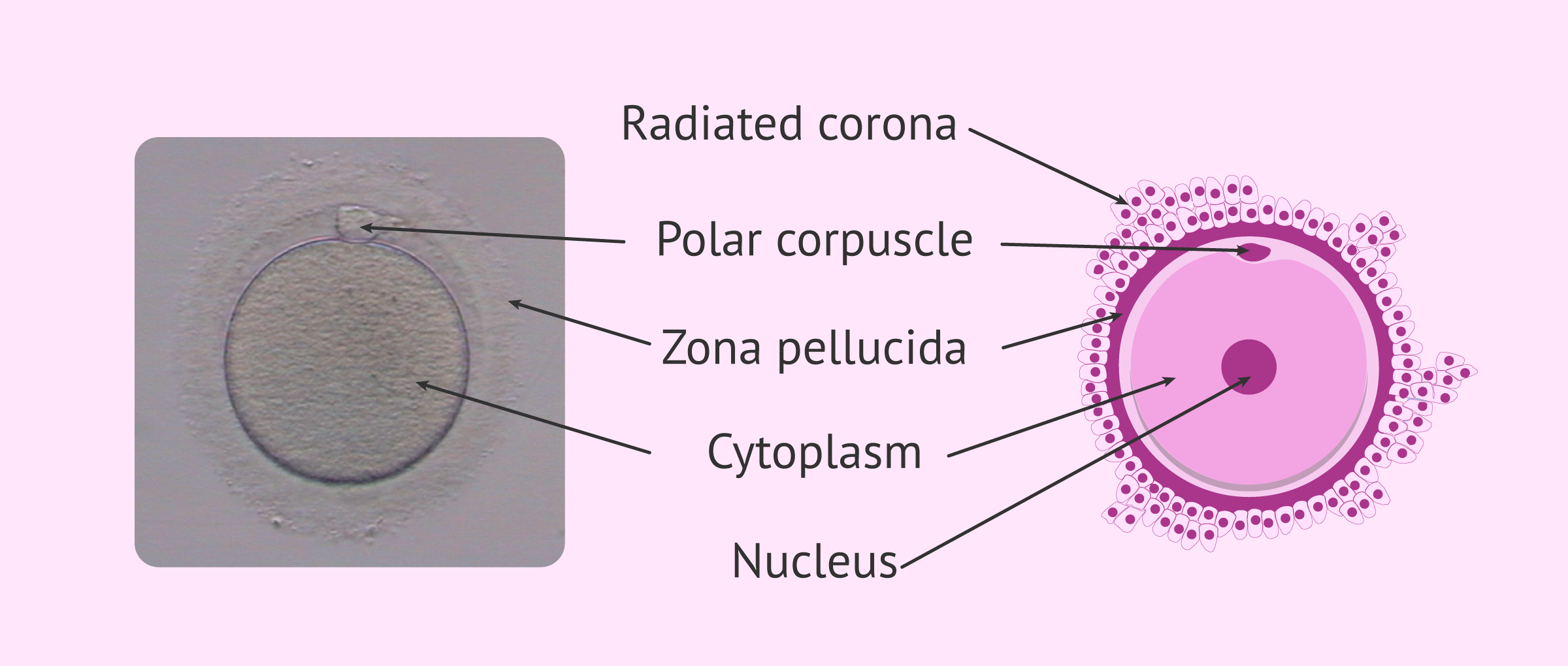
Curiously enough, the egg is the largest cell in a woman's body and can be seen perfectly under a microscope. In its structure, it is possible to differentiate the pellucid layer that surrounds it and a polar corpuscle when it is mature.
Community and Support
At inviTRA we work to make monthly and rigorous information accessible to everyone. If this article has helped you, consider supporting us so we can continue accompanying more people on their journey to parenthood.
Author

Find the latest news on assisted reproduction in our channels.

