Artificial Intelligence in IVF: Advances for Fertility
A recent review by David B. Olawade, Jennifer Teke, Khadijat K. Adeleye, Kusal Weerasinghe, Momudat Maidoki, and Aanuoluwapo Clement David-Olawade, researchers from the University of East London, Medway NHS Foundation Trust, York St John University, Canterbury Christ Church University, University of Massachusetts, and University Hospitals of Leicester, has explored in depth the use of artificial intelligence in in vitro fertilization (IVF).
The application of these new computational technologies has great potential to optimize various stages of assisted reproduction treatment and improve pregnancy rates.
The different sections of this article have been assembled into the following table of contents.
Contents
- 1.
- 2.
- 3.
- 4.
- 5.
Artificial Intelligence and tailored ovarian stimulation
The first major step of in vitro fertilization (IVF) is ovarian stimulation, a process that is fundamental for obtaining a good number of eggs to fertilize. Traditionally, predicting how each woman will respond to the hormonal medication of ovarian stimulation has been a significant medical challenge.
In this regard, artificial intelligence allows for much more precise personalization of treatments. Computer algorithms are capable of analyzing large amounts of clinical data, such as age, body weight, and ovarian reserve, to predictively calculate the ideal dose of medication. This technology can also help estimate the quantity of eggs that will be obtained in the ovarian puncture and predict the best day to administer the final medication before the puncture.

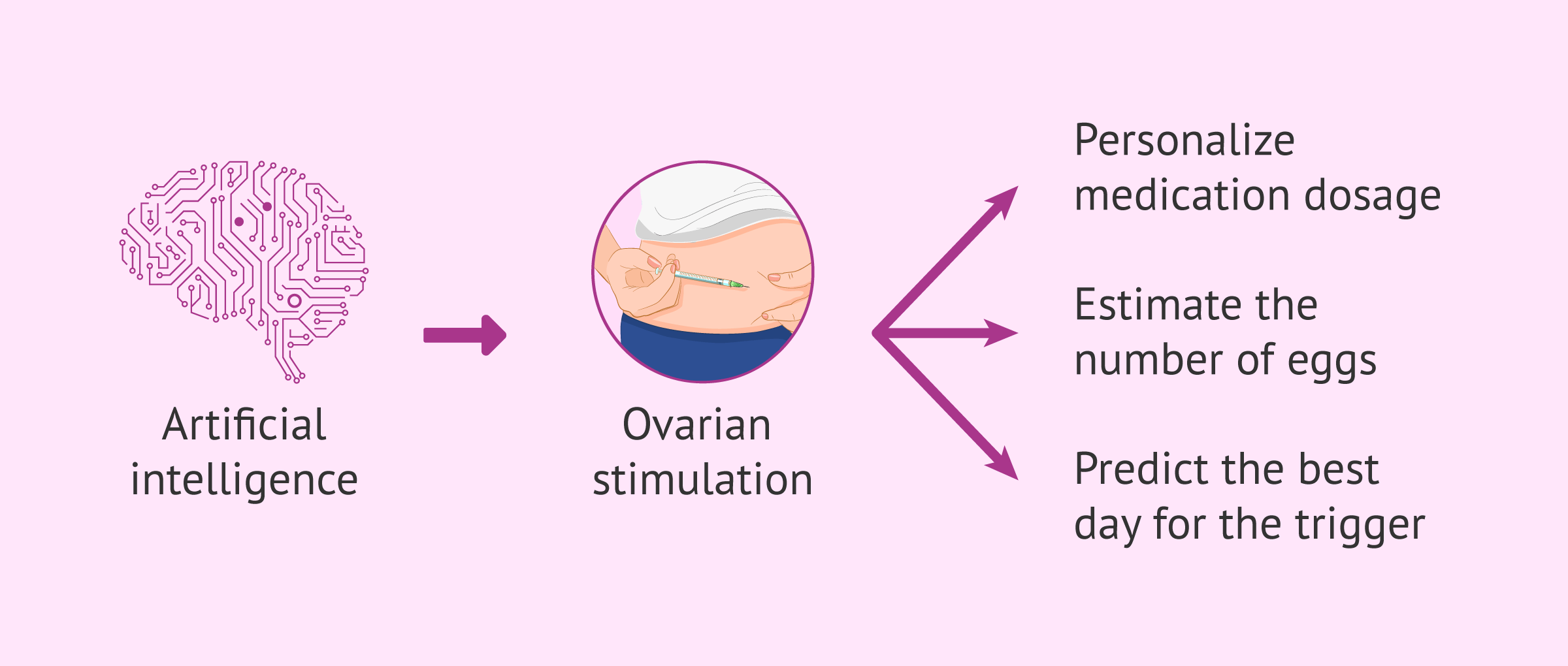
One of the greatest advantages of these predictive artificial intelligence tools is that they facilitate real-time adjustments during the ovarian stimulation phase. This aims to achieve maximum treatment efficacy and reduce the risk of potential medical complications.
Gamete and embryo selection
Properly choosing eggs and sperm is a determining factor for achieving successful fertilization. The incorporation of artificial intelligence brings great objectivity to this field:
- Sperm evaluation: technology allows for the detailed and precise analysis of sperm motility and morphology parameters, identifying those with the greatest capacity to fertilize.
- Egg quality: artificial intelligence-based systems evaluate high-resolution images to detect small structural variations in eggs that the human eye might overlook, which would be related to oocyte quality.
- Embryo classification: thanks to incubator technology with time-lapse video cameras, artificial intelligence studies each milestone of the embryo's cellular development to predict its viability more accurately.
By successfully identifying the embryo with the greatest potential for implantation in the uterus, specialists can increase success rates and decrease the number of cycles needed to achieve an ongoing pregnancy.
Improvements in the IVF laboratory
The embryology laboratory requires a highly controlled environment. In this sense, artificial intelligence also offers valuable tools to ensure strict quality control.
These computer platforms continuously monitor environmental parameters, such as temperature or air quality, immediately alerting of any alteration before it becomes harmful to the embryos.
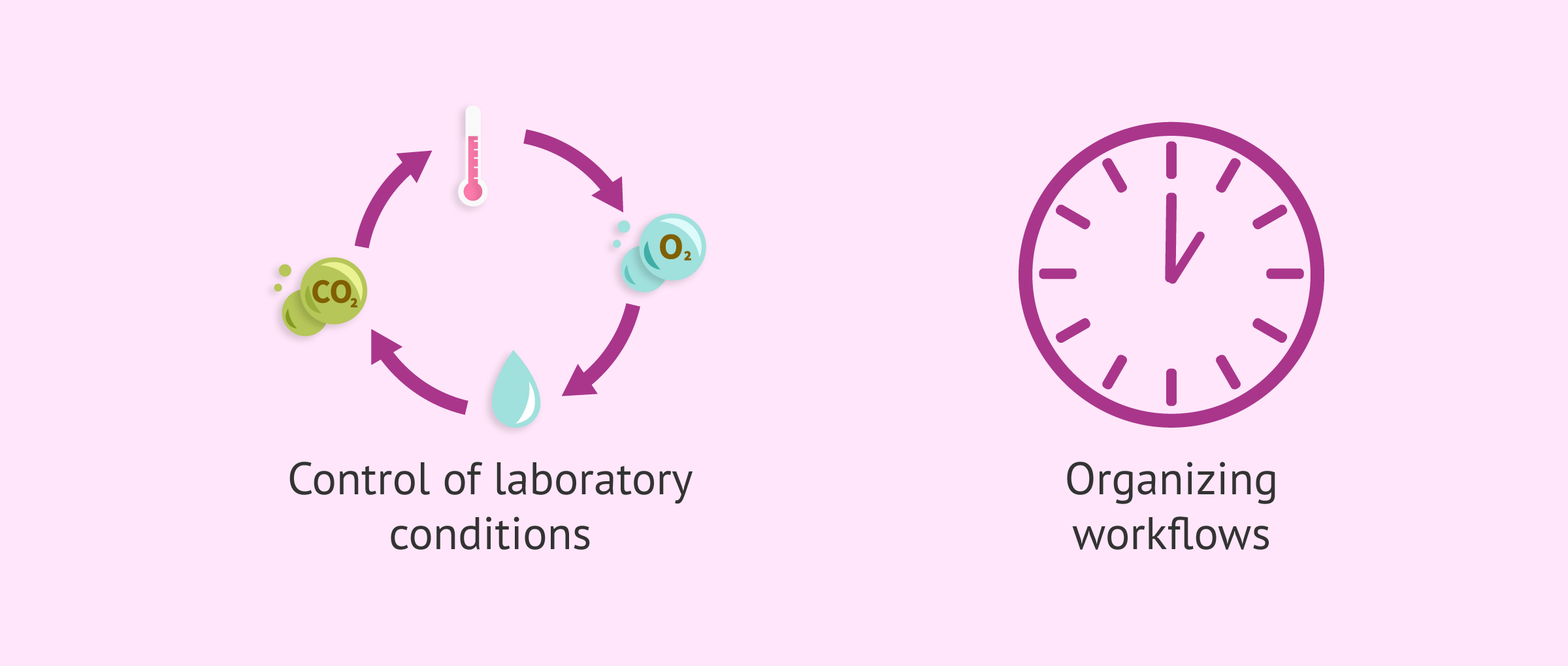
Furthermore, this technology is highly useful for organizing workflows. Through data analysis, the system predicts the optimal times to perform key procedures, such as ovarian punctures or embryo transfers, ensuring that the laboratory workflow does not suffer delays.
Ethical and future challenges of Artificial Intelligence
Despite the undeniable progress that artificial intelligence represents, its large-scale clinical application still faces significant challenges. Experts agree on the need to carry out more studies and controlled trials that solidly demonstrate the improvement in live birth rates.
On the other hand, the protection of privacy regarding medical records is a central ethical concern.
Equally important is ensuring that artificial intelligence algorithms are fed with data from diverse patients, avoiding demographic biases that could cause inequalities in the precision of fertility treatments.
We make a great effort to provide you with the highest quality information.
🙏 Please share this article if you liked it. 💜💜 You help us continue!
References
Olawade DB, Teke J, Adeleye KK, Weerasinghe K, Maidoki M, Clement David-Olawade A. Artificial intelligence in in-vitro fertilization (IVF): A new era of precision and personalization in fertility treatments. J Gynecol Obstet Hum Reprod. 2025 Mar;54(3):102903. doi: 10.1016/j.jogoh.2024.102903. Epub 2024 Dec 27. PMID: 39733809. (View)