What is embryonic fragmentation?
Embryonic fragmentation is a phenomenon that occurs in embryos to a greater or lesser extent and the exact cause is unknown. There are several studies that establish that embryonic fragmentation could be due to cell debris without a nucleus or to the decomposition of embryonic cells.
Depending on the degree of fragmentation in the embryo, three degrees of embryo quality are established:
- Grade 1 embryos
- have 10% fragmentation.
- Grade 2 embryos
- the percentage of fragmentation is between 10-25%.
- Grade 3 embryos
- These embryos show about 25-35% fragments.
- Grade 4 embryos
- have more than 35% fragments.

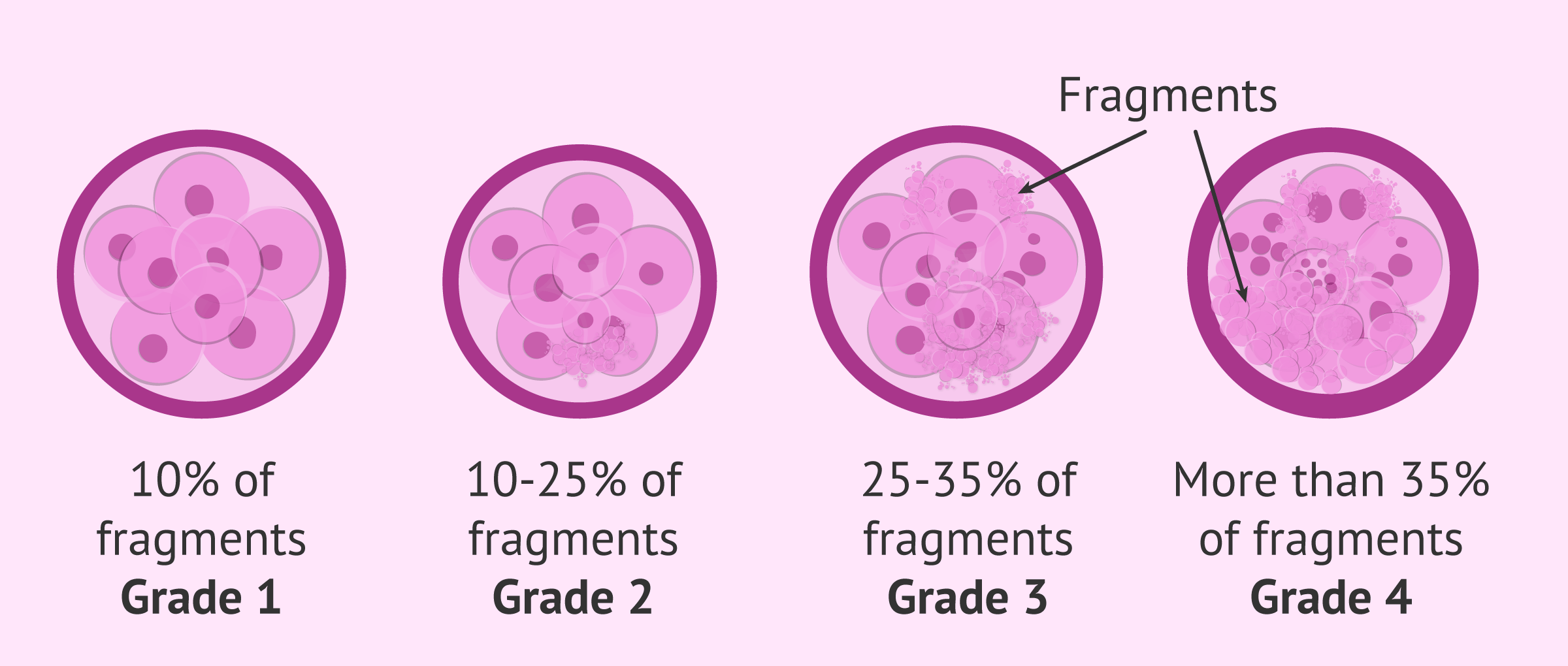
Furthermore, it is important to know that as the embryo evolves in its development, the number of fragments can increase or decrease. The main drawback of embryonic fragmentation is that it hinders cell division, so the embryo will develop slowly and will have a low capacity for implantation in the uterus.
We make a great effort to provide you with the highest quality information.
🙏 Please share this article if you liked it. 💜💜 You help us continue!