
In the field of assisted reproduction, the proper processing of semen before performing artificial insemination (AI) is a fundamental step. Recently, a large team of specialists consisting of Tuyen N.D. Duong, Vinh Q. Dang, Tien K. Le, Anh T.L. Vu, Duy L. Nguyen, Toan D. Pham, Mai T. Nguyen, Phuong T.M. Nguyen, Tuan M. Vo, Chau T.H. Nguyen, Phuong T.B. Le, Anh H. Le, Cam T. Tran, Ben W. Mol, Lan N. Vuong and Tuong M. Ho, has published an important study to evaluate the best methodologies.
This international research was conducted in collaboration with prestigious centers such as the IVFMD and the HOPE Research Centre of My Duc Hospital, Monash University, the IVFMDPN of My Duc Phu Nhuan Hospital, the University of Aberdeen, and the University of Medicine and Pharmacy at Ho Chi Minh.
Provided below is an index with the 7 points we are going to expand on in this article.
Why does semen need to be prepared?
When a male provides a semen sample, it contains seminal plasma, sperm of varying qualities, and other types of cells. To increase the chances of success in artificial insemination, the andrology laboratory performs a procedure to isolate the fastest and best-shaped sperm. Furthermore, this process removes elements that could hinder fertilization.
The two most popular techniques currently used worldwide to prepare semen are swim-up and density gradients.
Techniques: Swim-up and gradients
Although both semen preparation techniques seek the same goal, they work very differently:
- Swim-up: this technique is based on the natural swimming ability of sperm. The sample is placed in a culture medium and incubated, allowing the most motile and healthy sperm to swim to the top, thus separating them from those that do not move.
- Density gradients: this method isolates the highest quality sperm using the force of centrifugation through media of different densities. When centrifuging the sample, the most functional sperm manage to pass through the filter, separating from the cellular debris.
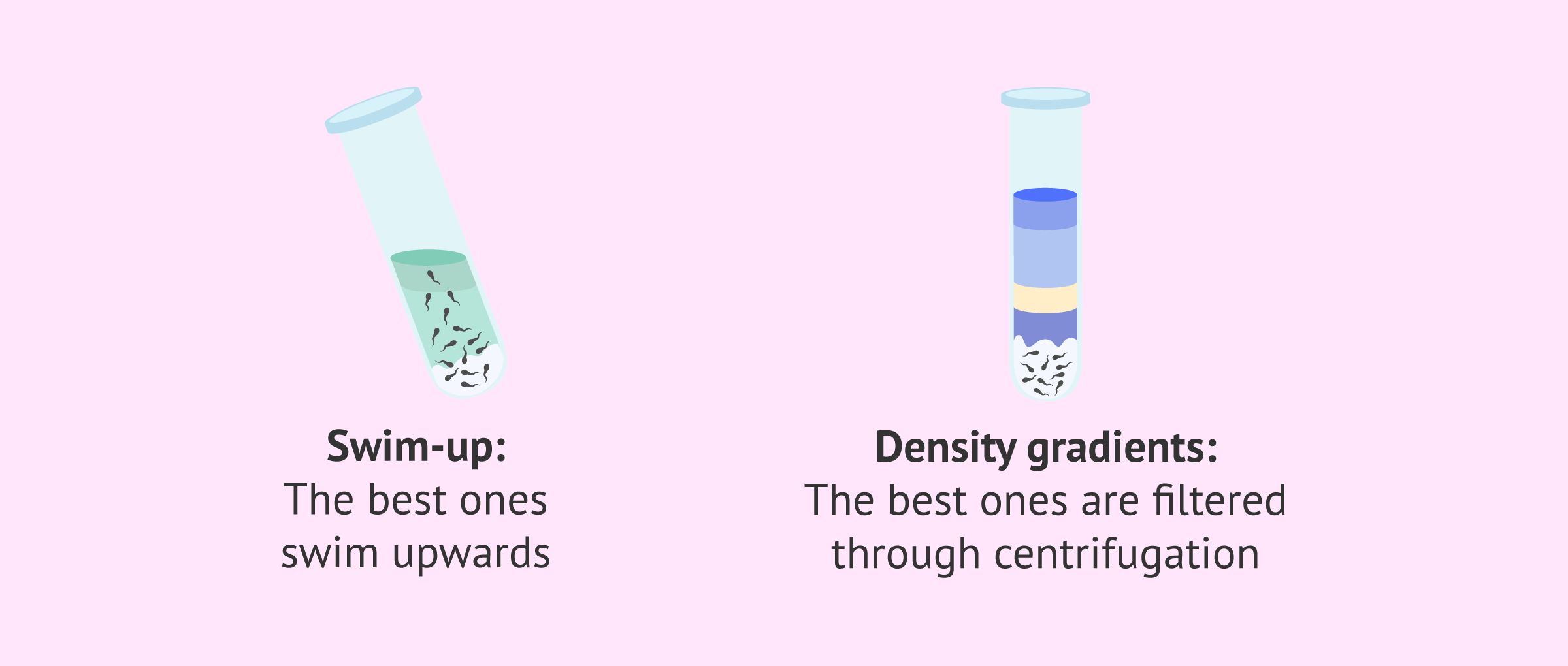
When applying this in the laboratory, the goal is always to maximize the recovery of the best possible sperm without causing them any damage during manipulation.
Pregnancy and birth outcomes
To determine which technique offers better results, the study randomly divided 912 couples into two equal groups (456 for swim-up and 456 for density gradients). After performing artificial insemination, the results were very interesting:
- 12.1% of the couples achieved a live birth in the swim-up group.
- 15.7% of the couples achieved a live birth in the density gradient group.
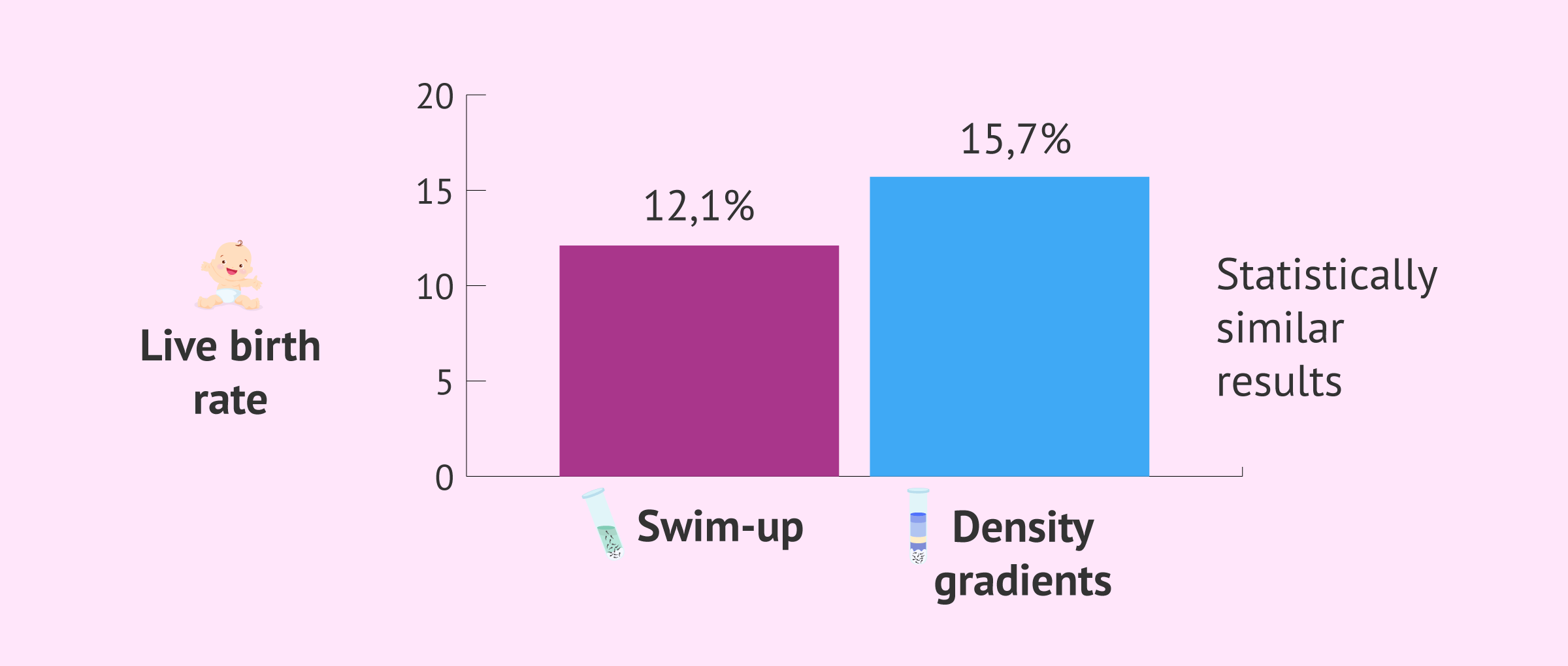
Although the numbers for the gradient method seem slightly higher, from a statistical point of view, the difference between the two techniques is not significant.
There were also no noteworthy differences regarding obstetric and neonatal outcomes.
Which is the best method in AI?
The good news for those undergoing artificial insemination is that both methods, swim-up and density gradients, are safe and effective. The study concludes that both techniques can be used interchangeably for semen preparation in clinics.
The decision to use one or the other will fall mainly on laboratory professionals, who will base it on practical factors such as processing time, original semen quality, and the ease of standardizing the method within the clinic's routines.
Community and Support
At inviTRA we work to make monthly and rigorous information accessible to everyone. If this article has helped you, consider supporting us so we can continue accompanying more people on their journey to parenthood.
References
Duong TND, Dang VQ, Le TK, Vu ATL, Nguyen DL, Pham TD, Nguyen MT, Nguyen PTM, Vo TM, Nguyen CTH, Le PTB, Le AH, Tran CT, Mol BW, Vuong LN, Ho TM. Swim-up versus density gradients for sperm preparation in infertile couples undergoing intrauterine insemination: a randomized clinical trial. Hum Reprod. 2025 May 1;40(5):788-795. doi: 10.1093/humrep/deaf047. PMID: 40135621. (View)


