Toxoplasmosis: real impact on human sperm
A recent study has revealed significant findings on how toxoplasmosis affects male reproductive health. The research was led by authors Lisbeth Rojas-Barón, Leandro Tana-Hernandez, Mireille H. Nguele Ampama, Raúl Sanchéz, Ulrich Gärtner, Florian M. E. Wagenlehner, Christian Preußer, Elke Pogge von Strandmann, Carlos Hermosilla, Anja Taubert, María E. Francia and Zahady D. Velasquez.
Furthermore, this research was made possible by the collaboration of several institutions: Institute of Parasitology (Justus Liebig University Giessen, Germany), Laboratory of Apicomplexan Biology (Institut Pasteur de Montevideo, Uruguay), Center of excellence in Translational Medicine Scientific and Technological Bioresource Nucleus and Department of Preclinical Sciences (Universidad de la Frontera, Chile), Institute of Anatomy and Cell Biology and Clinic for Urology, Pediatric Urology and Andrology (Justus Liebig University Giessen), EV-Core Facility (Philipps University Marburg, Germany) and the Department of Parasitology and Mycology (Universidad de la Republica, Uruguay).
The different sections of this article have been assembled into the following table of contents.
Contents
- 1.
- 2.
- 3.
- 4.
Toxoplasmosis and male fertility
The acute infection caused by the microorganism Toxoplasma gondii can have direct consequences on male fertility. This parasite has the ability to infect and proliferate directly within the testes and the epididymis, essential organs for the formation and maturation of semen.
By colonizing these organs, the parasite alters the usual structure of the tissue, causing cellular damage and allowing the infiltration of immune system cells.

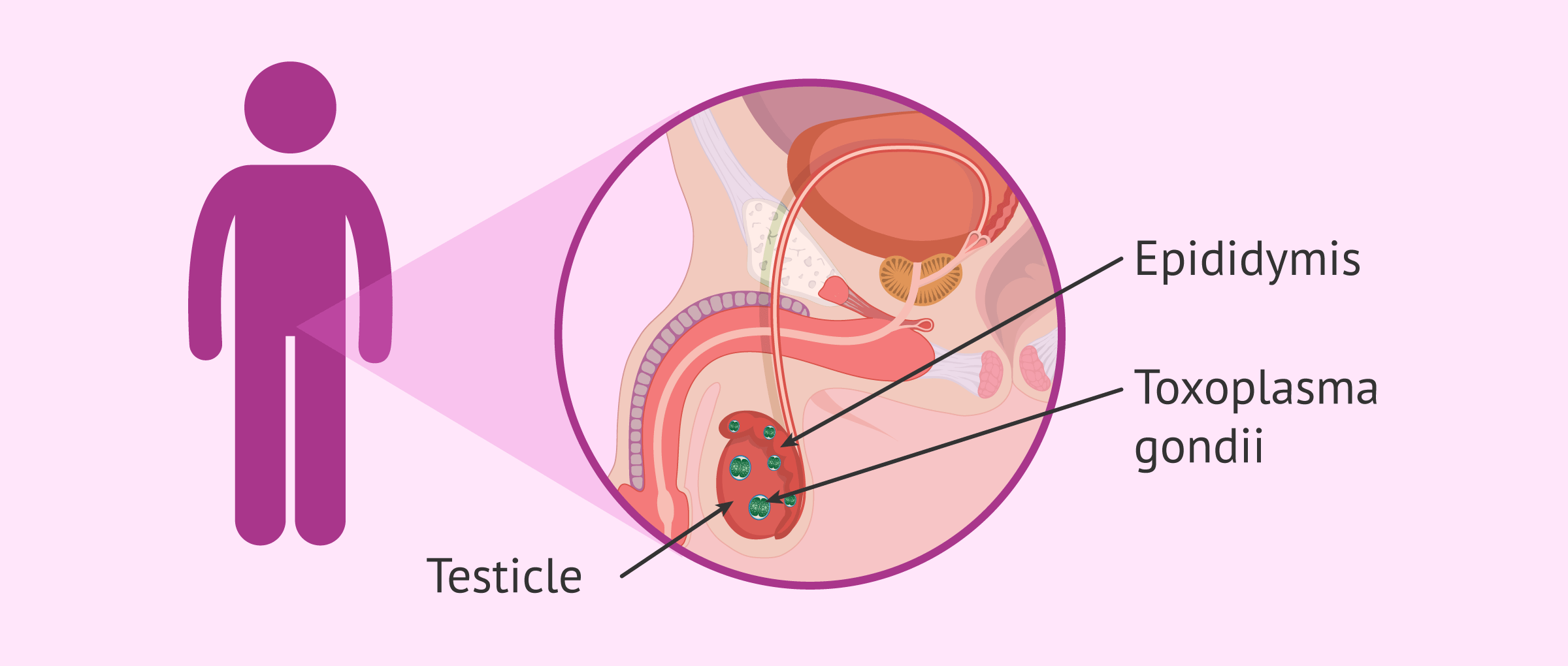
This ability of the microorganism to settle in the reproductive area is a key finding, as it exposes male reproductive cells to a direct risk at critical stages of their development.
Direct damage to sperm
One of the most striking discoveries of the study is that the parasite physically interacts with human sperm, causing severe alterations. Among the most frequent structural defects are the following:
- A high proportion of headless sperm.
- Twisted tails, bent at right angles or coiled, which hinders the natural mobility of the sperm.
- Breaks (disruptions) in the plasma membrane that covers the reproductive cell.
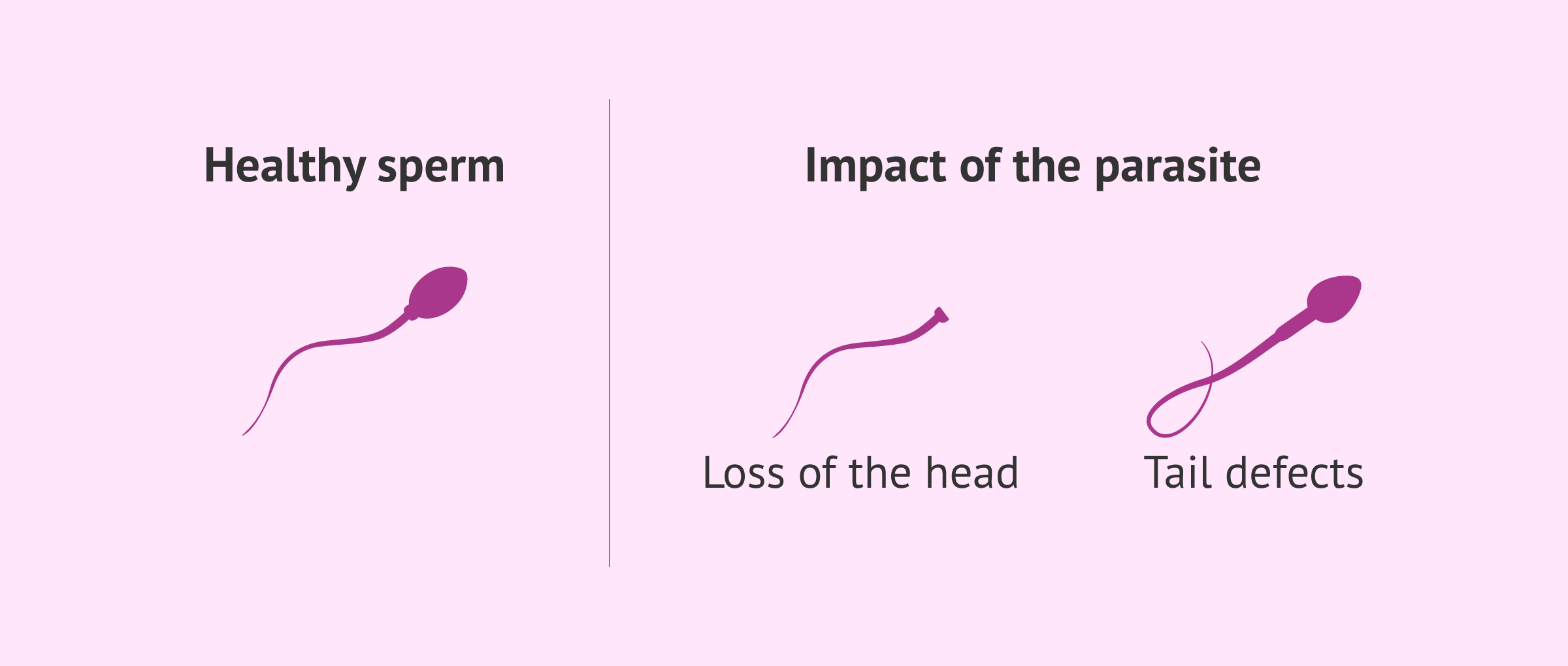
The researchers have confirmed that this impact on the sperm does not occur because the parasite releases toxic substances into the environment, but rather that direct contact or adherence between the microorganism and the male reproductive cell would be necessary.
Alterations in sperm function
To achieve fertilization, the sperm needs a large supply of energy provided by its mitochondria, which function as the engine of the cell. The study has shown that interaction with the parasite causes a loss of the mitochondrial membrane potential of the sperm. This leads to cell death, either by apoptosis or necrosis.
Despite these major structural and functional damages, the research indicates that the infection does not produce abnormal levels of oxidation (oxidative stress) in the sample. Likewise, it was observed that contact with the parasite does not increase sperm DNA fragmentation and does not initially alter the structure of the head responsible for piercing the egg, known as the acrosome.
We make a great effort to provide you with the highest quality information.
🙏 Please share this article if you liked it. 💜💜 You help us continue!
References
Rojas-Barón L, Tana-Hernandez L, Nguele Ampama MH, Sanchéz R, Gärtner U, Wagenlehner FME, Preußer C, Pogge von Strandmann E, Hermosilla C, Taubert A, Francia ME, Velasquez ZD. Adverse impact of acute Toxoplasma gondii infection on human spermatozoa. FEBS J. 2025 Sep;292(17):4720-4736. doi: 10.1111/febs.70097. Epub 2025 May 3. PMID: 40318165; PMCID: PMC12414867. (View)