Treatment for alopecia and fertility: the mistake that damages your semen
The search for solutions to stop hair loss is a very common concern, but some treatments could have a hidden cost for reproductive capacity.
A recent and detailed investigation carried out by the authors Young Jae Kim, Seoung Ryeol Lee and Young Dong Yu, belonging to the Department of Urology (CHA Bundang Medical Center, CHA University School of Medicine, Seongnam) and the Department of Andrology (Fertility Center of CHA Bundang Medical Center, Seongnam), has set off alarms by revealing that the prolonged use of medications such as dutasteride can generate persistent fertility problems.
The different sections of this article have been assembled into the following table of contents.
Contents
- 1.
- 2.
- 3.
- 4.
- 5.
Alopecia and fertility
Dutasteride is a widely known and prescribed drug to treat androgenetic alopecia, the most common cause of hair loss in men. Its mechanism of action consists of inhibiting the enzyme responsible for transforming testosterone into dihydrotestosterone (DHT), thus stopping hair loss.
The study analyzed 200 young men (between 28 and 39 years old) who consumed a daily dose of 0.5 mg of dutasteride. The objective was to understand what happens to sperm when this medication is taken for different periods of time. The participants were divided into groups according to the duration of their treatment: less than 6 months, between 6 and 12 months, from 13 to 18 months, from 19 to 24 months, and more than 24 months.
Negative effects on semen
The results of the seminal tests showed significant alterations as the use of dutasteride was prolonged. Although parameters such as sperm concentration and shape (morphology) did not suffer alarming changes, other seminal alterations were detected:
- Decrease in seminal volume: the total amount of semen expelled was considerably reduced with the time of drug use.
- Loss of sperm motility: the ability of sperm to move properly (both total and progressive motility) worsened according to the months of treatment.

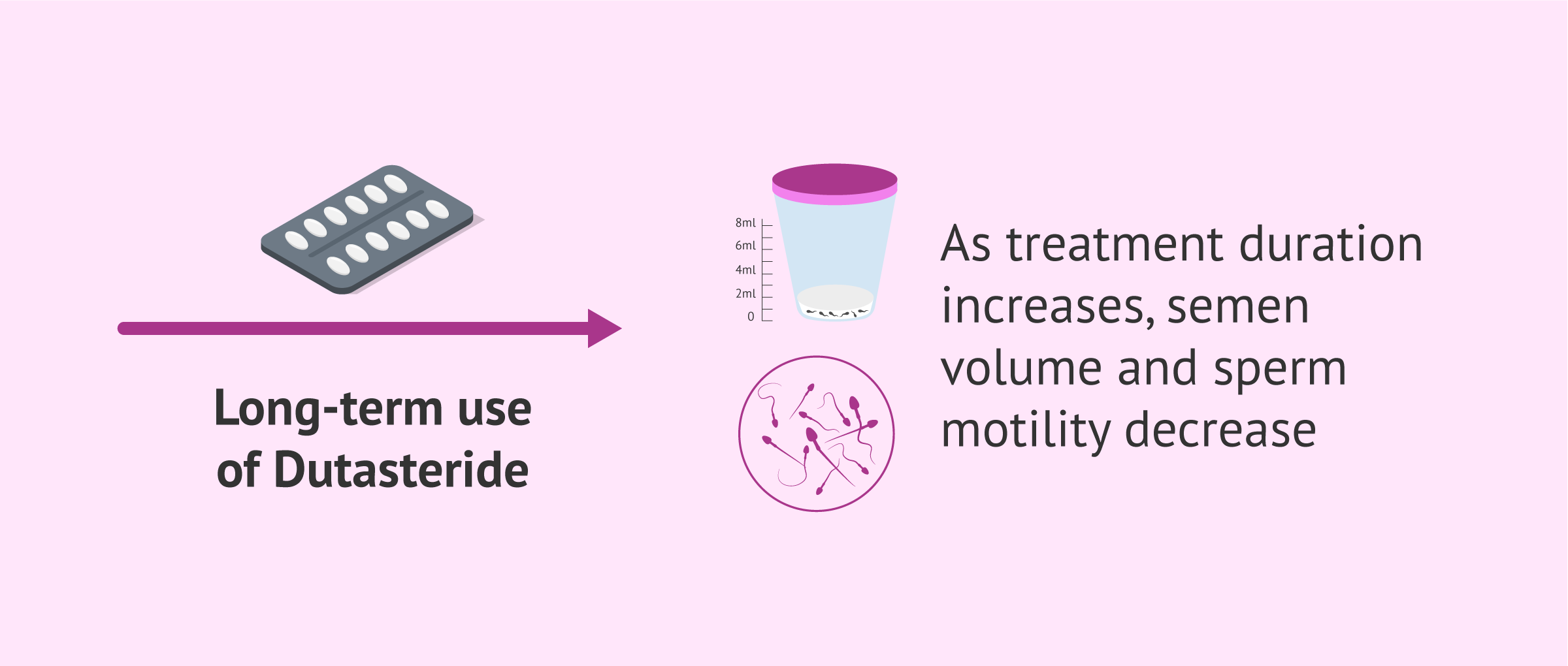
These changes explain why many patients may face difficulties when seeking offspring naturally while trying to maintain their hair health.
When is the damage irreversible?
The most revealing part of the study was observing what happened when patients stopped taking the medication for 6 months. All groups showed some recovery after stopping the pills. However, the research determined that there is a "red line" or point of no return.
Two critical cut-off times for continuous dutasteride treatment were established that would cause persistent damage, even half a year after interrupting the treatment:
- At 17.8 months: the deterioration in semen volume becomes a persistent problem.
- At 20.3 months: the reduction in sperm motility tends to become a constant condition.
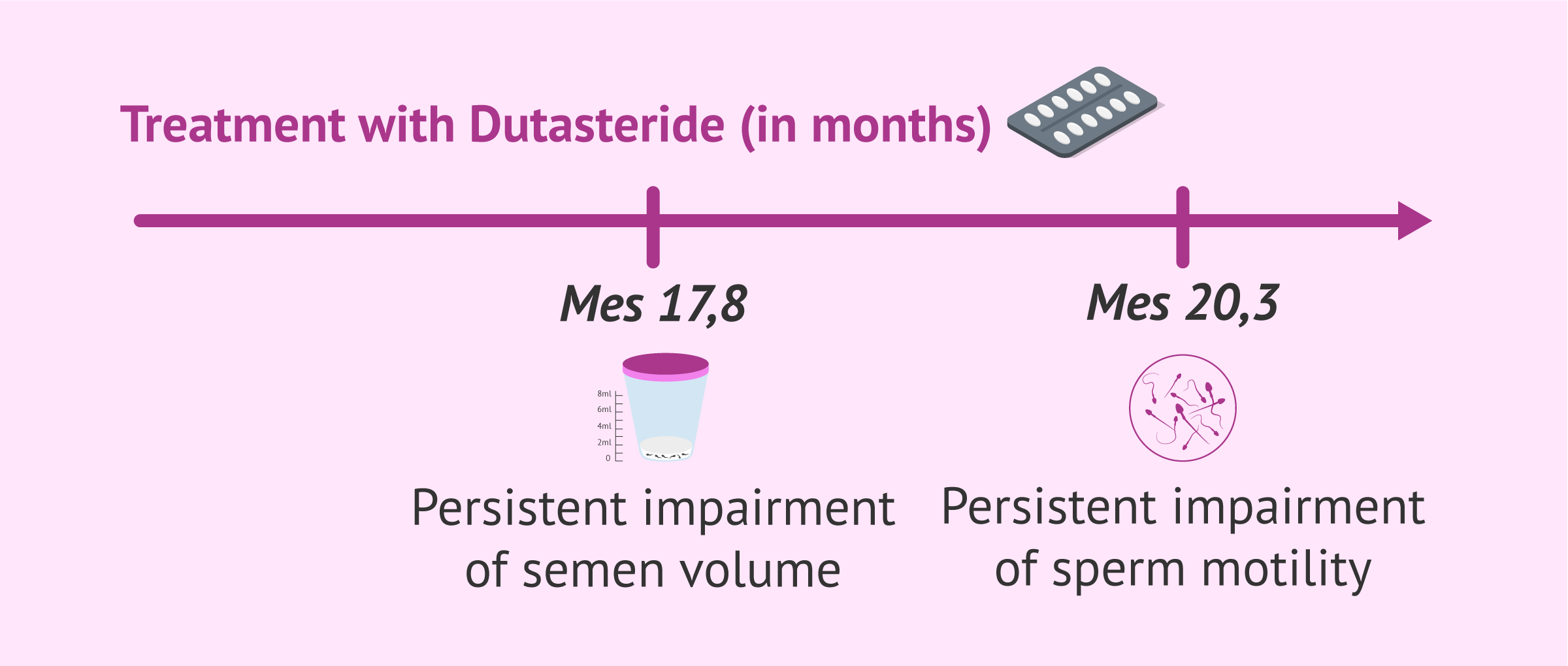
This means that men who consume dutasteride for almost a year and a half or more are exposed to long-term problems that are not solved simply by stopping the pill, but are still present 6 months later.
Recommendations for future fathers
Following these scientific discoveries, experts call for caution. It is essential that young men who are taking or plan to take dutasteride for alopecia and who also wish to have children in the future receive strict monitoring.
It is advisable to perform regular semen analyses to detect any drop in values in time and suspend the medication well before crossing the thresholds of irreversible damage.
We make a great effort to provide you with the highest quality information.
🙏 Please share this article if you liked it. 💜💜 You help us continue!
References
Kim YJ, Lee SR, Yu YD. Long-term use of dutasteride to treat androgenic alopecia in young men may lead to persistent abnormalities in semen parameters. Clin Exp Reprod Med. 2025 Dec;52(4):376-385. doi: 10.5653/cerm.2024.07675. Epub 2025 Mar 21. PMID: 40114308; PMCID: PMC12682408. (View)