
A zygote is the cell resulting from the union of an egg and a sperm after fertilization. It corresponds to the first stage of life and from it the embryo will be formed after successive cell divisions.
In the zygote, the pro-nuclei from the ovum and the sperm are fused in order to restore the chromosome endowment of the human species: 46 chromosomes, 23 of maternal origin and 23 of paternal origin.
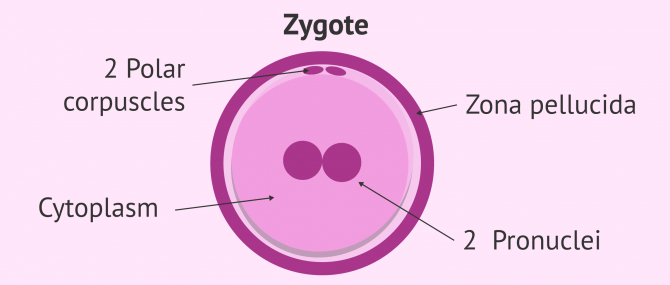
In addition, the zygote is also formed by a hard zona pellucida that surrounds and protects it, by two polar corpuscles in the perivitelline space and by the cytoplasm that surrounded the nucleus.
Community and Support
At inviTRA we work to make monthly and rigorous information accessible to everyone. If this article has helped you, consider supporting us so we can continue accompanying more people on their journey to parenthood.
Author

Find the latest news on assisted reproduction in our channels.

