
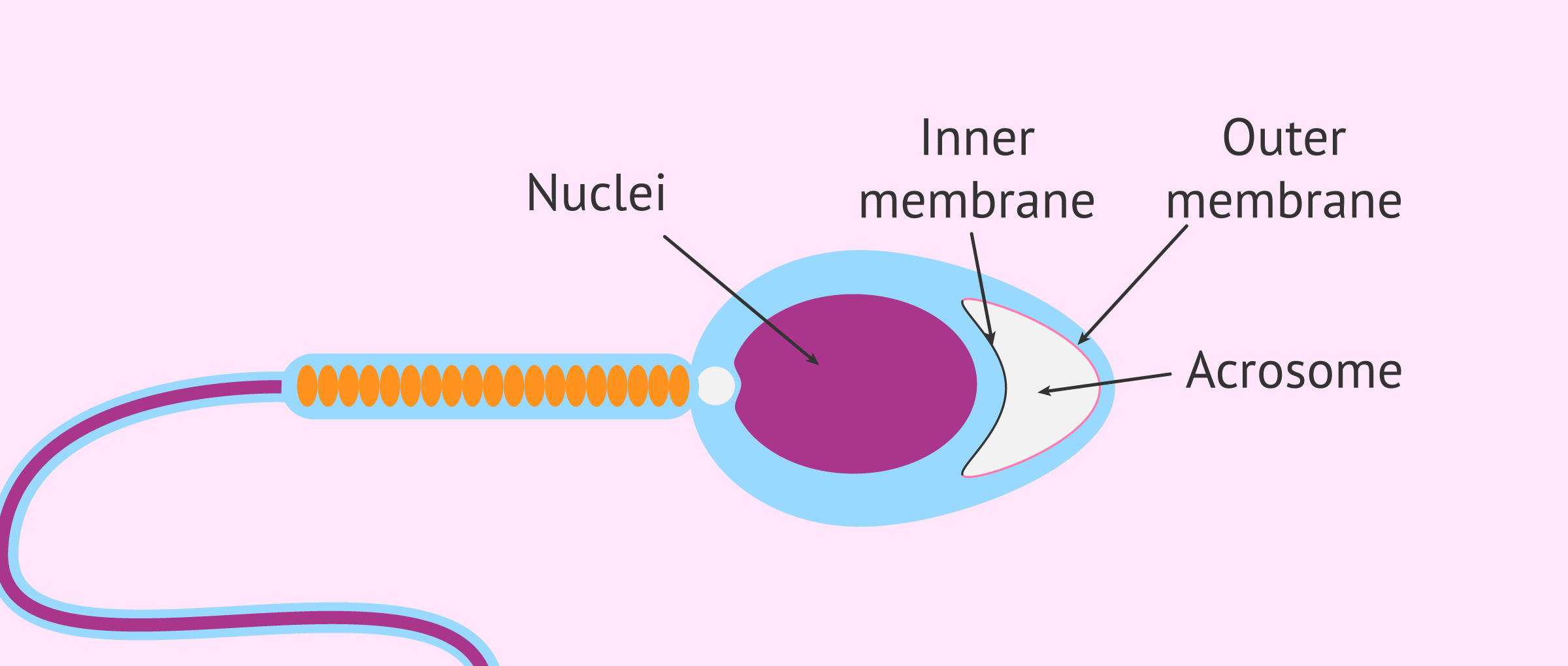
The acrosome is the term used for the area of the sperm head that occupies the first two thirds of the total volume.
The morphology of the acrosome consists of a vesicle derived from the Golgi complex, which is synthesized and assembled during the early stages of spermiogenesis, i.e., sperm formation.
The acrosome vesicle is delimited by two membranes which are called acrosome membranes. These membranes include different structural and non-structural components, proteins and enzymes of different types.
The acrosome contains proteolytic enzymes, whose function is to break down the pellucid zone of the egg in order to penetrate it. Therefore, this structure of the spermatozoon has an essential function during the fertilization process. The main enzyme of the acromosome is hyaluronidase, whose purpose is to progressively separate the cells of the cluster surrounding the egg by hydrolyzing the hyaluronic acid.
Community and Support
At inviTRA we work to make monthly and rigorous information accessible to everyone. If this article has helped you, consider supporting us so we can continue accompanying more people on their journey to parenthood.
Author

Find the latest news on assisted reproduction in our channels.

