ART Reproduccion


This clinic has closed.
The different sections of this article have been assembled into the following table of contents.
Contents
- 1.
- 2.
- 3.
- 3.1.
- 3.2.
- 3.3.
- 3.4.
- 3.5.
- 3.6.
- 3.7.
- 3.8.
- 3.9.
- 4.
- 5.
- 5.1.
- 5.2.
- 6.
- 7.
- 7.1.
- 8.
Description
ART Reproducción is a fertility clinic belonging to the private sector that was opened in 2013 in Vitoria-Gasteiz.
Today, ART Reproducción has two other centres in Burgos and Bilbao, although ART Vitoria is the main centre that has its own operating theatre and laboratory to carry out all fertility treatments.
The founders of ART Reproduction are Jon Ander Agirregoikoa and José Luis de Pablo, a gynecologist and embryologist respectively, who remain the current directors of the clinic.
In addition to these, the ART Reproducción team is made up of a total of 14 workers and performs around 300 cycles of assisted reproduction per year.
If you need information on how to get to the clinic, either by public or private transport, you can access this link.
History
Throughout his professional career, José Luis de Pablo has been in charge of IVI Bilbao's in vitro fertilisation (IVF) laboratories (from 2005 to 2008) and Quirón Bilbao (from 2009 to 2014), pioneering the introduction of some innovative techniques.
In 2013, he decided to set up the ART Reproduction clinic with Dr. Jon Ander Agirregoikoa, which led them to win one of the AJEBASK awards in recognition of the work of young entrepreneurs in Álava, specifically the award dedicated to innovation in the service sector.
Furthermore, ART Reproducción also has the UNE 179007 quality certificate for assisted reproduction laboratories, and its results are audited by the Spanish Fertility Society (SEF).
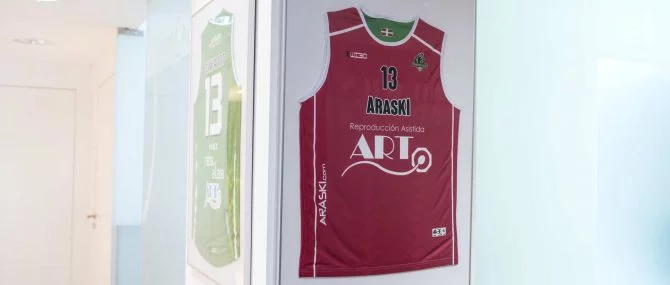
Furthermore, ART Reproducción is the sponsor of Vitoria's women's basketball team, ART Araski Reproduction, which plays in the National League. Throughout its history, the ART Reproducción clinic has always had a close relationship with women's health and sport.
Facilities
ART Reproduction has a total of 450m2, which includes the reception, waiting room, consultation room, operating room, and laboratory, among other rooms.
The style of the clinic is very modern and in some of its structures Krion® stands out, a non-porous material that is warm to the touch and similar to natural stone with multiple properties. T
The following is a list of all the areas of the clinic, with the resources and technology available to carry out assisted reproduction treatments.
Building and surroundings
ART Reproduction occupies the ground floor and the upper floor of a tall corner building.
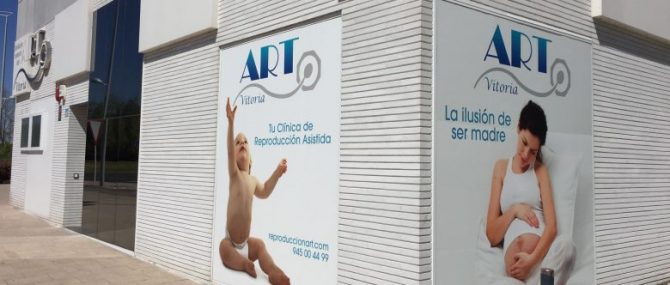
The main façade is made of white bricks and Krion® cubes, with a large window that lets in natural light but without seeing the inside of the clinic, and the entrance door is in the centre. On this façade, you can also see the ART Reproducción logo in a corner and other large advertising posters that are illuminated at night.

The pavements of the street where ART Reproducción is located are wide, with several trees around and the bike path. It is a very quiet area on the outskirts of Vitoria where it is very easy to park the car.
Reception and waiting room
The ART Reproducción reception is located at the entrance to the clinic, on a white counter on the right. Here, patients are usually attended to by an adminisration employee.
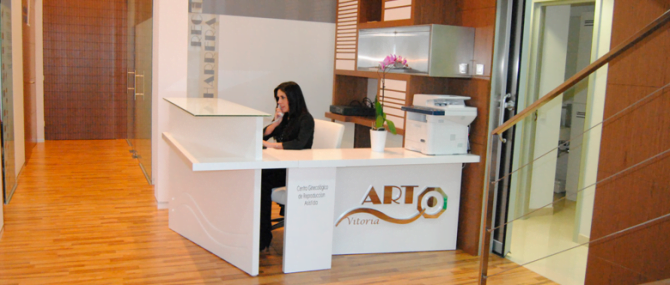
As for the waiting room, it is located in a room just opposite the reception, where there are several chairs and a water dispenser.
For entertainment, patients have at their disposal the user and password of the WiFi, several magazines, and some news about ART Reproducción on the walls.

In addition, the clinic has specific facilities for egg donors, so they have a different entrance door, reception, and waiting room from the patients.
Consultations
ART Reproducción has two medical offices with an examination room. These offices are located on the left side of the clinic, next to the waiting room.
The ultrasound machine they have is the General Electric Voluson S8, a state-of-the-art ultrasound machine.
The consultation rooms are also equipped with a changing room, a gynaecological table, a sink, and a screen so that the woman can see the ultrasound scan.

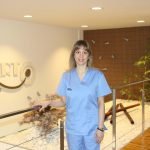
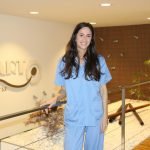
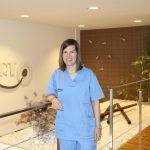
There are 5 gynaecologists working at ART Reproducción, both specialists in assisted reproduction and in general gynaecology and obstetrics. They speak Spanish, Basque, and English; and they perform weekend guards in case it is necessary to perform any medical procedure such as puncture or embryo transfer.

Nursing room
ART Reproducción has two nursing rooms: one in front of the doctor's office and one in the donor area.
This is where the blood draws are done. To this end, each room has a chair with armrests, a sink, and a storage area.
Operating Room
The ART Reproducción operating room is located in the sterile area of the clinic, next to the laboratory, and the recovery boxes.
This area is accessed through a door next to the reception, where there is a dressing room for patients to change into their operating room clothes. This dressing room has a bathroom, a sink, and 4 individual lockers.
The ART Reproduction operating room is fully equipped with an operating table, instrument tables, a monitor, the General Electric LOGIQ F8 ultrasound machine, anesthesia delivery system, defibrillator, a crash cart, and an ultra-purified air line. There is also a large screen so that patients can see when the embryo is introduced into the uterus.
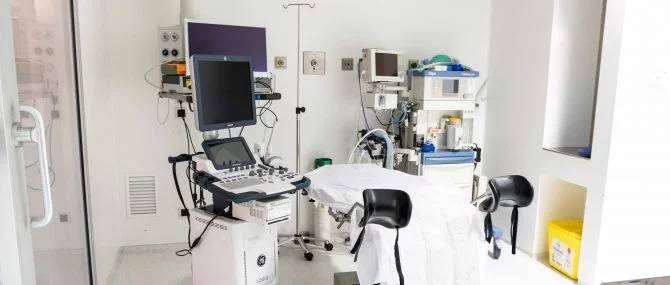
This operating room communicates directly with the laboratory through a glass door that can be opaque or transparent.
Both rooms are built with Krion® and have a positive pressure ventilation system to guarantee maximum sterility conditions.
Krion® is a solid material composed of two thirds of natural minerals and a low percentage of high-strength resins. Thanks to this, Krion® has unique properties: it is ecological and recyclable, easy to clean, resistant to fungi and bacteria, does not allow the proliferation of microorganisms, has a high resistance to fire, etc.
Finally, it should be noted that the usual procedures performed in this operating room are ovarian puncture and embryo transfer, although major outpatient surgery techniques such as hysteroscopy, endometrial biopsy, testicular biopsy, etc., are also carried out.
The staff present in all the interventions are the gynecologist, the anesthesiologist, a nurse and an embryologist if it is the case.
Laboratory
The ART Reproducción laboratory is divided into two parts: andrology and embryology.
Three embryologists work here to carry out all the necessary procedures, including intracytoplasmic sperm injection (ICSI) and embryo biopsies for genetic analysis of the embryos.
For this reason, ART Reproduction laboratory is equipped as follows:
- Two laminar flow hoods with heated surfaces
- Two binocular magnifiers
- An inverted microscope and a micro-injector with a vibration table
- Two classic incubators
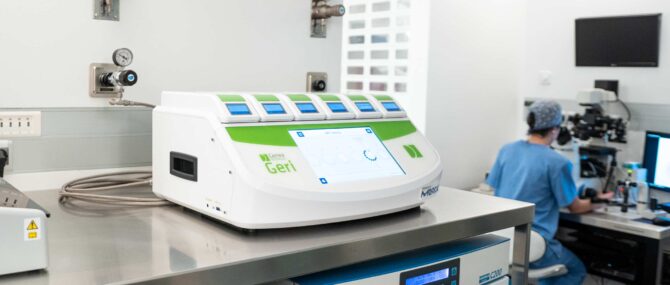
- A Time-lapse GeriIncubator
- A K-SYSTEMS incubator with low oxygen content
- A centrifuge
- One sperm bank, one egg bank and one embryo bank
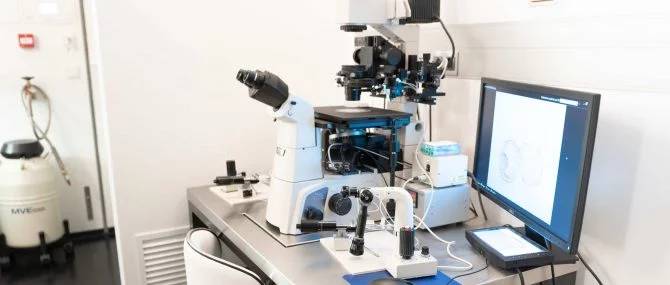
Also, all the laboratory furniture is made of stainless steel and, as we have already said, the walls and floor are made of Krion® with rounded corners to facilitate cleaning.
As a result, the optimal conditions for embryo culture are guaranteed, both in terms of sterility and in terms of light parameters, temperature, etc.
As for the computerized security and traceability system for biological samples, ART Reproduction uses the Witness® system. These are radio frequency identification chips, which are attached to each sample and it is possible to know at any time which patient they belong to.
Recovery room
At the exit of the ART Reproducción operating room, still in the surgical area, there are two recovery boxes for patients undergoing surgery.
The furniture that can be found here is an articulated bed, an armchair for the accompanying person, a television, and a small table.
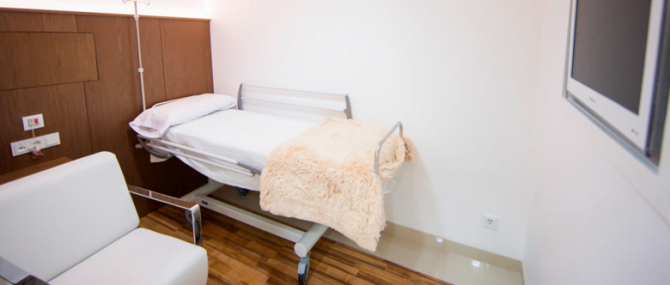
After the operations, ART Reproducción nurses offer patients breakfast service, which consists of coffee or ColaCao and a freshly made croissant.
As we indicated before, the patients' bathroom is in the dressing room right in the corridor of the surgical area.
Semen extraction room
ART Reproducción has two rooms for obtaining sperm samples: one located next to the medical offices and the other in the donor area.
Each is equipped with the following resources: a chair, a sink, a toilet, and a television with a video catalogue.
Moreover, both rooms are internally connected to the andrology area of the laboratory, so the patient only has to leave the sample in a small window and ring the bell for the embryologists to collect it.
Egg Donor Facilities
Those women who want to become egg donors can also go to ART Reproducción to have all the necessary medical and psychological tests done, as indicated in the Law 14/2006 on Assisted Human Reproduction Techniques.
If accepted, egg donors will have to come to the clinic itself to perform ovarian stimulation and follicular puncture.
One of the advantages of ART Reproduction is that it has specific facilities for egg donors. The entrance door is at the back of the clinic, through which you can access a different reception and waiting room than the patients.
Here is a door that connects directly to one of the doctor's offices. In this way, donors do not have access to the front of the clinic at any time and possible contact with patients who are going to undergo assisted reproduction treatment is avoided.

On the other hand, ART Reproduction does not attend to men who want to donate sperm, so donor sperm samples are acquired from an external bank.
What is the first visit like?
ART Reproducción offers all its patients a free first visit with a gynaecologist and an embryologist so that they can get to know them and visit the facilities.
This consultation lasts approximately one hour and is informative. The gynaecologist reviews all the reports provided by the patients, both from tests and from previous cycles, indicates new tests if necessary and, finally, explains what the treatment will consist of if it is already clear.
Once patients have everything and decide to undergo treatment, the second visit at ART Reproduction costs 100 euros and includes an ultrasound scan and assessment of the results of the diagnostic tests.
Patients from outside Vitoria, however, have the possibility of making the first informative visit by video call.
What treatments do they perform?
The fertility treatments carried out at ART Reproducción Vitoria are those shown in the following table.
If you're still unsure which fertility treatment is right for you and would like to know more about it, we suggest you read on here: Fertility Treatment Overview.
The treatment costs may vary significantly depending on the tests or techniques included or not, such as the seminogram, medication, fertility testing, medical visits, prolonged culture or embryo vitrification.
This Tool helps you to find out the exact costs of the different fertility clinics (what's included and what's not) and provides you with lots of useful tips for your first appointment.
Another advantage of ART Vitoria is that it offers the possibility of financing assisted reproduction treatments without interest.
Complementary techniques
In addition to all the treatments indicated in the previous section, ART Reproducción also offers its patients the possibility of carrying out the following complementary techniques in order to increase the chances of success
- Embryo culture with Time-Lapse technology
- Long culture up to blastocyst stage
- Assisted hatching
- Sperm DNA fragmentation with Fertile Chip
- Genetic analysis of embryos
- Testicular biopsy to obtain sperm
Diagnostic Tests
On the other hand, in ART Reproducción it is also possible to perform the following diagnostic tests before determining the appropriate fertility treatment or once pregnancy is achieved:
- Female fertility testing
- Male fertility testing
- Semen analysis
- Sperm FISH
- Endometrial receptivity test (ERA)
- Genetic compatibility test
- Ultrasound pregnancy confirmation
Other services
For assisted reproduction treatments to be successful, the intervention of other medical specialists besides the gynecologist may be necessary. For this reason, ART Reproduction has the following medical specialties to offer its patients a more comprehensive service:
- Psychological support
- psychologist María Barahona accompanies ART Reproducción patients during fertility treatments, at no extra cost to the budget, with the aim of helping them to go through this difficult time and maintain a positive attitude.
- Gynecology
- ART Reproducción also has this service to attend to women's health in general, with routine gynaecological check-ups, prevention and treatment of breast, cervical, uterine and ovarian pathologies, etc.
- Obstetrics
- finally, all patients who have achieved a pregnancy, either naturally or by means of assisted reproduction techniques, have the possibility of carrying out the follow-up of the complete pregnancy in the clinic itself.
Success rates
The Spanish Fertility Society is in charge of compiling the results of all the Spanish assisted reproduction clinics every year and making a statistical analysis. In fact, the SEF is the only scientific and independent organization of the clinics that collects and publishes these data in an objective manner.
Although our analysis of this clinic was carried out in 23rd October, 2020, we have to indicate that the last report published by the SEF shows the success rates obtained in the year 2020 (National Activity Register 2020-SEF Register).
Normally, there is a delay of about 2 years in the publication of these statistics due to the difficulty in data collection and the controls that are carried out. It should be noted that, to collect data from a gestation achieved in December 2017, we must wait until delivery, which will be approximately in September 2018.
It should also be taken into account that directly comparing pregnancy rates between different clinics can lead to misunderstandings because there are many factors that influence the results, such as the cause of sterility or the particular characteristics of each treatment.
Therefore, the SEF data shown below should be taken as a mere guide. In addition, we recommend reading this article for a better interpretation of the statistics.
IVF/ICSI
Realized cycles
Number of total cycles performed by the clinic in a year.
The SEF does not provide an exact number of annual cycles that each center performs, but rather it does so in the form of ranges as follows: less than 100 annual cycles, between 100 and 500 annual cycles, or more than 500 annual cycles.
From inviTRA we consider that for a better interpretation of the results it would be good that the SEF provides more exact data or smaller ranges for the number of annual cycles.
This is the total number of cycles performed by ART Reproduccion in a year.
Implantation rate per transfer
The probability that an embryo will implant in the woman's uterus after the transfer.
This success rate refers to the probability that a transferred embryo will nest in the woman's uterus. It is calculated as follows: number of gestational sacs observed on ultrasound divided by the number of embryos transferred.
The SEF shows this value in the form of an interval, since it is very complicated to provide an exact percentage due to the variability of factors that we have already discussed.
It should also be taken into account that the more assisted reproduction cycles the clinic performs, the narrower this interval will be and the better the interpretation.
Below, we show the implantation rates per embryo transfer in ART Reproduccion.
Pregnancy probability per transfer
Probability that an embryo transfer will lead to a pregnancy, regardless of the number of embryos transferred.
This success rate refers to the probability of pregnancy for each embryo transfer, regardless of the number of embryos transferred and the type of gestation obtained, that is, whether it is a single or multiple gestation.
The SEF divides this success rate according to the woman's age and is also shown in the form of an interval, so it is likely that very large intervals will be found in clinics that perform few cycles.
These are the pregnancy rates per embryo transfer obtained by ART Reproduccion.
Fresh embryo transfer
Frozen embryo transfer
Percentage of transferred embryos
Percentage of embryo transfers made with one, two or three embryos
According to Law 14/2006 on Assisted Human Reproduction Techniques, in Spain it is only permitted to transfer a maximum of 3 embryos at each attempt.
Even so, a higher percentage of single-embryo transfers is now considered a quality parameter for clinics, since although transfers of two or three embryos increase the rate of gestation, twin or multiple pregnancies have many risks for the mother and babies and must be avoided at all costs.
The recommendation of inviTRA is to transfer only 1 or 2 embryos whenever possible.
In ART Reproduccion they have the following percentages in terms of number of embryos transferred.
Fresh embryo transfer
Frozen embryo transfer
Type of pregnancy per transfer
Types of pregnancies achieved according to the number of embryos transferred
As we have said, a single gestation is the best result that can be obtained after an assisted reproduction treatment.
In the following graphs, the percentage of each type of gestation obtained in ART Reproduccion is shown according to the number of embryos transferred.
Due to the risks associated with multiple pregnancies (lower birth weight, higher probability of premature birth, etc.), the ideal would be to always obtain a single gestation rate of 100%, regardless of having transferred 1, 2 or 3 embryos.
Transfer of fresh embryos
Transfer of frozen embryos
IVF with egg donation
Realized cycles
Number of total cycles performed by the clinic in a year.
As far as egg donation is concerned, these are the ranges of annual cycles performed by ART Reproduccion.
As we have indicated above, the SEF does not provide the exact number of cycles performed by a center and that makes it difficult to interpret.
Implantation rate per transfer
The probability that an embryo will implant in the woman's uterus after the transfer.
The probability of a successful egg donation is usually higher than that of IVF with own eggs.
Taking this into account, these are the implantation rates obtained in ART Reproduccion for IVF with donated eggs.
Pregnancy probability per transfer
Probability that an embryo transfer will lead to a pregnancy, regardless of the number of embryos transferred.
In the case of egg donation, the probability of achieving a pregnancy does not depend so much on the age of the recipient woman. Still, the SEF divides this success rate equally into age ranges.
It should also be noted that the current trend is to perform IVF with frozen donor eggs rather than fresh ones.
These are the pregnancy rates by embryo transfer obtained in ART Reproduccion for egg donation.
Frozen embryo transfer
Percentage of transferred embryos
Percentage of embryo transfers made with one, two or three embryos
Given the high probability of achieving a pregnancy with donated eggs, it is always preferable to transfer a single embryo in this treatment in order to avoid a multiple pregnancy.
In ART Reproduccion the embryos resulting from egg donation are transferred in the following manner.
Transfer of fozen embryos
Type of pregnancy per transfer
Types of pregnancies achieved according to the number of embryos transferred
Finally, these are the types of pregnancies achieved by ART Reproduccion according to the number of embryos transferred in egg donation IVF.
Frozen Embryo transfer
Artificial insemination with partner's sperm
Pregnancy rate per cycle
Number of pregnancies per cycle according to the woman's age.
This success rate refers to the probability of achieving a pregnancy for each artificial insemination performed.
The SEF divides this success rate according to the woman's age and is also shown in the form of an interval, so it is likely to be found with very large intervals in clinics that perform few cycles.
Below are the pregnancy rates per cycle obtained in ART Reproduccion.
Type of gestation by pregnancy
Type of pregnancy obtained after performing an artificial insemination treatment
Single gestation is the best result that can be obtained after an assisted reproduction treatment, either by artificial insemination or by in vitro fertilization.
In the following graphs, the percentages of each type of pregnancy obtained in ART Reproduccion are shown for each pregnancy achieved with artificial insemination. These data are also divided according to the woman's age.
Due to the risks associated with multiple pregnancies (lower birth weight, higher probability of premature birth, etc.), the ideal would be to always obtain a single gestation rate of 100%.
Women between 35 - 39 years
Artificial insemination with donor sperm
Pregnancy rate per cycle
Number of pregnancies per cycle according to the woman's age.
To show the pregnancy rate of donor artificial insemination, the SEF divides the results according to the woman's age.
These are the probability intervals of pregnancy achieved by ART Reproduccion for donor artificial insemination.
Type of gestation by pregnancy
Type of pregnancy obtained after performing an artificial insemination treatment
As for the type of pregnancy obtained after getting a positive result with donor artificial insemination, these are the data obtained by ART Reproduccion according to the woman's age.
It is worth noting the risks that a multiple pregnancy entails for both mother and babies, so the ideal result in any assisted reproduction treatment is a single gestation.
Women under 35 years
Clinic location
The ART Reproducción clinic is located in Calle Alto de Armentia N/52, in the Ariznavarra district. This is a residential area in the southwest of Vitoria-Gasteiz, specifically about 4 kilometres from the city centre.
As we have said, this location is ideal because patients can easily get there and park if they go in their own vehicle.
52, Alto de Armentia Kalea, 01015 Vitoria-Gasteiz, ÁlavaHow to get there?
Depending on the point of origin of the patients, it is possible to reach ART Reproduction by different routes.
Those who come from Burgos, can take the AP-1 and then access Vitoria by the N-102. The clinic is on a roundabout on this very road. If coming from Bilbao, patients can take the AP-68 and N-622. The cost of the toll is about 5€.
As for public transport, the city bus lines L4 (Lakua-Mariturri) and L6 (Zabalgana-Arkayate) stop near ART Reproducción.
Medical team







Conclusion
ART Reproducción is a good fertility clinic for both national and international patients since they provide assistance in various languages.
Being on the outskirts of the city, there is a very quiet atmosphere and it is easy to get there and park a few meters away from the clinic.
Its facilities are modern and avant-garde, ideal for carrying out all assisted reproduction treatments with the maximum conditions of sterility.
The Krion® elements of some of its structures give a touch of cleanliness and ensure the maintenance of clean and bacteria-free rooms. Furthermore, with the use of this recyclable material, ART Reproduction contributes to the conservation of the environment.
Finally, it should be noted that the entire team of professionals at ART Reproduction has several years of experience in the sector, are very close to and treat their patients with great kindness.
In case you have doubts when choosing a fertility clinic, we can give you more recommendations and advice like the ones you will find in this article: How to choose the fertility clinic for me? or in the Fertility Report tool.
We make a great effort to provide you with the highest quality information.
🙏 Please share this article if you liked it. 💜💜 You help us continue!