
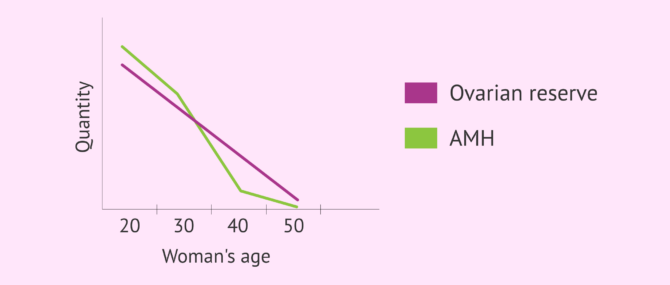
Anti-Müllerian hormone is a good marker of ovarian reserve—that is, the number of eggs available to a woman at a given point in her life.
Therefore, as a woman approaches menopause and her ovarian reserve decreases, her anti-Müllerian hormone level will also decrease. Consequently, the anti-Müllerian hormone level in a menopausal woman will be close to 0.
Despite this, older women with low anti-Müllerian hormone levels may still become mothers thanks to IVF with egg donation.
Read the full article on: What Is Menopause? – Age, Causes, Symptoms & Treatment ( 80).

Marta Barranquero Gómez
B.Sc., M.Sc.
Graduated in Biochemistry and Biomedical Sciences by the University of Valencia (UV) and specialized in Assisted Reproduction by the University of Alcalá de Henares (UAH) in collaboration with Ginefiv and in Clinical Genetics by the University of Alcalá de Henares (UAH).
License: 3316-CV

