IVF with retrograde ejaculation: the secret to achieving pregnancy
A recent investigation led by specialists Haiqing Deng and Jun Zhang, from Yichang Central People's Hospital in China, has shed light on one of the most challenging conditions in male fertility: complete retrograde ejaculation.
Through their study, they have evaluated which is the most effective technique to achieve a successful pregnancy through In Vitro Fertilization (IVF), comparing two different ways of obtaining sperm that will change the way this diagnosis is approached.
The different sections of this article have been assembled into the following table of contents.
Contents
- 1.
- 2.
- 3.
- 4.
- 5.
- 6.
What is retrograde ejaculation?
Retrograde ejaculation is an ejaculatory dysfunction in which semen, instead of being expelled through the urethra to the outside during climax, is partially or totally redirected into the urinary bladder.
When there is no expulsion of semen, we speak of complete retrograde ejaculation, which translates directly into a severe fertility problem by preventing the natural arrival of sperm to the egg.

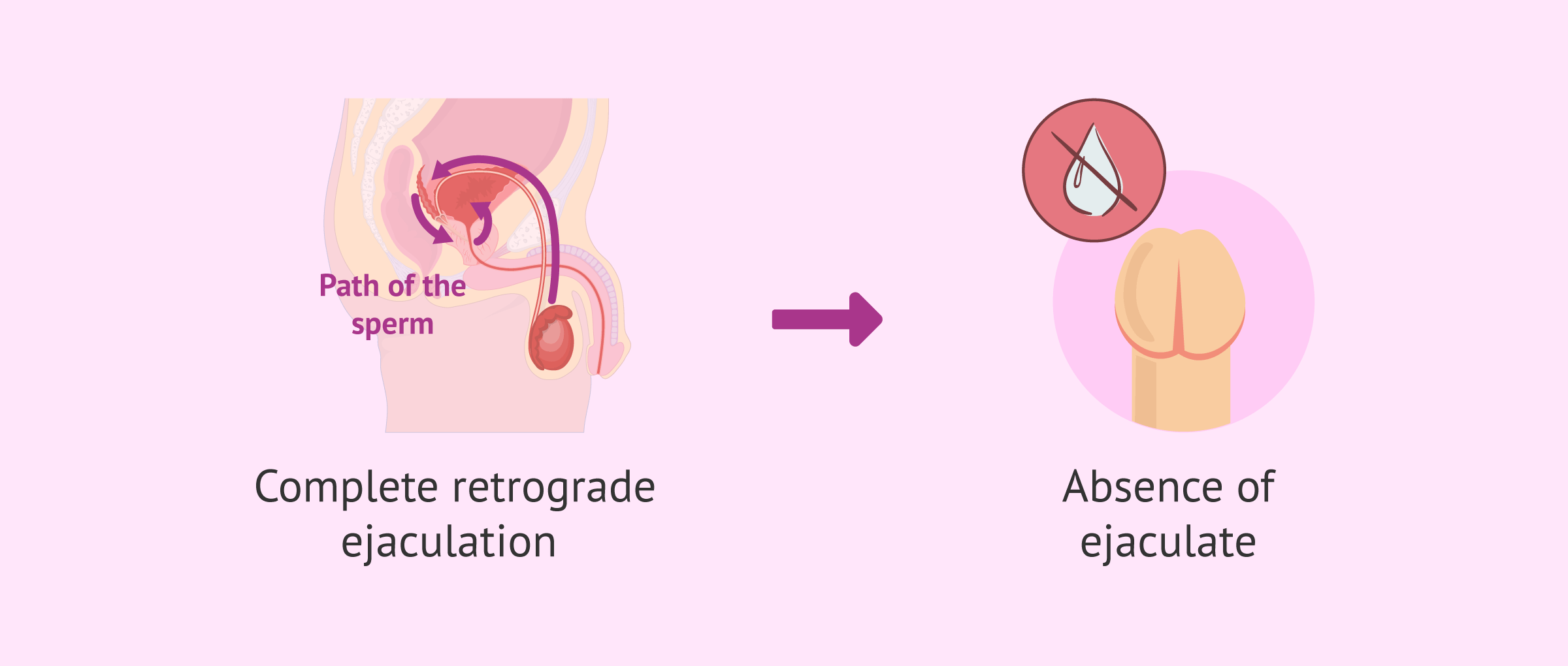
This disorder can be caused by various medical factors, with diabetes, the use of certain medications, and pelvic surgeries being the main triggers.
Since natural conception is impossible, assisted reproduction techniques such as IVF become the main route to starting a family when there is complete retrograde ejaculation.
Sperm origin: urine or testicle?
When a man presents with retrograde ejaculation, the assisted reproduction clinic faces the challenge of collecting sperm for the IVF cycle. The two methods evaluated in the study to achieve this are:
- Sperm recovered from urine: requires the patient to alkalize his urine days before by taking sodium bicarbonate. After ejaculating, the first urine is collected and processed in the laboratory to rescue the sperm that ended up in the bladder.
- Testicular sperm: consists of a minimally invasive surgical technique under local anesthesia, where sperm are extracted directly from the testicle by aspiration with a fine needle (TESA).
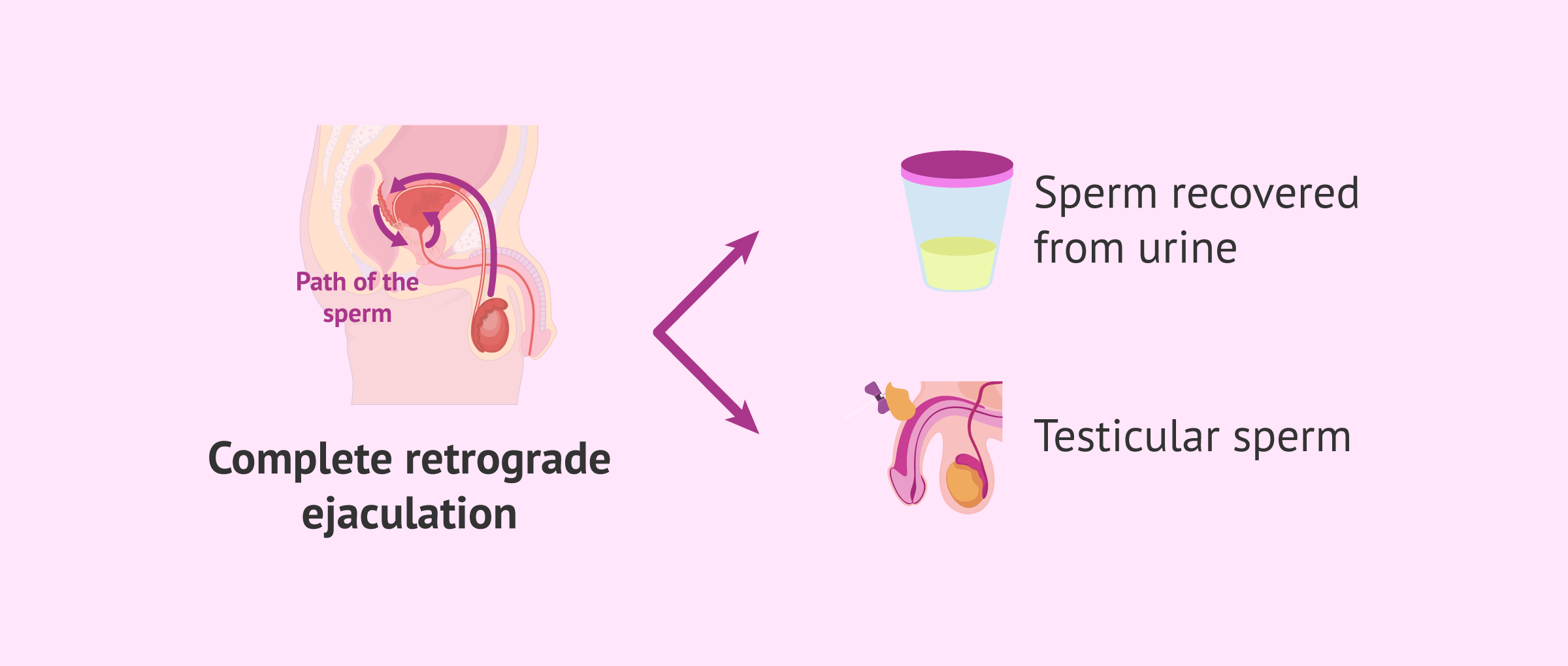
Although both methods allow sperm to be obtained from a male with retrograde ejaculation, the results in the embryology laboratory are very different and decisive for the success of the IVF cycle.
The success of testicular sperm in IVF
The study analyzed the IVF cycles of patients who used both techniques, revealing an advantage for sperm extracted directly from the testicle compared to that rescued from urine. Clinical data showed that the group using testicular sperm achieved significantly higher success rates:
- Normal fertilization rate: 86.11% with testicular sperm versus 72.84% with urine.
- High-quality embryos: 29.03% versus 13.79%.
- Clinical pregnancy rate: multiplied, achieving 60.87% compared to 27.78% in the urine group.
- Live birth rate: 52.17% achieved birth, compared to 16.67% in the urine group.
These results suggest that the use of testicular sperm facilitates better early embryonic development.
Why urine damages sperm
It is reasonable to ask why sperm recovered from urine has a lower quality. The answer lies in the toxic environment that urine poses for sperm.
The high concentration (osmolality) and natural acidic pH of urine cause almost instantaneous and irreversible damage to sperm. This generates an osmotic shock that damages their membranes and alters their fertilizing capacity, affecting their viability even if they are rescued and washed in the laboratory quickly.
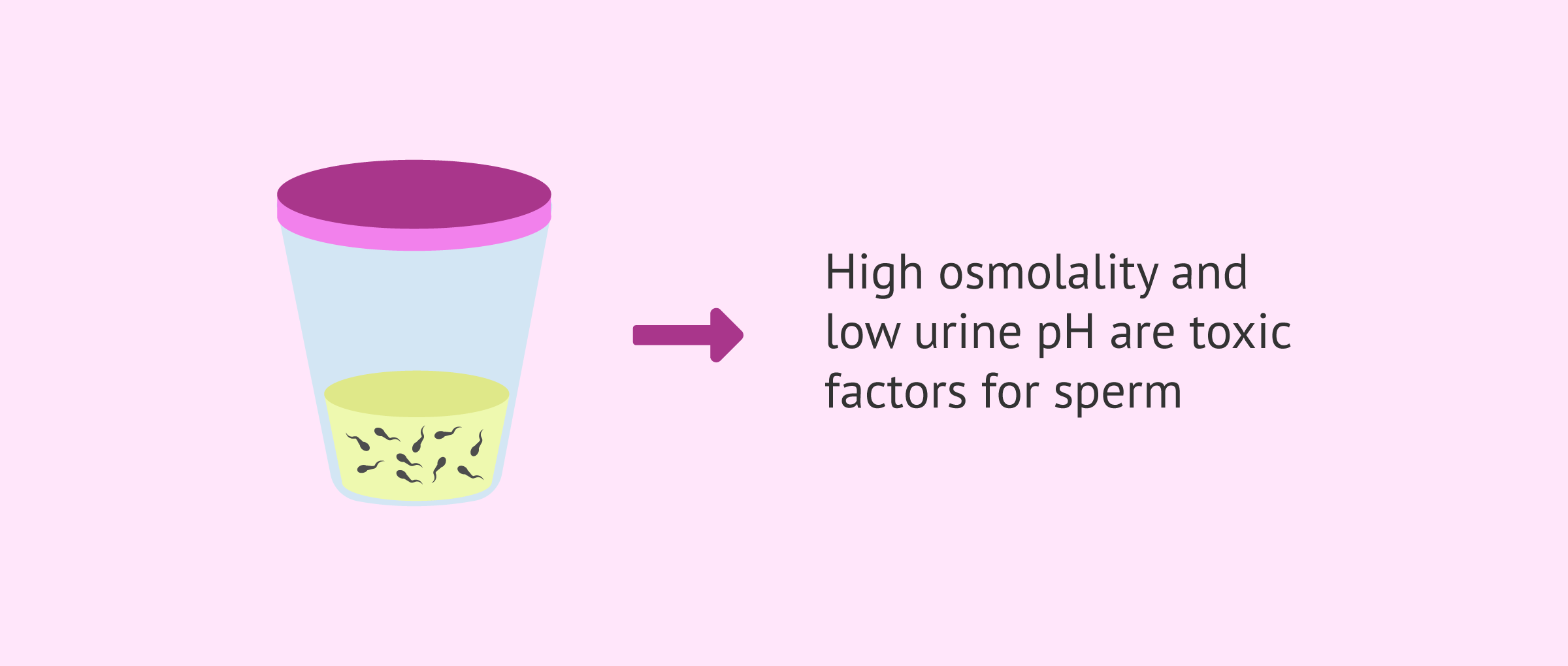
This toxicity would explain why, even if fertilization occurs, the embryos formed tend to be of lower quality and, consequently, achieve fewer ongoing pregnancies.
Conclusion on the best alternative
Based on the evidence from this study, the use of testicular sperm is superior to urine recovery for men suffering from complete retrograde ejaculation and seeking to become fathers through IVF.
Direct intervention, although minimally invasive, protects the sperm from the harmful environment of urine, thus improving the chances of success.
We make a great effort to provide you with the highest quality information.
🙏 Please share this article if you liked it. 💜💜 You help us continue!
References
Deng H, Zhang J. Clinical outcomes of in vitro fertilization using testicular sperm versus urinary-recovered sperm in men with complete retrograde ejaculation: A single-center, retrospective, comparative study. Medicine (Baltimore). 2026 May 29;105(22):e49120. doi: 10.1097/MD.0000000000049120. PMID: 42216385; PMCID: PMC13225550. (View)