The incredible beta hCG data that defines pregnancy success
The wait after an embryo transfer until the pregnancy test, commonly known as the "two-week wait", is one of the moments that generates the most uncertainty in assisted reproduction treatments. However, science sheds new light to provide faster answers.
A recent investigation carried out by the Northwestern University Feinberg School of Medicine, Northwestern University, and the Biostatistics Collaboration Center, and led by authors Lydia M. Hughes, Adrienne Schuler, Maxwell Sharmuk, Jacob Michael Schauer, Mary Ellen Pavone, and Lia A. Bernardi, has identified very precise parameters to predict an ongoing pregnancy.
This study shows that the early evaluation of the beta hCG hormone is a good predictor of a live birth after the transfer of a single embryo.
The different sections of this article have been assembled into the following table of contents.
Contents
- 1.
- 2.
- 3.
- 4.
- 5.
The early value of the hCG hormone
When conception occurs and the embryo manages to implant, the trophoblast (the structure that will give rise to the placenta) begins to secrete human chorionic gonadotropin hormone, clinically known as hCG. This hormone can be detected in maternal blood approximately 6 to 8 days after the egg has been fertilized.
After the pregnancy test, it is usual to wait for the 6-week ultrasound to detect the heartbeat. However, specialists have confirmed that monitoring how beta hCG levels rise in the blood in the first few days could provide information about the evolution of the pregnancy weeks in advance.

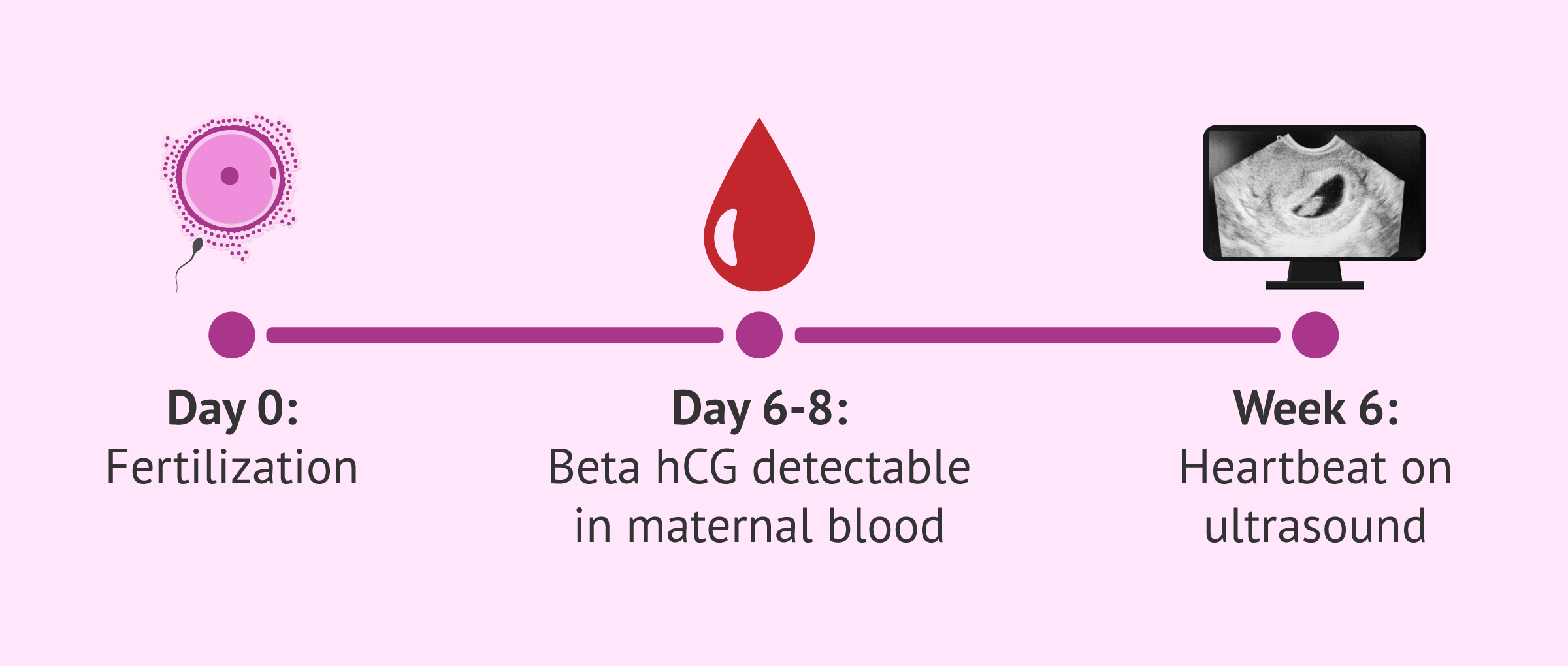
In fact, this retrospective analysis evaluated over a thousand cycles of patients who underwent in vitro fertilization (IVF) with single embryo transfer. It analyzed what figures marked the real difference between a successful cycle and one that did not reach full term.
Two rules to predict pregnancy
The team determined two fundamental rules that act as powerful markers of embryo viability after ovarian puncture. Meeting these milestones improves the chances of giving birth.
- The "double" rule: beta hCG levels must at least double within a 48-hour period. The study found that when the hormone doubled in this time, the live birth rate exceeded 80%.
- The "reach 100" rule: the hormone level must be equal to or greater than 100 mIU/ml by 15 days after the eggs are retrieved. Achieving this value was also associated with a live birth rate of over 81%.
Furthermore, when both conditions occurred at the same time in a pregnancy (the hormone doubled and also exceeded 100 mIU/ml 15 days after egg retrieval), the probability that the pregnancy would end with the birth of a live newborn rose above 85%. Conversely, if 100 mIU/ml was not reached on day 15, the live birth probability dropped to around 22%.
The effect of BMI on results
Another relevant discovery within the research has to do with how the maternal body metabolizes and reflects these hormonal values depending on the Body Mass Index (BMI). The analyses showed that there is an inverse relationship between BMI and the beta hCG levels detected in blood.
Women with a body mass index equal to or greater than 30 whose cycle ended in a live birth presented significantly lower beta hCG figures on days 13 and 15 compared to pregnant women whose BMI was below 25.
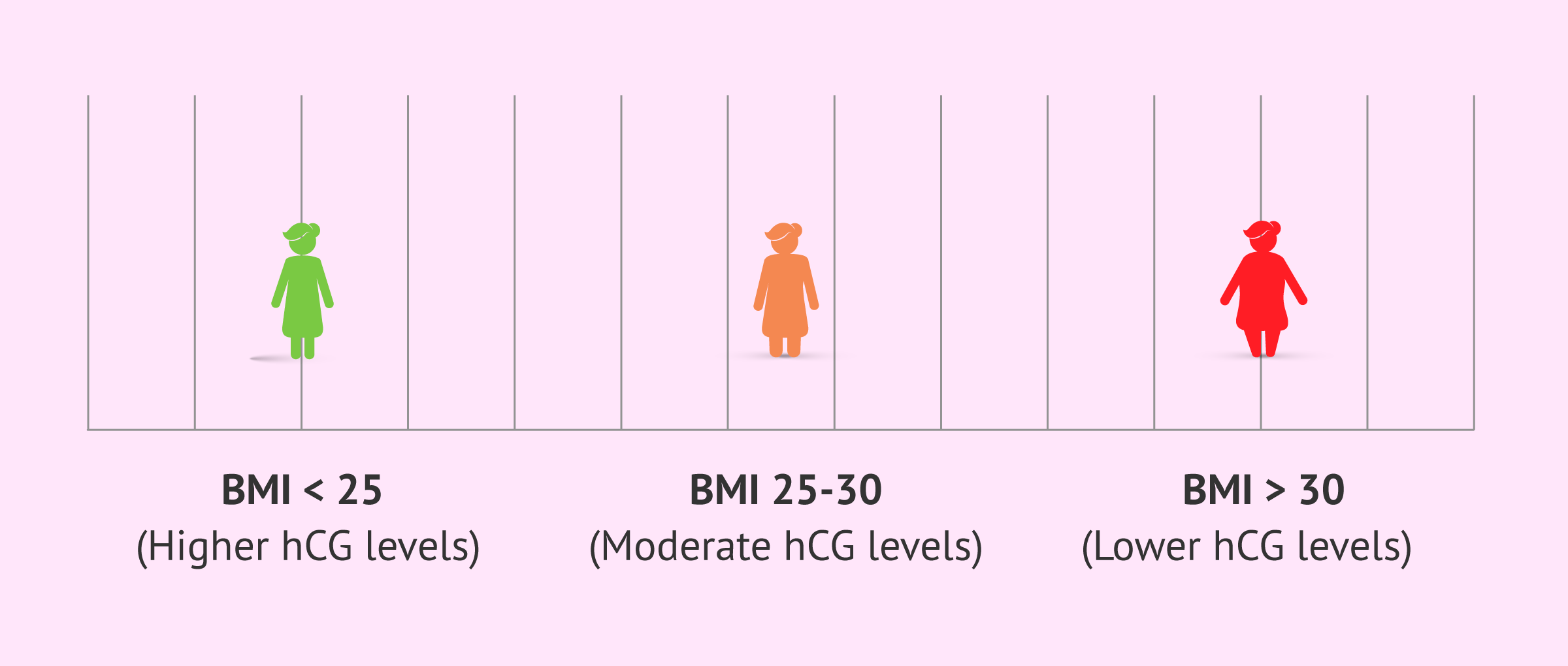
Despite this initial difference in the hCG values measured by the laboratory, the statistical model determined that the hormone's ability to increase and evolve properly continued to predict the birth of a healthy baby regardless of maternal weight.
Differences according to embryo type
The study also shed light on how the developmental stage of the embryo at transfer influences these markers. It was found that embryos transferred in the blastocyst stage (day 5 of development) showed notably higher beta hCG levels than those transferred early in the cleavage stage (day 3) when measured on days 13 and 15 after ovarian puncture.
However, the study determined that variables such as embryo freezing or the use of donor eggs (egg donation) did not affect the evolutionary levels of the hormone in successful pregnancies.
We make a great effort to provide you with the highest quality information.
🙏 Please share this article if you liked it. 💜💜 You help us continue!
References
Hughes LM, Schuler A, Sharmuk M, Schauer JM, Pavone ME, Bernardi LA. Early β-hCG levels predict live birth after single embryo transfer. J Assist Reprod Genet. 2022 Oct;39(10):2355-2364. doi: 10.1007/s10815-022-02606-w. Epub 2022 Sep 8. PMID: 36074224; PMCID: PMC9596620. (View)