
A recent systematic review conducted by researchers Charalampos Voros, Menelaos Darlas, Diamantis Athanasiou, Antonia Athanasiou, Aikaterini Athanasiou, Kyriakos Bananis, Georgios Papadimas, Charalampos Tsimpoukelis, Athanasios Gkirgkinoudis, Ioakeim Sapantzoglou, Ioannis Papapanagiotou, Dimitrios Vaitsis, Aristotelis-Marios Koulakmanidis, Vasileios Topalis, Nikolaos Thomakos, Marianna Theodora, Panagiotis Antsaklis, Fotios Chatzinikolaou, Hans Atli Dahl, Georgios Daskalakis, and Dimitrios Loutradis, analyzes the accuracy of non-invasive preimplantation genetic testing (niPGT) compared to traditional embryo biopsy.
This important study has had the collaboration of several prestigious institutions, including the 1st Department of Obstetrics and Gynecology of the 'Alexandra' General Hospital (National and Kapodistrian University of Athens), IVF Athens Reproduction Center, King's College Hospitals NHS Foundation Trust, Athens Medical School, Laboratory of Forensic Medicine and Toxicology of the Aristotle University of Thessaloniki, Amplexa Genetics A/S, and Fertility Institute-Assisted Reproduction Unit.
Provided below is an index with the 7 points we are going to expand on in this article.
What is non-invasive preimplantation genetic testing (niPGT)?
The selection of chromosomally healthy embryos is a step sometimes performed in assisted reproduction treatments. Traditionally, to determine the chromosomal status of the embryo, a trophectoderm biopsy is performed, which involves extracting a few cells from the outer layer of the blastocyst. Although this technique is highly accurate, it is an invasive procedure that requires direct manipulation of the embryo.
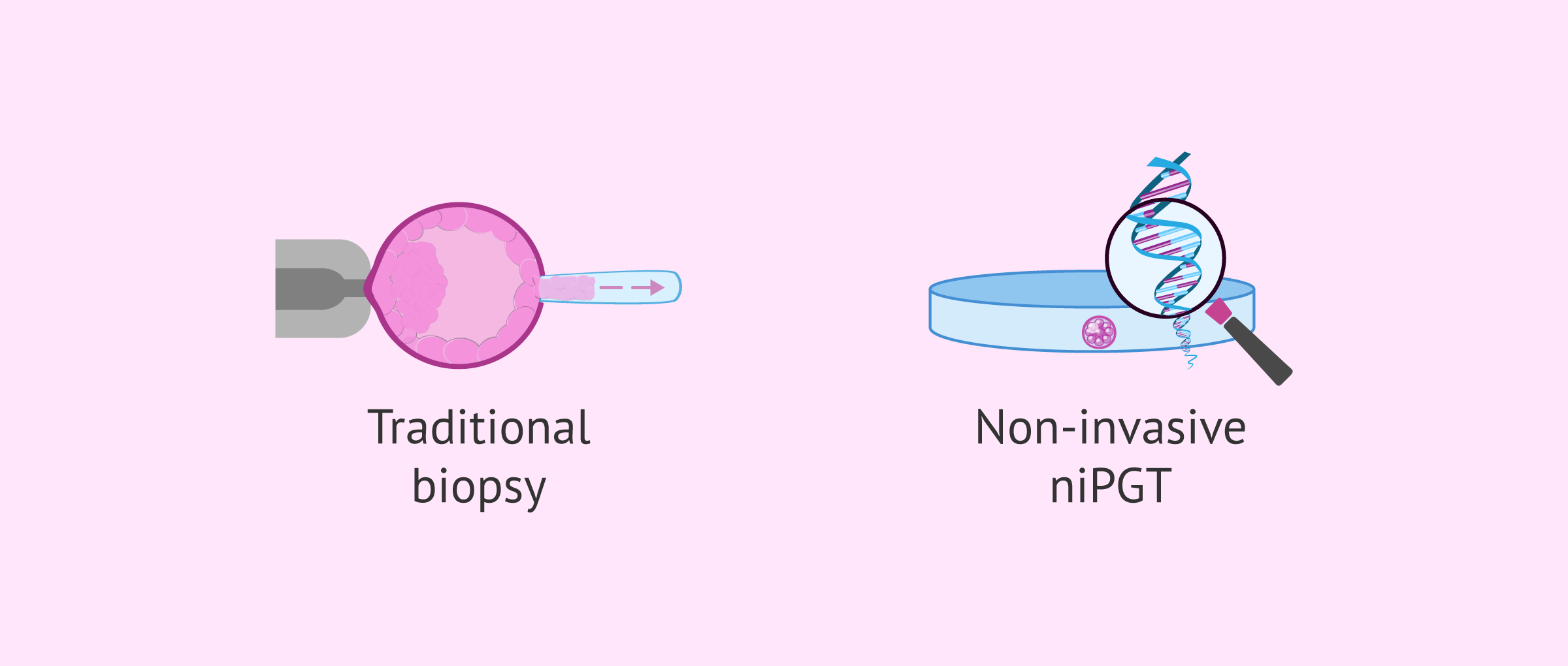
As an alternative, non-invasive preimplantation genetic testing, known as niPGT, has emerged. This technique analyzes the cell-free DNA (cfDNA) that the embryo naturally releases into the culture medium or the blastocoel fluid during its development in the laboratory. In this way, it is possible to study its genetics without the need to directly extract cells.
Advantages of the niPGT test
The main benefit of this technique is its less invasive nature, which reduces mechanical stress on the embryo and eliminates the theoretical risk of damaging its viability. Recent research shows very promising results:
- Good concordance: studies indicate that niPGT results have a concordance rate of between 60% and 90% compared to traditional biopsy.
- Comparable success rates: in several trials, implantation and clinical pregnancy rates have been very similar to those obtained with the invasive method, although results are not consistent and further trials are required.
- Natural DNA release: the embryo releases this genetic material through biological processes such as the secretion of extracellular vesicles and natural cellular apoptosis.
Current challenges of this technique
Despite its great advantages, niPGT still faces technical and biological challenges that limit its widespread clinical use as a single diagnostic test.
Among the main obstacles are the following limiting factors:
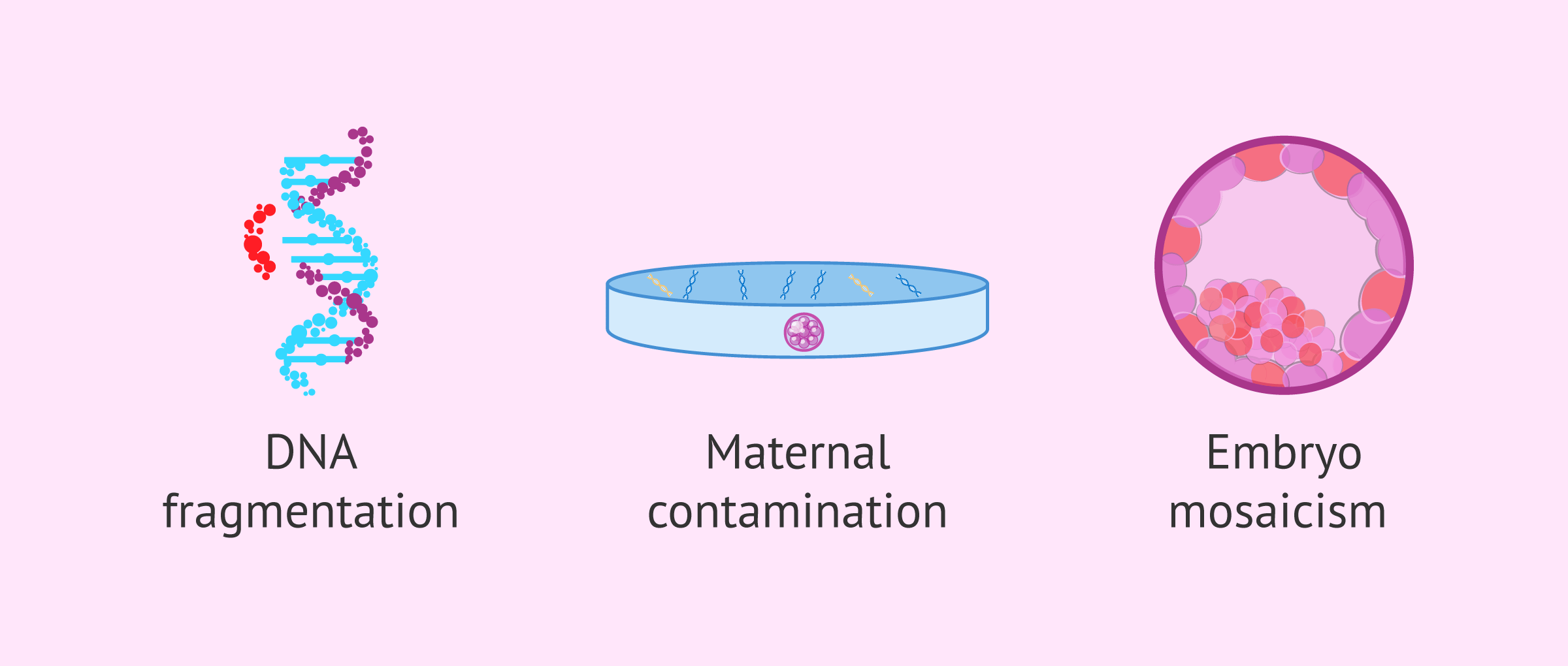
- Low quantity and fragmentation of DNA: the amount of genetic material recovered from the culture medium is usually scarce and highly fragmented (with pieces of barely 50 to 200 base pairs), making its reading and clinical interpretation difficult.
- Maternal DNA contamination: it is common for maternal biological remains (such as the cumulus cells that surrounded the egg) to be left in the culture medium. This can mix the mother's DNA with that of the embryo, leading to erroneous results.
- Mosaicism detection: identifying mosaic embryos (those that have a mixture of normal and altered cells) is complicated with this technique, as the DNA floating in the culture medium does not always reflect the true proportion of cells in the entire embryo.
Future of embryo selection
Currently, experts believe that niPGT should not immediately replace traditional biopsy, but rather be used as a complementary tool to prioritize which embryos to transfer first, especially in cycles where performing an invasive biopsy is not viable.
The future of reproductive genetics relies on standardizing laboratory protocols and improving bioinformatic systems that separate DNA data. With more large-scale validations, this more embryo-friendly alternative could achieve the reliability necessary for universal use.
Community and Support
At inviTRA we work to make monthly and rigorous information accessible to everyone. If this article has helped you, consider supporting us so we can continue accompanying more people on their journey to parenthood.
References
Voros C, Darlas M, Athanasiou D, Athanasiou A, Athanasiou A, Bananis K, Papadimas G, Tsimpoukelis C, Gkirgkinoudis A, Sapantzoglou I, Papapanagiotou I, Vaitsis D, Koulakmanidis AM, Topalis V, Thomakos N, Theodora M, Antsaklis P, Chatzinikolaou F, Dahl HA, Daskalakis G, Loutradis D. Evaluation of the Effectiveness and Accuracy of Non-Invasive Preimplantation Genetic Testing (niPGT) Compared to Invasive Embryo Biopsy. Biomedicines. 2025 Aug 18;13(8):2010. doi: 10.3390/biomedicines13082010. PMID: 40868262; PMCID: PMC12383400. (View)


