Anti-Müllerian Hormone: Is a single ovarian reserve test enough?
A recent scientific study carried out by researchers Yavuz Emre Şükür, Batuhan Aslan, Necati Berk Kaplan, Musa Doğru, Batuhan Özmen, Murat Sönmezer, Bülent Berker, Cem Somer Atabekoğlu, and Ruşen Aytaç, from the Department of Obstetrics and Gynecology at Ankara University Faculty of Medicine and the Reproductive Health Research Center at Ankara University, sheds new light on the anti-Müllerian hormone (AMH).
Although this hormone is the most widely used marker to estimate ovarian reserve and predict success in fertility treatments, the study reveals that its levels are not as stable as historically believed.
The different sections of this article have been assembled into the following table of contents.
Contents
- 1.
- 2.
- 3.
The variation of anti-Müllerian hormone (AMH)
Classically, anti-Müllerian hormone has been considered a fixed value, independent of the timing of the menstrual cycle. However, clinical data shows that it can undergo significant fluctuations.
When measuring the hormone in two consecutive menstrual cycles, an average variation of 44.3% was observed in the patients' levels. This instability has direct consequences on fertility diagnosis:
- Almost 20% of patients are reclassified into a different category (between normal response and poor responder) based on a second measurement.
- While the absolute change in serum AMH levels was greater in patients with a normal response, the proportional change was more significant in patients with a poor response.
- Relying on a single analysis can lead to an erroneous classification of ovarian reserve.

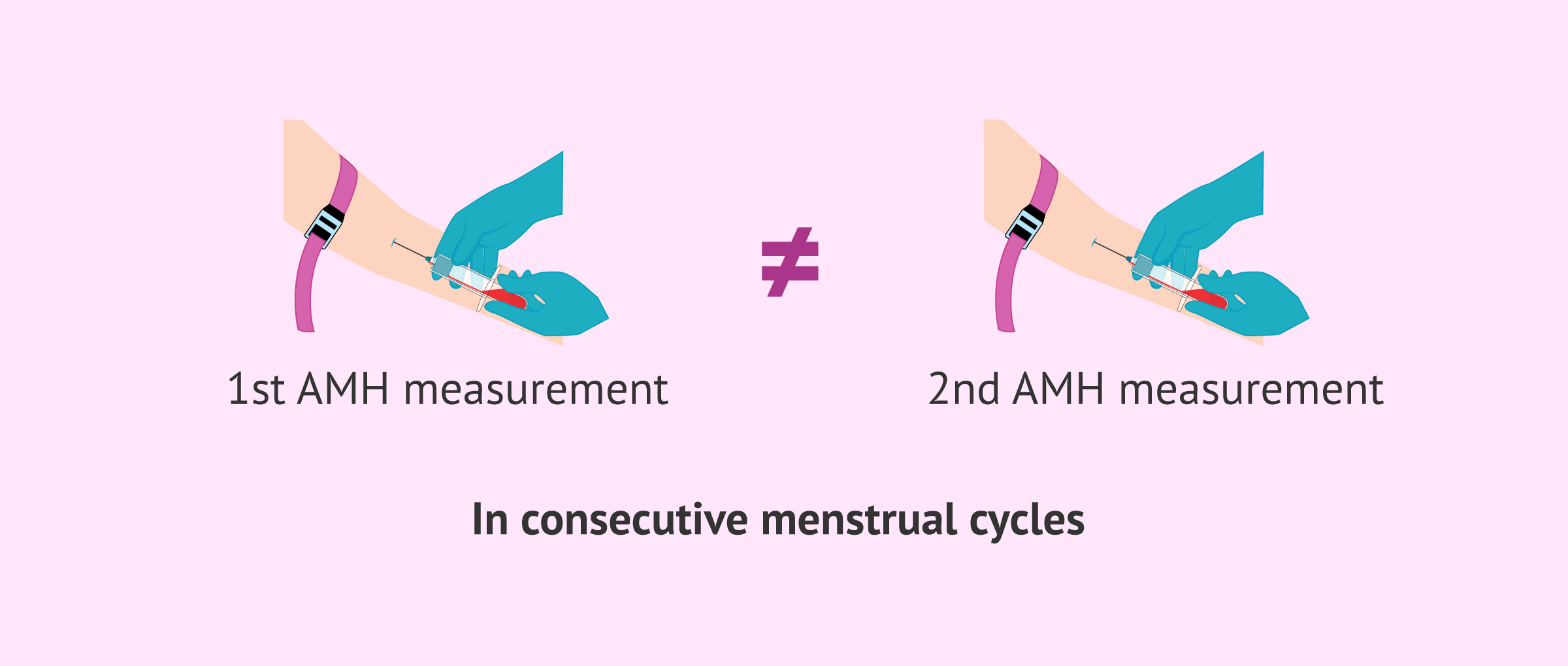
Thus, basing the entire reproductive strategy on a single blood test from previous months may not reflect the woman's actual ovarian reality when starting her in vitro fertilization treatment.
When to take the fertility test
Given these findings, the medical team suggests an adaptation in how ovarian stimulation treatments are initiated.
Measuring the anti-Müllerian hormone in the early follicular phase of the same cycle in which stimulation is to begin provides a much more accurate prediction.
This change in approach brings important clinical advantages:
- It improves the correlation with the total number of eggs that will be retrieved during the puncture.
- It predicts more reliably how many of those eggs will be mature (MII oocytes) and, therefore, suitable for fertilization.
- It helps gynecologists precisely adjust the medication dose needed.
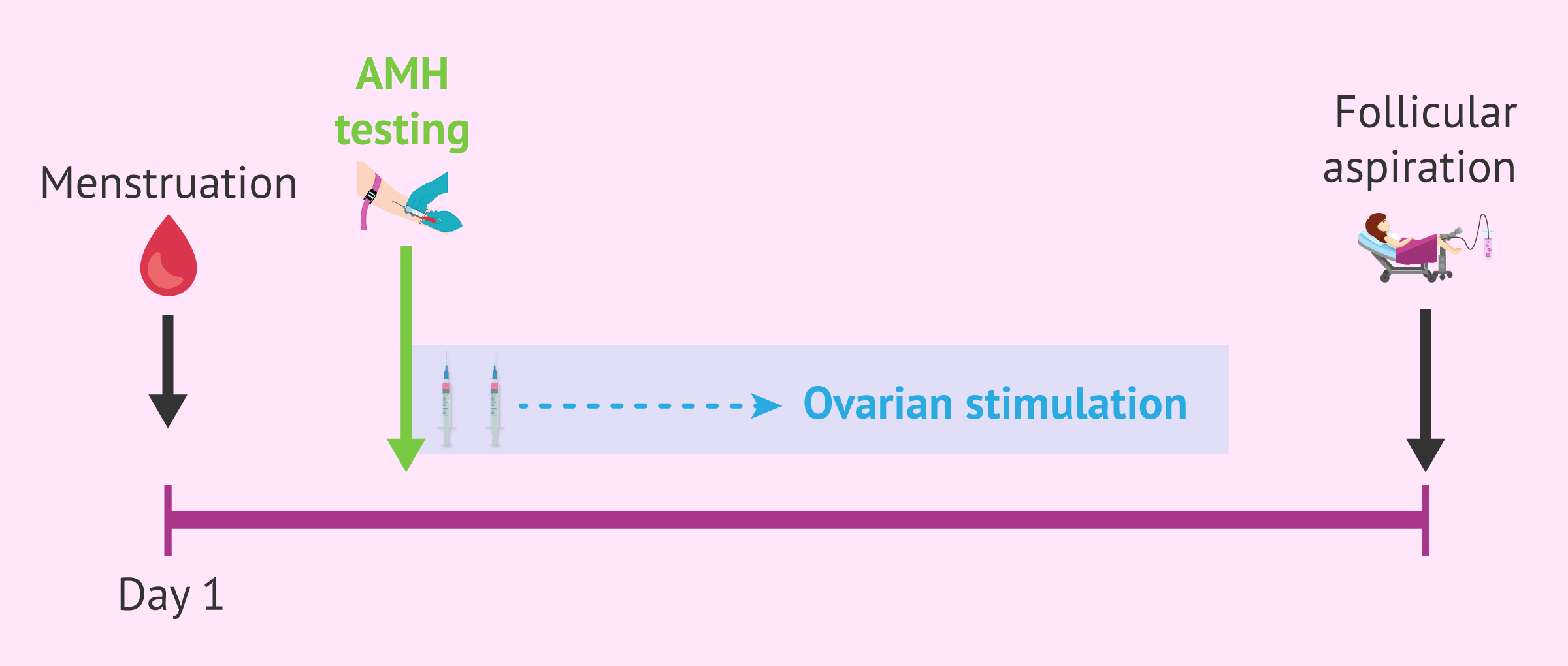
In summary, repeated and updated measurements of anti-Müllerian hormone are a vital clinical tool. Measuring this value at the right time avoids misclassifications, reduces uncertainty, and helps design much more personalized and effective assisted reproduction protocols to achieve the desired pregnancy.
We make a great effort to provide you with the highest quality information.
🙏 Please share this article if you liked it. 💜💜 You help us continue!
References
Şükür YE, Aslan B, Kaplan NB, Doğru M, Özmen B, Sönmezer M, Berker B, Atabekoğlu CS, Aytaç R. Inter-cycle variability of anti-Müllerian hormone: implications for predicting controlled ovarian stimulation cycle outcomes. J Ovarian Res. 2024 Oct 25;17(1):209. doi: 10.1186/s13048-024-01517-x. PMID: 39456057; PMCID: PMC11515343. (View)