
A recent international study led by Jun S. Lai, Shan Xuan Lim, Sheila J. Barton, Elizabeth Huiwen Tham, Sarah El-Heis, Benjamin B. Albert, Caroline E. Childs, Cathryn A. Conlon, Marjorelee T. Colega, Vanessa Cox, Heidi Nield, See Ling Loy, Wayne S. Cutfield, Mary F.-F. Chong, Keith M. Godfrey and Shiao-Yng Chan has analyzed how preconception nutrition influences the time it takes to achieve a pregnancy.
These researchers belong to centers such as the Agency for Science, Technology and Research (Singapore), National University of Singapore, National University Health System, University of Southampton, University Hospital Southampton NHS Foundation Trust, The University of Auckland, Massey University, KK Women's and Children's Hospital and Duke-NUS Medical School.
Time to conception is often used as a key indicator of a woman's fertility. To better understand this relationship, the research evaluated the dietary patterns of women planning to conceive in the United Kingdom, Singapore, and New Zealand, who had no known fertility problems.
Provided below is an index with the 5 points we are going to expand on in this article.
The ideal diet for conceiving
The results of this study showed that a diet with a high presence of plant-based foods significantly improves the chances of achieving pregnancy. The study highlighted a specific dietary pattern that was highly beneficial, consisting mainly of:
- A high consumption of vegetables, leafy greens, and legumes.
- The daily intake of all kinds of fruits.
- The regular presence of nuts in the diet.
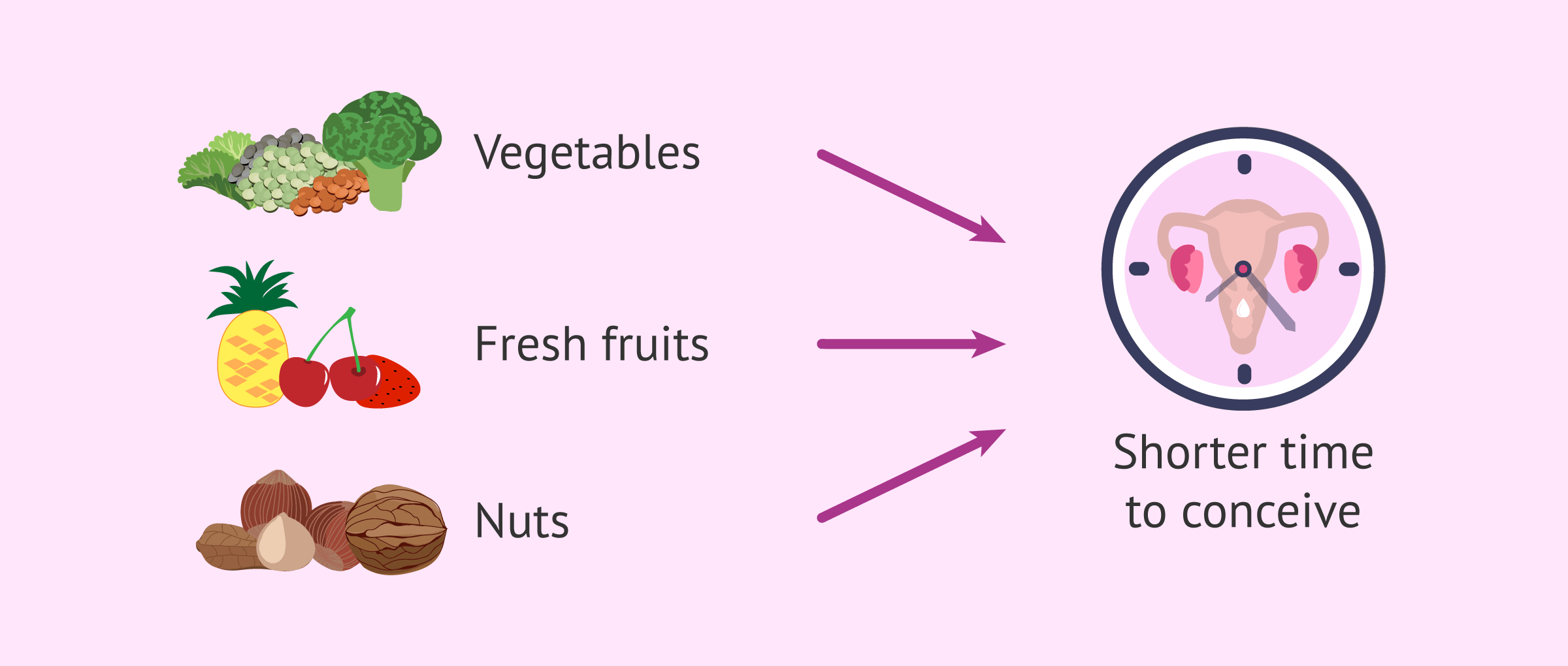
Women who consistently followed this dietary pattern managed to shorten the time needed to achieve a pregnancy, compared to those who consumed very low amounts of these healthy foods.
In fact, following this diet rich in vegetables and nuts increased the chances of conceiving within a year in women with no known fertility problems.
The impact of other diets
On the other hand, the researchers also analyzed the consequences of a diet based on less healthy products. This second evaluated dietary pattern was characterized by the frequent consumption of french fries, processed meats, and sugary drinks.
When analyzing the data from the entire study population, no clear or statistically significant association was observed between this processed food pattern and the time needed to conceive.
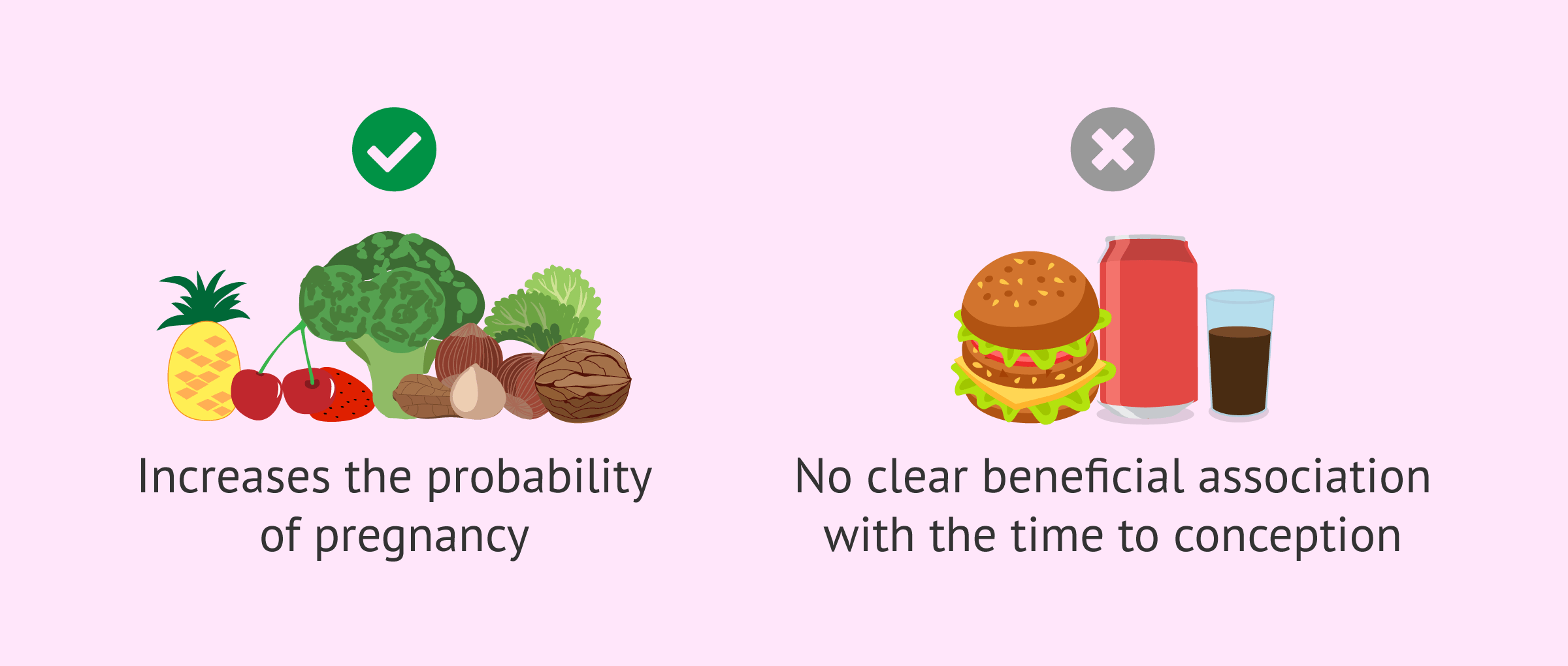
In conclusion, adopting a diet rich in vegetables, fruits, and nuts has proven to be a highly effective strategy for fertility, especially in those areas or populations where the habitual consumption of these foods is usually low.
Meta-descripción: Discover how a diet rich in vegetables, fruits, and nuts can shorten the time to achieve pregnancy, according to a recent international study.
Community and Support
At inviTRA we work to make monthly and rigorous information accessible to everyone. If this article has helped you, consider supporting us so we can continue accompanying more people on their journey to parenthood.
References
Lai JS, Lim SX, Barton SJ, Tham EH, El-Heis S, Albert BB, Childs CE, Conlon CA, Colega MT, Cox V, Nield H, Loy SL, Cutfield WS, Chong MF, Godfrey KM, Chan SY. Preconception dietary patterns and time-to-conception in the high-income multi-country NiPPeR study. Nutr J. 2026 Jan 23;25(1):23. doi: 10.1186/s12937-026-01283-0. PMID: 41578268; PMCID: PMC12910744. (View)
Author

Find the latest news on assisted reproduction in our channels.

