What is the price of a complete semen analysis in Spain?
A seminogram or spermiogram is a study carried out on the male whose objective is to analyze the quality of the semen. The main purpose of this analysis is to assess the reproductive capacity of the male.
It is a simple male fertility test whose cost varies depending on the semen parameters analyzed and the assisted reproduction clinic or laboratory where it is performed. In addition, other complementary tests can be performed to assess the quality of the semen, which would increase the price considerably.
The different sections of this article have been assembled into the following table of contents.
Contents
- 1.
- 2.
- 3.
- 3.1.
- 3.2.
- 4.
- 4.1.
- 4.2.
- 4.3.
- 4.4.
- 4.5.
- 4.6.
- 5.
- 6.
What does a basic semen analysis consist of?
A basic or general semen analysis is a semen analysis that determines parameters such as:
- Color analysis.
- PH analysis.
- Semen volume.
- Viscosity study.
- Study of sperm motility and vitality.
- Spermatozoa morphology.
- Sperm count per milliliter.
- Assessment of sperm count.
Currently, the average price for this type of basic semen analysis is between 50 and 170 euros. However, the cost of a semen analysis may vary from one clinic to another and depending on the tests included.


In some cases, the spermiogram is accompanied by other male fertility tests such as physical examination of the penis and testicles, genetic tests such as karyotyping, etc. All these complementary analyses would increase the cost of the semen analysis.
Assisted procreation, as any other medical treatment, requires that you rely on the professionalism of the doctors and staff of the clinic you choose. Obviously, each clinic is different. Get now your Fertility Report, which will select several clinics for you out of the pool of clinics that meet our strict quality criteria. Moreover, it will offer you a comparison between the fees and conditions each clinic offers in order for you to make a well informed choice.
In addition, the semen analysis report usually includes a visit to assess the results. However, this is not always the case and the price of the test may be increased as well.
Spermiogram + MSC
The motile sperm count (MSC) is a type of analysis that allows the study of sperm quality once the sperm capacitation process has been completed. For this reason, its price is higher, since it combines a basic semen analysis (volume, concentration, viscosity, etc.) with the evaluation of semen quality after training.
Semen capacitation or sperm capacitation is a process by which sperm acquire the ability to fertilize the egg. When a semen sample is to be used in an assisted reproduction treatment (in vitro fertilization or artificial insemination), it will always be subjected to training.

If the REM semen analysis is performed in a male, it is possible to obtain more detailed information about the semen quality of the male and to make a better diagnosis. This is of great importance if the man is to undergo reproductive treatment.
The price of the REM semen analysis varies between 120 and 250 euros, depending on the fertility clinic or laboratory where it is performed. In addition, it will depend on whether it includes only the report of the results or also the interpretation of the results by the specialist.
If you want more information about REM analysis we recommend you to consult the following article: REM Seminogram.
Complementary tests
Other complementary tests can be performed on a semen sample such as the study of sperm DNA fragmentation or FISH on spermatozoa. In this way, a specific analysis and more reliable results of the sperm sample will be obtained.
Sperm DNA fragmentation
It is a test that evaluates the integrity of the genetic material present in semen. For this purpose, possible breaks or lesions in the DNA chains of the spermatozoa are analyzed.
Sperm DNA fragmentation is a very common cause of male infertility, as it can cause difficulty in achieving pregnancy even with normal semen parameter values.
The study of sperm DNA fragmentation is indicated in the following cases:
- Infertility of unknown cause.
- Failures in repeated assisted reproduction techniques.
- Repeated miscarriages.
- Varicocele.
- Poor embryo quality.

The approximate price of the sperm DNA fragmentation test is between 150-250 euros.
FISH of spermatozoa
Fluorescent in situ hybridization (FISH) is a classical cytogenetic technique based on the study of sperm DNA. It uses fluorescent probes that specifically bind to specific chromosomes. Its purpose is to observe the percentage of spermatozoa with abnormal chromosomal endowment and to assess whether or not they exceed the limits considered normal.
The patient must collect a semen sample in the same way as for a seminogram, that is, with a few days of abstinence (3 to 5 days) and the laboratory is in charge of its processing.

The price of FISH on sperm will vary depending on the clinic, but is usually around 200 euros.
If you would like to learn more about this technique, we recommend that you continue reading in the following link: FISH in spermatozoa.
FAQs from users
What are the differences between the REM and the semenogram?
A semenogram and REM are related tests, but they are not the same.
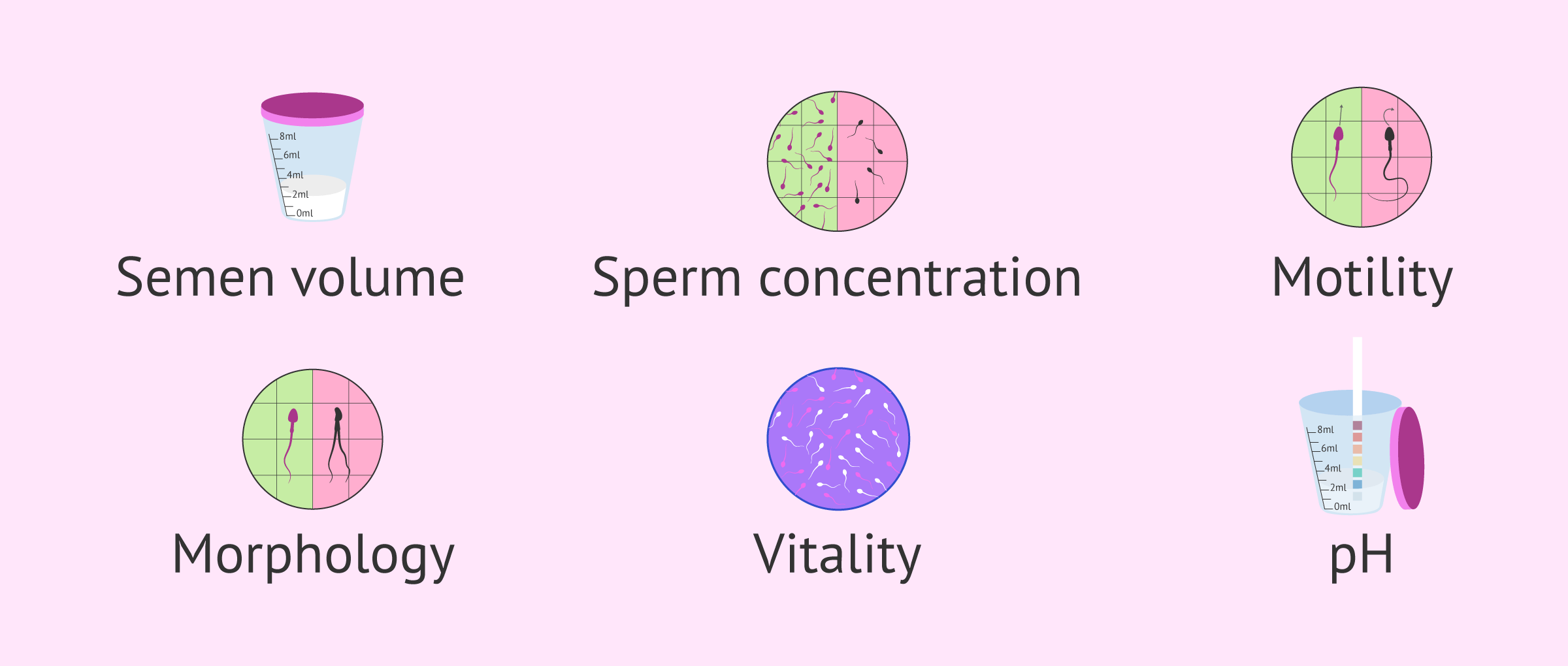
A semenogram —also known as a basic semen analysis— provides an overall assessment of male fertility and is typically the first step in evaluating reproductive potential.
It examines parameters such as:
- Semen volume.
- Sperm concentration.
- Motility.
- Morphology.
- Vitality.
- pH.

REM stands for Recuperación de Espermatozoides Móviles (in Spanish), which translates to Recovered Motile Sperm in English. It is a specialized, preparation technique used in assisted reproduction, often referred to as a "sperm capacitation test".
The result provides the number of motile sperm per milliliter recovered after the washing and centrifugation process of the sample. This parameter is especially important when determining the most appropriate fertility treatment.
In summary, the semenogram offers a complete overview of semen quality, while REM focuses specifically on the number of motile sperm recovered after processing the sample, and plays a key role in treatment planning.
How much does a semen analysis cost?
The cost of a semen analysis or a semen analysis can vary depending on where it is performed, but it is usually around 50 euros for the most basic analysis. However, if the semen analysis includes a study of the motile sperm count (REM) or any other complementary technique, the price will go up.
What tests are included in a complete semen analysis?
The semenogram evaluates framoscopic parameters such as ejaculate volume, pH, viscosity, and microscopic parameters such as concentration, motility, morphology, sperm vitality, etc.
However, nowadays, some assisted reproduction centers have included more advanced studies in their seminograms. This means that they will also take into account parameters such as apoptosis or sperm DNA fragmentation.
Read more
Is it necessary to have a period of abstinence to undergo a seminogram-REM?
Yes, of course it is necessary to have a period of abstinence for a REM semen analysis.
The motile sperm count (REM) is a type of analysis that allows the study of semen quality once the sperm capacitation process has passed. It is the combination of a basic semen analysis (volume, concentration, viscosity, etc.) with the evaluation of semen quality after capacitation.
What does a basic semen analysis include?
A basic semen analysis is a study of semen quality that normally includes macroscopic parameters such as volume, viscosity, pH or color. It also includes microscopic parameters such as motility, vitality, morphology or number of spermatozoa per mL of ejaculate.
How can sperm DNA fragmentation analysis be performed?
Sperm DNA fragmentation analysis can be performed by different techniques, such as TUNEL analysis, Comet, SCD or flow cytometry.
Suggested for you
We have talked about the period of abstinence required to perform a complementary FISH test on spermatozoa. If you want to learn more about it, you can read the article: How does sexual abstinence affect sperm quality?
In addition, if you want more information on what are the normal values obtained in a semen analysis, we recommend that you access the following link: How are semen analysis results and their values interpreted?
We make a great effort to provide you with the highest quality information.
🙏 Please share this article if you liked it. 💜💜 You help us continue!
References
Abo El-Khair, SM, Gaballah, MA, Abdel-Gawad, MM, Ismail, SRM, Elsamanoudy, AZ. Spermatozoal Fractalkine Signaling Pathway Is Upregulated in Subclinical Varicocele Patients with Normal Seminogram and Low-Level Leucospermia. Adv Urol. 2017 Dec 2017:5674237. doi: 10.1155/2017/5674237 (Ver)
Baker DJ (2007). Semen analysis. Clin Lab Sci; 20: 172-187; quiz 188-192 (See)
Kvist U, Björndahl L. ESHRE Monographs: Manual on Basic Semen Analysis. Oxford: Oxford University Press, 2002 (See)
Sigman M, Zini A. (2009). Semen analysis and sperm function assays: what do they mean? Semin Reprod Med; 27: 115-123 (See)