What Diseases Are Dangerous During Pregnancy?
Nowadays, an increasing number of women have to deal with some kind of chronic disease, which is to say, a disease that persists over a long period of time and has no cure.
Some of the most common examples are cardiovascular diseases, cancer, chronic obstructive pulmonary disease, and diabetes.
Chronic diseases do not prevent you from having children. However, women in this situation who get pregnant are often diagnosed with a high-risk pregnancy, as pregnancy may worsen the symptoms of the disease.
The different sections of this article have been assembled into the following table of contents.
Contents
- 1.
- 2.
- 3.
- 4.
- 5.
- 5.1.
- 5.2.
- 5.3.
- 5.4.
- 6.
- 6.1.
- 6.2.
- 6.3.
- 6.4.
- 6.5.
- 7.
- 8.
Cardiovascular diseases
Cardiovascular diseases (CVDs) are associated with problems in the heart and blood vessels. In fact, nowadays they are the leading cause of death worldwide.
During pregnancy, the cardiovascular system must adapt to provide sufficient blood flow to the placenta. This implies that plasma volume increases, cardiac output increases by up to 40% and a state of hypercoagulability occurs (increased tendency to clot).
Although there exists a great variety of CVDs, the following are the ones that can get worse during pregnancy:
- Cardiopathies (heart diseases): serious complications such as heart failure can occur in these patients. Complications can also occur in patients with valvular diseases (diseases of the heart valves and adjacent vessels), mainly in obstructive valvular diseases (with valve stenosis). The heart diseases associated with a higher risk of maternal mortality are: Marfan syndrome, pulmonary hypertension and Eisenmenger syndrome, dilated cardiomyopathy, aortic and mitral stenosis, coarctation of the aorta, valves in functional class III or IV or in atrial fibrillation and carriers of mechanical prosthesis that require anticoagulation.
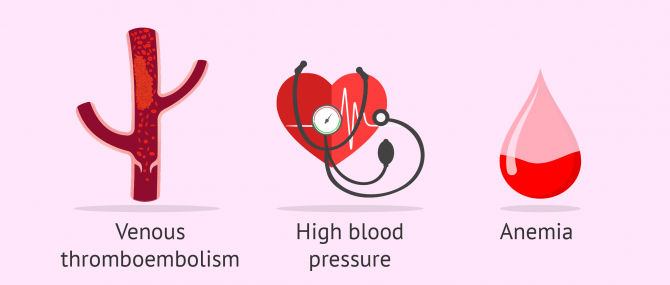
- High blood pressure: In pregnant women with high blood pressure prior to pregnancy, the greatest risk is of developing preeclampsia, which occurs in up to 10-25% of these patients.
- Varicose syndromes will also worsen during pregnancy due to the relaxation of the vein walls, increased flow to the legs and compression of the uterus on the vena cava. This makes pregnant women more vulnerable to varicose veins and in the most severe cases to the formation of thrombi in the blood vessels (venous thromboembolic disease)
- Anemia: is a reduction in the number of red blood cells. The woman may feel tired and suffer from dizziness among other symptoms.

Venereal diseases
Venereal diseases, also known as Sexually Transmitted Diseases (STDs) or Sexually Transmitted Infections (STIs), are transmitted through unprotected sexual contact, although there exist other routes of infection.
TORCH syndrome is the medical term used to refer to a group of bacterial, viral, or parasitic diseases that can be transmitted from mother to baby during pregnancy.
The abbreviation TORCH includes Toxoplasmosis, Other (syphilis and HIV), Rubella, Cytomegalovirus (CMV), and Herpes infections.
There exists no definitive cure for viral infections, including HIV. As a matter of fact, they are the ones with the highest number of risks associated when it comes to getting pregnant, since transmission can occur through two pathways: horizontal (to partner) and vertical (to offspring).
Fetuses and newborns with TORCH syndrome typically develop the following diseases: intrauterine growth restriction (IUGR), hydrocephalus, microcephaly, pneumonitis, calcification in the brain, heart defects, hemolytic anemia, glaucoma, etc.
Autoimmune diseases
Autoimmune diseases affect the immune system, that is, the immune cells (lymphocytes, leukocytes...) do not carry out their function properly.
This type of diseases are associated with pregnancy complications, and some of them lead to recurrent miscarriage, including:
- Rheumatoid arthritis (RA)
- Thrombophilia
- Systemic lupus erythematosus (SLE)
- Myasthenia gravis
- Celiac disease


Patients with thrombophilias will have a basic tendency to arterial and venous thrombosis. Since pregnancy and the puerperium are periods of increased thrombotic risk, it is common for women with this undiagnosed pathology to debut with a thrombotic episode at this time.
Endocrine disorders
Endocrine disorders are those affecting the production of hormones, or causing the endocrine system function to be altered.
Diabetes mellitus is the most common chronic endocrine disorder present in the world's population, and it characterizes for high blood sugar levels.
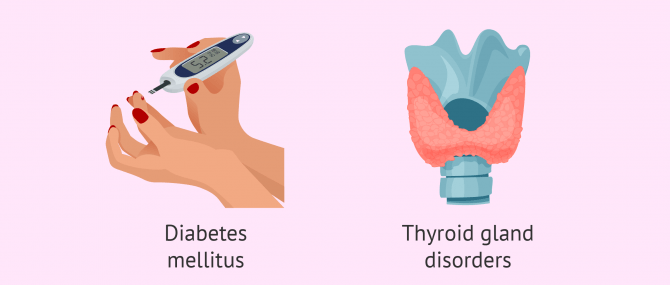
Also, thyroid gland problems can lead to endocrine disorders like hypothyroidism or hyperthyroidism.
Other diseases
Apart from the aformentioned diseases, there are other chronic illnesses which can worsen during pregnancy.
Respiratory diseases
Pregnancy also modifies lung function by producing a physiological state of hyperventilation.
Therefore, certain illnesses such as asthma can worsen during pregnancy.
Pregnancy increases the risk of acute asthmatic crises, especially as a result of viral respiratory infections.
Digestive diseases
In pregnant women, progesterone produces a relaxation of the smooth musculature of the digestive tract, so that the intestinal transit is slowed down causing alterations such as constipation. In addition, due to the increase in the size of the uterus, episodes of gastro-oesophageal reflux worsen.
Pregnancy also increases the risk of gallstone formation, so that biliary colic may occur more frequently during pregnancy.
Musculoskeletal pathologies
The symptoms of scoliosis are often worse during pregnancy, especially at the end of the pregnancy due to the overloaded spine.

The same is true for women with herniated discs, spondylitis (inflammation of the vertebrae) or spondylolisthesis (displacement of one vertebra from adjacent ones).
Neurological pathologies
In women with epilepsy, hormone levels can lead to seizures, so optimal pre-pregnancy and gestational control is very important.
FAQs from users
What chronic diseases in women could get worse during a pregnancy?
Most chronic diseases will be at risk of worsening during pregnancy, so close monitoring before, during and after pregnancy will be essential.
In some cases, pregnancy may even be contraindicated because of the risks to the mother.
What are intercurrent conditions in pregnancy?
Intercurrent conditions observed during pregnancy are not caused directly by the pregnancy itself, but it can get worse as a consequence of this new state in the woman.
Additionally, these diseases can lead to complications and become a potential risk for the pregnancy.
Can STDs be transmitted from mother to baby during pregnancy?
Yes, some Sexually Transmitted Diseases (STDs) can be transmitted from mother to fetus during pregnancy or at birth. Some examples are gonorrhea, chlamydia, syphilis, and HIV.
That is the reason why it is crucial for all pregnant women to do all checkups and serologies recommended. STDs can become severe, or even lead to stillbirth.
Which diseases of pregnancy affect the fetus directly?
Any disease the pregnant woman suffers while pregnant affects the baby to some extent. Among the most common signs and symptoms, we can mention intrauterine growth restriction, risk of preterm birth, C-section, mental retardation, etc.
Thus, taking care of yourself whilst pregnant is essential, especially if you suffer from a chronic disease or pathology.
What are the most common dental problems during pregnancy?
Dental problems are common during pregnancy due to fluctuations in hormone levels and increased estrogen levels, which affect teeth and gums directly. These are some examples:
- Tooth decay
- Swelling (inflammation) of the gingiva
- Acid erosion on teeth
- Periodontal disease

Suggested for you
As explained above, all these diseases in the mother-to-be can lead to high-risk pregnancy, which requires closer monitoring and special care. Click here to learn more: High-Risk Pregnancy – How Can You Manage It?
As for the medications that one can take during pregnancy, you can read more on this article: What Medications Are Safe to Take during Pregnancy?
We make a great effort to provide you with the highest quality information.
🙏 Please share this article if you liked it. 💜💜 You help us continue!
References
Adachi K, Xu J, Ank B, Watts DH, Camarca M, Mofenson LM, Pilotto JH, Joao E, Gray G et al. Congenital Cytomegalovirus and HIV Perinatal Transmission. Pediatr Infect Dis J. 2018;37(10):1016-1021 (View)
Hall ME, George EM, Granger JP. El corazón durante el embarazo. Rev Esp Cardiol. 2011;64(11):1045-50 (View)
Madrid L, Varo R, Sitoe A, Bassat Q. Congenital and perinatally-acquired infections in resource-constrained settings. Expert Rev Anti Infect Ther. 2016;14(9):845-61 (View)