Embryo transfer in Spain
The Law 14/2006 on Human Assisted Reproduction Techniques (henceforth, LHART) is the regulation responsible for establishing a mode of operation when it comes to dealing with fertility treatments in Spain.
As for embryo transfer, such policy addresses the following main aspects:
- Number of embryos to transfer: for in vitro fertilization (IVF), it allows the transfer of a maximum of three embryos per patient and fertility cycle.
- Cancellation of treatment cycle: women undergoing this type of treatments can request the postponement or cancellation of the treatment cycle, which will be granted provided that it is requested before the embryo transfer has been done.
Taking into account the limit established with regard to the number of embryos which can be transferred in a single cycle, the patient will have to necessarily freeze the leftover embryos for them to be used in prospective cycles.

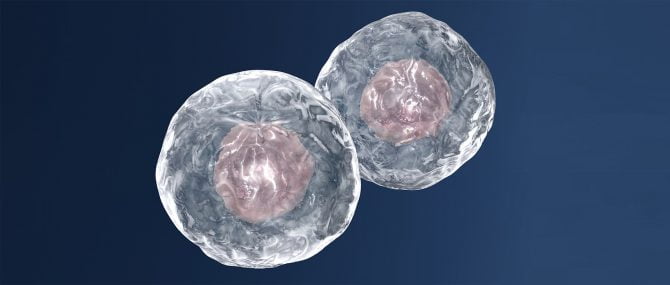
Today's techniques for embryo cryopreservation, known as embryo vitrification, allow reaching high embryo survival rates. Thanks to them, embryo cryopreservation is not a problem anymore when it comes to achieving reproductive success.
Single embryo transfer
Even though Spanish law on assisted reproduction allows up to 3 embryos to be transferred, the reality is that such amount is used in very few cases. Commonly, embryo transfers involve just one or two embryos.
Nowadays, there exist many studies focused on improving the selection of the best quality embryo, which is to say, that presenting the highest implantation potential. The ultimate goal of such researches is reducing the number of two-embryo transfers carried out in favor of single embryo transfers.
It is true that even if a single embryo is transferred, the chance that it divides spontaneously and gives rise to two independent viable embryos, and therefore to two fetuses, exists. However, it is a very low likelihood.
In the early days of assisted reproduction—before the current law 14/2006 came into force—, three or even four embryos were transferred in order to increase the odds of success. For this reason, the number of twins or even triplets by that time increased drastically, with the subsequent associated risks.

Today, advances made in assisted reproductive technologies allow selecting an embryo and preparing the endometrium with greater accuracy. Both factors let us achieve reproductive success in a wider number of cases, whilst ruling out the performance of a multiple embryo transfer.
How many embryos should be transferred?
This is a difficult question, as multiple answers can be given. Making the decision of how many embryos to transfer is not easy as achieving a pregnancy free from risks for the mother and the baby is our ultimate goal.
In reaching a decision therefore, there should be consensus between embryologists, physicians, and patients beforehand. To that end, factors as the ones mentioned hereunder should be taken into consideration:
- Number of embryos available
- Quality of the embryos obtained
- Age of the patient
- Causes behind infertility
- Characteristics of the recipient's uterine lining
Thus, where there are poor-quality embryos and it is a case of advanced maternal age, it is assumed that the implantation potential of the embryos will be low, in which case the ultimate decision will be transferring two or three embryos. Conversely, provided that the patient is a young woman, with a healthy uterus, and high-quality embryos ready to be transferred, high implantation potential is to be expected. In such case, a single embryo will be transferred.
Be it as it may, patients should always make informed choices after seeking advice of the medical and laboratory staff.
We make a great effort to provide you with the highest quality information.
🙏 Please share this article if you liked it. 💜💜 You help us continue!