Endometrial receptivity and implantation failure
Recurrent implantation failure is one of the most frustrating challenges in reproductive medicine. It occurs when, after transferring good quality embryos, the desired pregnancy is not achieved. A recent international scientific study, led by doctors Katarzyna Opuchlik and Katarzyna Pankiewicz along with a large team, has shed light on how factors such as the patient's age and the duration of trying to conceive directly affect the endometrium, the tissue where the embryo must nest.
This research is the result of collaboration between multiple prestigious centers: the Institute of Mother and Child, OVIklinika Infertility Center, the Medical University of Warsaw and Calisia University in Poland; together with the University of Tartu and the Competence Centre on Health Technologies in Estonia; and the Karolinska Institutet and Karolinska University Hospital in Sweden. The authors of the study (Opuchlik, Pankiewicz, Pierzyński, Sierdziński, Aleksejeva, Salumets, Issat and Laudański) have deeply analyzed the molecular causes that could explain why, sometimes, the uterus is not ready to receive the embryo at the standard time.
The different sections of this article have been assembled into the following table of contents.
Contents
- 1.
- 2.
- 3.
- 4.
- 5.
Understanding endometrial receptivity
For a pregnancy to take place, a good embryo is not enough; we need a fertile and prepared "soil". We call this endometrial receptivity. There is a specific period in the menstrual cycle, known as the window of implantation, in which the endometrium is ready to allow embryo nesting. However, this window can be displaced in time.
The study observed 68 women with recurrent implantation failure and compared them with a control group. The results showed that alterations in endometrial receptivity are significantly more frequent in patients with repeated implantation failures. Specifically, a "pre-receptive" endometrium (which is not yet ready and needs more time of progesterone) was detected in 19.1% of these patients, compared to only 6.1% in the control group (with no significant differences between the two groups for the other states of endometrial receptivity).

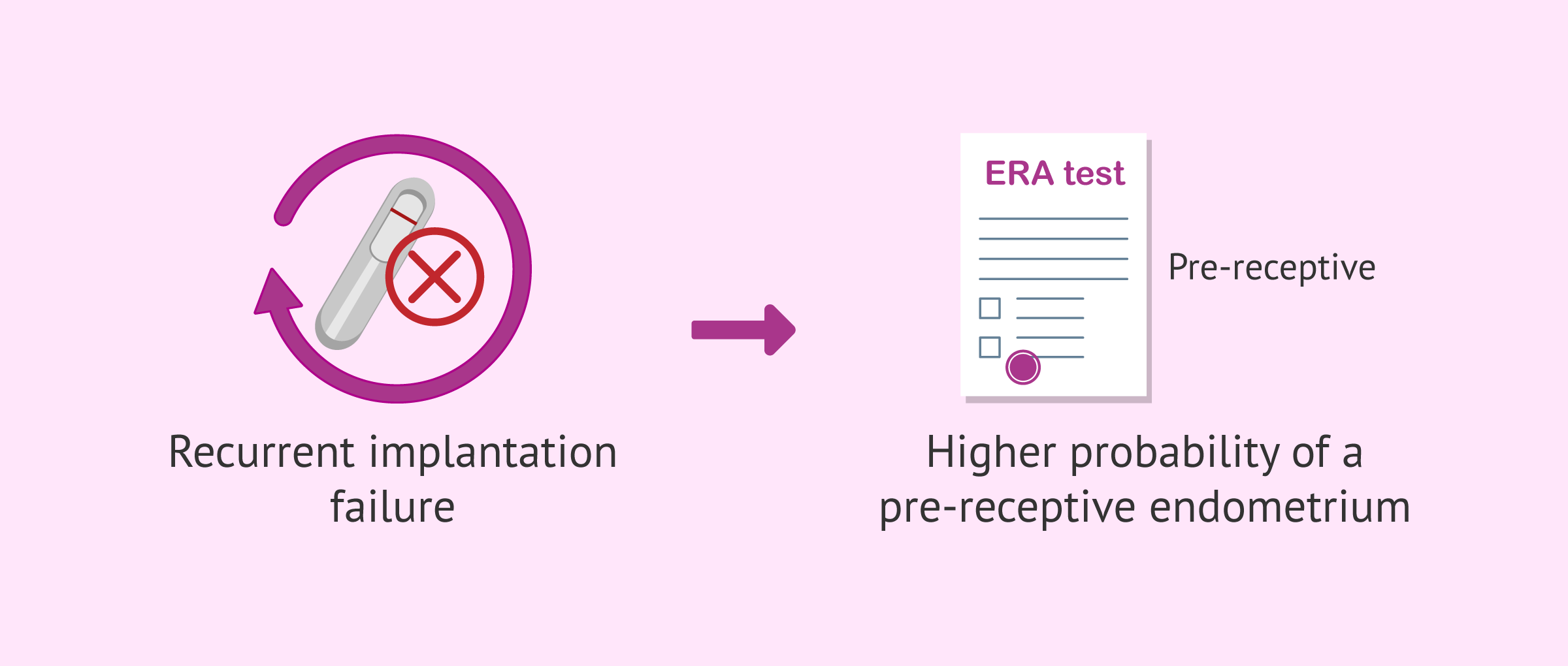
These data suggest that, sometimes, the problem is not the embryo, but rather that we are performing the embryo transfer at a time when the uterus has not yet "opened" its window to receive it.
Age and time: key factors
One of the most relevant findings of this research is the direct correlation between a woman's age and the state of her endometrium. The authors found a significant association:
- Younger women: tended to have normal or, in some cases, late receptivity.
- Older women: more frequently presented a pre-receptive or early receptive endometrium.
In addition to age, the duration of infertility plays a crucial role. The longer a patient with recurrent implantation failure has been trying to get pregnant without success, the more likely her window of implantation is altered. This indicates that the passage of time could affect the molecular mechanisms that regulate the preparation of the uterus.
PCOS and idiopathic infertility
The study also analyzed specific subgroups of patients, finding very interesting data for women with Polycystic Ovary Syndrome (PCOS) and those with unexplained infertility (UI):
- In patients with PCOS, the vast majority (70.6%) showed an early receptive endometrium, suggesting that their window of implantation might be advanced or starting earlier than expected.
- In cases of idiopathic infertility, a high rate of temporally displaced endometria was also observed. 66.7% of women presented an early receptive endometrium.
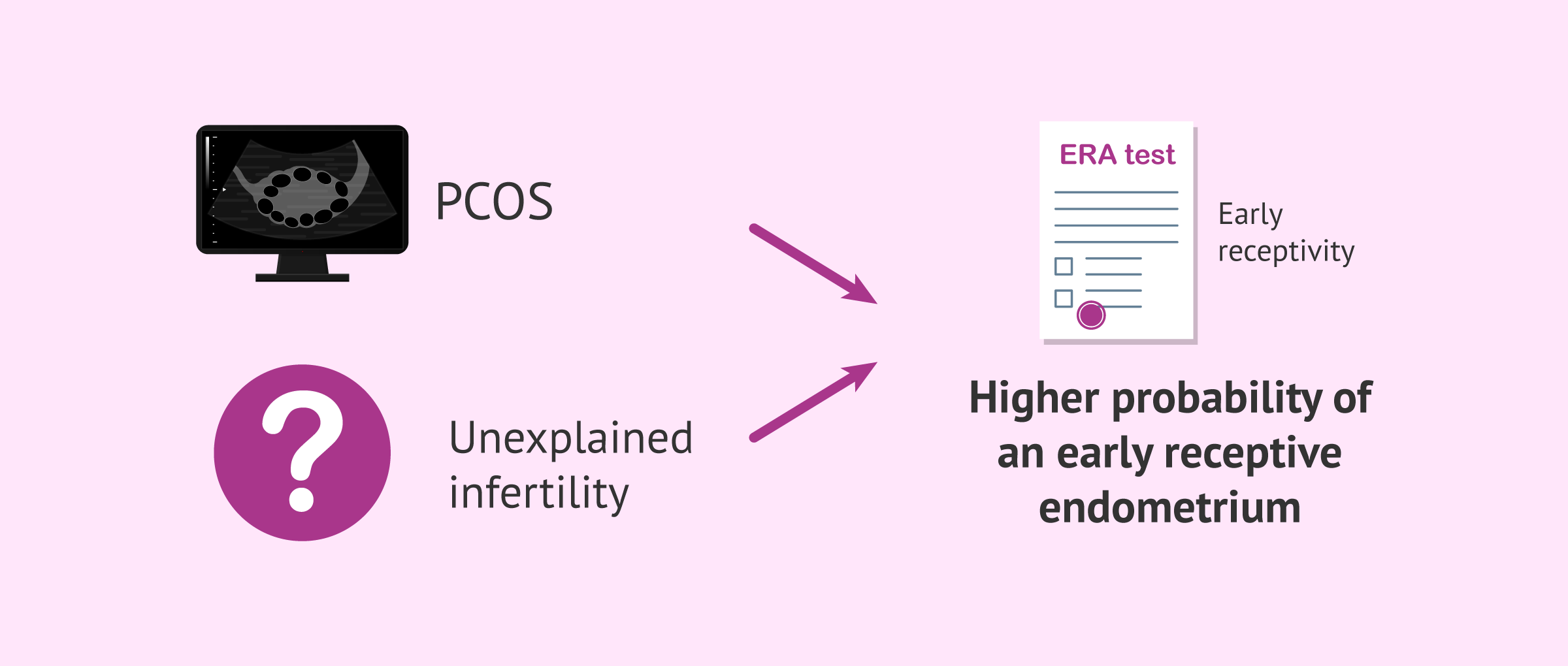
These findings reinforce the importance of not treating all patients under a standard protocol, especially if there are underlying pathologies such as PCOS.
Towards personalized transfer
The main conclusion for clinical practice is clear. While not all patients need an endometrial receptivity test right away, there is a profile that benefits enormously from it. According to this research, older women with a long history of infertility are the ideal candidates for these genetic studies of the endometrium.
By identifying exactly when the endometrium is receptive, assisted reproduction specialists can schedule a personalized embryo transfer (pET). This means adjusting the hours of progesterone administration before transferring the embryo, ensuring it reaches the uterus at the exact moment of maximum receptivity, thus increasing the chances of achieving an evolutionary pregnancy.
We make a great effort to provide you with the highest quality information.
🙏 Please share this article if you liked it. 💜💜 You help us continue!
References
Opuchlik K, Pankiewicz K, Pierzyński P, Sierdziński J, Aleksejeva E, Salumets A, Issat T, Laudański P. Factors influencing endometrial receptivity in women with recurrent implantation failure. BMC Womens Health. 2025 Jan 9;25(1):15. doi: 10.1186/s12905-024-03531-z. PMID: 39789542; PMCID: PMC11715555. (View)