Fertility Madrid


The different sections of this article have been assembled into the following table of contents.
Contents
- 1.
- 2.
- 3.
- 3.1.
- 3.2.
- 3.3.
- 3.4.
- 3.5.
- 3.6.
- 3.7.
- 3.8.
- 3.9.
- 4.
- 5.
- 5.1.
- 5.2.
- 5.3.
- 6.
- 7.
- 7.1.
- 8.
Description
Fertility Madrid is a private assisted reproduction clinic located in the Salamanca district of Madrid.
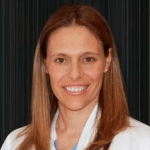
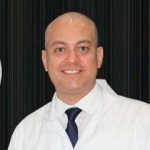
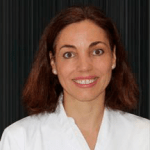
Its team consists of 15 professionals, including its medical director, Dr. Oscar Oviedo, and its laboratory director Jose Luis De Pablo.
To carry out the fertility treatments, Fertility Madrid has a 500m2 center , which includes the reception, waiting rooms, consultation rooms, operating theatre, and its own laboratories, among other rooms.
If you need information on how to get to the clinic, either by public or private transport, you can access this link.
Clinic History
Fertility Madrid opened its doors in 2017 and since then they have been having a progressive growth that is reflected in the number of assisted reproduction cycles they perform each year:
- 70 cycles in 2017
- 140 cycles in 2018
- 130 cycles by mid 2019
These data indicate that Fertility Madrid is managing to double its number of patients annually. In addition, 20% of these patients are foreigners.
On the other hand, Fertility Madrid was awarded in 2017 the 12th Prize for the rationalization of Spanish schedules by ARHOE (National Commission for the Rationalization of Spanish Schedules), which shows that they are a clinic that is committed to measures to achieve greater efficiency and productivity at work, as well as to facilitate the reconciliation of personal, family and professional life.
Facilities
The Fertility Madrid clinic is located in a corner building that occupies the ground floor and the first floor. In addition, we will describe all the areas of the clinic, with the resources and technology available to perform assisted reproduction treatments.
Building and facade
The gateway to Fertility Madrid is right on the corner of General Oráa and Castelló streets. This door is very wide and is adapted for people with reduced mobility.
In the rest of the facade, there are two large windows on the right and three on the left, all of them with Fertility Madrid signs. These windows let natural light into the reception area and waiting rooms.
As for the clinic's surroundings, the sidewalk in front is very wide, with a large planter with bushes, trees along the street, and an area for parking motorcycles.
Being in the central district of Madrid, there is a lot of traffic around and it can be difficult to park if you go by car.
Reception and waiting rooms
Fertility Madrid's reception is at the entrance and has a corner counter.
Two patient care staff members work here, speaking Spanish, English, French, German, and Arabic.

In this same entrance, there is a common waiting room on the left side, with a large sofa, a modern table with magazines, a water dispenser, and a Nespresso coffee maker.
On the right side are the toilets and the stairs leading to the upper floor, where there is also another waiting room with two sofas in the same style.
In addition, Fertility Madrid has three individual waiting rooms of different sizes. Its style is very modern, with different colored duvet chairs, magazines for entertainment and wifi available.

The average waiting time for an appointment is about 10-15 minutes, although it must be taken into account that in the clinics there can always be a setback and you may have to wait a little longer than usual.
Consultations
Fertility Madrid has a total of four medical consultations, three of which have an examination room.
The equipment we can find in the examination room to make the controls is a gynecological table, the latest generation ultrasound machine Voluson S8, a screen, and a sink.

Fertility Madrid employs three gynecologists specialized in assisted reproduction, an obstetrician who attends to pregnancies, and a gynecologist who attends to general consultations.
The gynecologists who specialize in fertility speak Spanish and English and are on duty at the weekends in case of having to perform any follicular puncture or embryo transfer.
Operating Room
The operating room, recovery rooms, and laboratory area of Fertility Madrid are located to the right of the reception.
The operating room has direct communication with the IVF laboratory through a door that opens automatically. Both rooms are covered with epoxy paper, the corners of the wall and the floor skirting boards are rounded, and the ventilation system has positive pressure to ensure maximum sterility conditions.
Apart from that, the equipment present in this operating room is an operating table, instrument tables, a monitor, an ultrasound machine, an anesthesia administration system, a defibrillator, and a crash cart. There is also a large screen so that patients can see when the embryo is introduced into the uterus.

On the other hand, the Fertility Madrid operating room is adapted to perform major outpatient surgery such as hysteroscopies and testicular biopsies.
The staff present at each intervention is the gynecologist, the anesthetist, the nurse, and the biologist in case of puncture or embryo transfer.
Laboratories
Fertility Madrid has two laboratories on its premises: the andrology laboratory and the in vitro fertilization laboratory mentioned in the previous section.
There are three embryologists working here, who speak Spanish, English, Catalan, and Basque, and who are on duty at weekends and holidays in case of any puncture or embryo transfer.
Next, we comment on the two laboratories of Fertility Madrid:
Andrology Laboratory
It is located on the top floor of Fertility Madrid and is equipped with a laminar flow hood, a phase-contrast microscope, a centrifuge and two sample banks.
The following procedures are performed here:
- Semen analysis
- Double Stranded Sperm DNA Fragmentation with Comet Fertility TM
- Genetic analysis of spermatozoa by FISH
- Sperm freezing
IVF Laboratory
The doors of the IVF laboratory are automatic and access is restricted by means of an identification card.
The furniture is made of stainless steel, there are no windows, the light is very dim and the temperature is kept between 20-24ºC to ensure optimal conditions for embryo culture.
As for the equipment present in this laboratory to carry out the assisted reproduction techniques, we find the following: a laminar flow hood with two binocular magnifiers and two heated surfaces, two inverted microscopes, four heated blocks, a microinjector with an anti-vibration table, automatic pipettes and four banks for cryopreservation of oocytes and embryos.
For embryo culture, Fertility Madrid has a classic incubator and a state-of-the-art GERI incubator with the time-lapse system.

Additionally, Fertility Madrid also has a laser to perform the embryo biopsy necessary for the treatment of preimplantation genetic diagnosis (PGD) and its three embryologists are trained for this purpose.
Finally, the computerized system of security and traceability of biological samples used in Fertility Madrid is the VRepro and the double control.
Recovery room
At the exit of the Fertility Madrid operating room, there are three recovery rooms for patients undergoing surgery.
These rooms are equipped with an articulated bed, an armchair for the accompanying person, and a television.

Patients can stay in this room as long as they need to, as there are three rooms and there are no availability problems.
Sperm collection rooms
Fertility Madrid has two rooms for obtaining seminal samples. One is on the upper floor, next to the andrology laboratory, and the other is downstairs next to the IVF laboratory.
This room has a small window that connects to the lab. This is very good so that the patient can hand over the canister with the sample once it is finished.
On the other hand, the furniture and resources present in these rooms are a chair, a toilet, a television with a catalog of videos and magazines.
Nursing room
Fertility Madrid's nursery has a reclining extraction chair and a sink. This is where the blood draws for hormone determinations are made.
It is located on the ground floor and has two independent access doors: one for patients and one for egg donors.
On the other hand, the clinic does not have the equipment for biochemical analysis, so the blood samples are sent to an external laboratory.
Egg donor facilities
Those women who want to become egg donors can also go to ART Reproducción to have all the necessary medical and psychological tests done, as indicated in the Law 14/2006 on Assisted Human Reproduction Techniques.
If accepted, egg donors will have to come to the clinic itself to perform ovarian stimulation and follicular puncture.
Egg donation cycles at Fertility Madrid have always been performed with fresh eggs, that is, the donor's eggs are not frozen after being extracted in the puncture, but are fertilized with the partner’s sperm or with donor sperm if that is the case.
Fertility Madrid has specific facilities for egg donors. The entrance door is at the back, through which you can access a different waiting room from the patients.
This waiting room has a door that connects to the nursing room which, as we have mentioned, has an access door for donors and another for recipients.
In this way, possible contact between egg donors and patients who are going to undergo assisted reproduction treatment is avoided.
How is the first visit?
Fertility Madrid offers all its patients a free first visit with the gynecologist and the embryologist so that they can get to know them and visit the facilities.
This consultation lasts approximately one and a half hours and includes a gynecological examination with ultrasound. If necessary, patients also have a consultation with the center's psychologist at no cost.
During this first visit, the gynecologist also reviews the patient's medical history, if she has had previous cycles and the test results she hands in.
The other tests that are necessary and the possibility of doing them through private insurance are indicated below. If the seminogram is done at Fertility Madrid, it costs 90 euros.
For international patients, the clinic has English, French, German, and Arabic speaking staff. They also have a Chinese interpreter who travels to the center if they have Asian patients.
What treatments do they perform?
The treatments that can be carried out at Fertility Madrid, both for heterosexual couples and for couples of women or single women, are specified in the following table.
The clinic offers interest-free financing options for up to 24 months.
If you're still unsure which fertility treatment is right for you and would like to know more about it, we suggest you read on here: Fertility Treatment Overview.
The treatment costs may vary significantly depending on the tests or techniques included or not, such as the seminogram, medication, fertility testing, medical visits, prolonged culture or embryo vitrification.
This Tool helps you to find out the exact costs of the different fertility clinics (what's included and what's not) and provides you with lots of useful tips for your first appointment.
Complementary techniques
In order to improve the success rates of the treatments indicated in the previous section, Fertility Madrid has the following innovative techniques:
- Embryo culture with the GERI incubator, which allows for more stable culture conditions and better embryo selection thanks to the Time-Lapse technology.
- Assisted hatching: this involves making a hole in the zona pellucida of the embryo to facilitate its exit and allow implantation in the mother's uterus.
- Study of hereditary thrombophilia through the genetic test ThromboNIM. It serves to prevent thrombophilia, which is one of the possible causes of implantation failure and repeated miscarriages.
- Study of the endometrium through the triple test ERA, EMMA and ALICE. This will determine whether the receptivity and microbial environment of the uterus is optimal for embryo implantation.

Prenatal diagnostic techniques
Fertility Madrid has a gynecologist who specializes in physiopathology and fetal medicine and who performs ultrasound scans and pregnancy monitoring for women who have already achieved pregnancy.
To do this, they have the Voluson S8 ultrasound machine which, among its many functions, performs 4D ultrasounds to see the baby live. The best time to perform a 4D ultrasound is between 25-32 weeks of pregnancy when the fetus is most developed.
On the other hand, patients at Fertility Madrid also have the option of performing a non-invasive prenatal test. This is a genetic test carried out on the mother's blood, which makes it possible to know the probability of chromosome abnormalities in the future baby with a high degree of reliability.
Egg and sperm donors
In order to become an egg donor at Fertility Madrid, women must be between 20 and 29 years old. Moreover, it is essential that they are completely healthy, both physically and emotionally.
For this reason, they are subjected to a series of tests that confirm their state of health, the absence of a family history of hereditary diseases, the normality of their reproductive system and ovarian functionality.
In terms of assigning an egg donor to a recipient, Fertility Madrid's donor coordination department is based on the donor's phenotypic characteristics and blood group. The clinic also performs a genetic compatibility test between donors and recipients.
As far as donor sperm is concerned, Fertility Madrid uses an external bank to obtain the samples, since they do not donate the sperm in the center.
Other services
Fertility Madrid patients also have at their disposal other medical specialties that can be of great help during fertility treatment, as is the case with the Emotional Support Unit.
The clinic has a fertility coach on its team who helps patients manage the emotions and feelings that arise during the process, especially in the more complicated cases of repeated failures, acceptance of egg donation, etc.
They also have a urologist who performs testicular biopsies in cases of male sterility or vasectomy reversal.
On the other hand, Fertility Madrid disposes of legal advice by Fernando Abellán, external advisor of the National Commission of Assisted Human Reproduction.
Success rates
The Spanish Fertility Society is in charge of compiling the results of all the Spanish assisted reproduction clinics every year and making a statistical analysis. In fact, the SEF is the only scientific and independent organization of the clinics that collects and publishes these data in an objective manner.
Although our analysis of this clinic was carried out in 26th October, 2020, we have to indicate that the last report published by the SEF shows the success rates obtained in the year 2018 (National Activity Register 2018-SEF Register).
Normally, there is a delay of about 2 years in the publication of these statistics due to the difficulty in data collection and the controls that are carried out. It should be noted that, to collect data from a gestation achieved in December 2017, we must wait until delivery, which will be approximately in September 2018.
It should also be taken into account that directly comparing pregnancy rates between different clinics can lead to misunderstandings because there are many factors that influence the results, such as the cause of sterility or the particular characteristics of each treatment.
Therefore, the SEF data shown below should be taken as a mere guide. In addition, we recommend reading this article for a better interpretation of the statistics.
IVF/ICSI
Realized cycles
Number of total cycles performed by the clinic in a year.
The SEF does not provide an exact number of annual cycles that each center performs, but rather it does so in the form of ranges as follows: less than 100 annual cycles, between 100 and 500 annual cycles, or more than 500 annual cycles.
From inviTRA we consider that for a better interpretation of the results it would be good that the SEF provides more exact data or smaller ranges for the number of annual cycles.
This is the total number of cycles performed by Fertility Madrid in a year.
Implantation rate per transfer
The probability that an embryo will implant in the woman's uterus after the transfer.
This success rate refers to the probability that a transferred embryo will nest in the woman's uterus. It is calculated as follows: number of gestational sacs observed on ultrasound divided by the number of embryos transferred.
The SEF shows this value in the form of an interval, since it is very complicated to provide an exact percentage due to the variability of factors that we have already discussed.
It should also be taken into account that the more assisted reproduction cycles the clinic performs, the narrower this interval will be and the better the interpretation.
Below, we show the implantation rates per embryo transfer in Fertility Madrid.
Pregnancy probability per transfer
Probability that an embryo transfer will lead to a pregnancy, regardless of the number of embryos transferred.
This success rate refers to the probability of pregnancy for each embryo transfer, regardless of the number of embryos transferred and the type of gestation obtained, that is, whether it is a single or multiple gestation.
The SEF divides this success rate according to the woman's age and is also shown in the form of an interval, so it is likely that very large intervals will be found in clinics that perform few cycles.
These are the pregnancy rates per embryo transfer obtained by Fertility Madrid.
Fresh embryo transfer
Frozen embryo transfer
Percentage of transferred embryos
Percentage of embryo transfers made with one, two or three embryos
According to Law 14/2006 on Assisted Human Reproduction Techniques, in Spain it is only permitted to transfer a maximum of 3 embryos at each attempt.
Even so, a higher percentage of single-embryo transfers is now considered a quality parameter for clinics, since although transfers of two or three embryos increase the rate of gestation, twin or multiple pregnancies have many risks for the mother and babies and must be avoided at all costs.
The recommendation of inviTRA is to transfer only 1 or 2 embryos whenever possible.
In Fertility Madrid they have the following percentages in terms of number of embryos transferred.
Fresh embryo transfer
Frozen embryo transfer
Type of pregnancy per transfer
Types of pregnancies achieved according to the number of embryos transferred
As we have said, a single gestation is the best result that can be obtained after an assisted reproduction treatment.
In the following graphs, the percentage of each type of gestation obtained in Fertility Madrid is shown according to the number of embryos transferred.
Due to the risks associated with multiple pregnancies (lower birth weight, higher probability of premature birth, etc.), the ideal would be to always obtain a single gestation rate of 100%, regardless of having transferred 1, 2 or 3 embryos.
Transfer of fresh embryos
Transfer of frozen embryos
IVF with egg donation
Realized cycles
Number of total cycles performed by the clinic in a year.
As far as egg donation is concerned, these are the ranges of annual cycles performed by Fertility Madrid.
As we have indicated above, the SEF does not provide the exact number of cycles performed by a center and that makes it difficult to interpret.
Implantation rate per transfer
The probability that an embryo will implant in the woman's uterus after the transfer.
The probability of a successful egg donation is usually higher than that of IVF with own eggs.
Taking this into account, these are the implantation rates obtained in Fertility Madrid for IVF with donated eggs.
Pregnancy probability per transfer
Probability that an embryo transfer will lead to a pregnancy, regardless of the number of embryos transferred.
In the case of egg donation, the probability of achieving a pregnancy does not depend so much on the age of the recipient woman. Still, the SEF divides this success rate equally into age ranges.
It should also be noted that the current trend is to perform IVF with frozen donor eggs rather than fresh ones.
These are the pregnancy rates by embryo transfer obtained in Fertility Madrid for egg donation.
Fresh embryo transfer
Frozen embryo transfer
Percentage of transferred embryos
Percentage of embryo transfers made with one, two or three embryos
Given the high probability of achieving a pregnancy with donated eggs, it is always preferable to transfer a single embryo in this treatment in order to avoid a multiple pregnancy.
In Fertility Madrid the embryos resulting from egg donation are transferred in the following manner.
Transfer of fresh embryos
Transfer of frozen embryos
Type of pregnancy per transfer
Types of pregnancies achieved according to the number of embryos transferred
Finally, these are the types of pregnancies achieved by Fertility Madrid according to the number of embryos transferred in egg donation IVF.
Fresh Embryo transfer
Frozen Embryo transfer
Artificial insemination with partner's sperm
Pregnancy rate per cycle
Number of pregnancies per cycle according to the woman's age.
This success rate refers to the probability of achieving a pregnancy for each artificial insemination performed.
The SEF divides this success rate according to the woman's age and is also shown in the form of an interval, so it is likely to be found with very large intervals in clinics that perform few cycles.
Below are the pregnancy rates per cycle obtained in Fertility Madrid.
Type of gestation by pregnancy
Type of pregnancy obtained after performing an artificial insemination treatment
Single gestation is the best result that can be obtained after an assisted reproduction treatment, either by artificial insemination or by in vitro fertilization.
In the following graphs, the percentages of each type of pregnancy obtained in Fertility Madrid are shown for each pregnancy achieved with artificial insemination. These data are also divided according to the woman's age.
Due to the risks associated with multiple pregnancies (lower birth weight, higher probability of premature birth, etc.), the ideal would be to always obtain a single gestation rate of 100%.
Women between 35-39 years
Artificial insemination with donor sperm
Pregnancy rate per cycle
Number of pregnancies per cycle according to the woman's age.
To show the pregnancy rate of donor artificial insemination, the SEF divides the results according to the woman's age.
These are the probability intervals of pregnancy achieved by Fertility Madrid for donor artificial insemination.
Type of gestation by pregnancy
Type of pregnancy obtained after performing an artificial insemination treatment
As for the type of pregnancy obtained after getting a positive result with donor artificial insemination, these are the data obtained by Fertility Madrid according to the woman's age.
It is worth noting the risks that a multiple pregnancy entails for both mother and babies, so the ideal result in any assisted reproduction treatment is a single gestation.
Women under 35 years
Medical team








Clinic location
Fertility Madrid is located on General Oráa Street N/47, on the corner of Castelló Street, north of the central Salamanca district.
Very close to it, you can find outstanding streets in Madrid such as María de Molina or Príncipe de Vergara.
C/ General Oráa, 47 (Esquina Castelló), 28006 Madrid, Community of Madrid, SpainHow to get there?
To reach Fertility Madrid by public transport, the nearest metro stations are Núñez de Balboa (L5 and L9), Diego de León (L5 and L6), and Avenida América (L4, L9, and L7).
As for the city bus lines with the closest stop to the clinic are 61 (Moncloa - Narvaez), 12 (Cristo Rey - Marques de Zafra), 29 (Felipe II - Manoteras), and 53 (Sol/Sevilla - Santamarca).
If you come with your own vehicle, please note that it is difficult to park on the street because it is reserved for residents. However, there are several car parks in the surrounding area such as Parking María de Molina, Parking C/General Oráa, or Parking Anda.
Conclusion
Despite being a recently opened clinic, during the two years that it has been in operation, Fertility Madrid has managed to gain the trust of its patients thanks to the excellent treatment they offer.
Last year they already managed to perform 140 cycles of assisted reproduction and this year they are doubling that number. Its results and success rates will soon be published in the SEF's annual report.
Its facilities are completely new and modern, with the design and technology necessary to guarantee optimum procedures and maximum sterility conditions.
Being in the heart of Madrid, there are several fertility clinics nearby. That is why Fertility Madrid offers the first visit free of charge so that users can get to know the facilities and the team of professionals. You can get this free visit very easily by accessing the Fertility Report.
In case you have doubts when choosing a fertility clinic, we can give you more recommendations and advice like the ones you will find in this article: How to choose the fertility clinic for me?
We make a great effort to provide you with the highest quality information.
🙏 Please share this article if you liked it. 💜💜 You help us continue!