
Assisted reproduction is constantly advancing to offer the best success rates and the highest safety for both mother and baby. Recently, a collaborative study carried out by the Karolinska Institutet and the Karolinska University Hospital (Sweden), the Uppsala University (Sweden), and the University of Malaga together with the IBIMA institute (Spain), has shed light on early pregnancy development.
Researchers Mujin Ye, Mariana Barroso, Anna Sara Oberg, Nermin Hadziosmanovic, Arturo Reyes Palomares, and Kenny A. Rodriguez-Wallberg have analyzed whether there are differences in fetal growth during the first trimester depending on whether the transferred embryo was fresh or frozen.
Provided below is an index with the 6 points we are going to expand on in this article.
Fetal growth and type of transfer
One of the common concerns in fertility consultations is whether the laboratory process affects the development of the future baby. In this prospective study, which included 3,445 single live births, an interesting fact was observed: pregnancies achieved after a frozen embryo transfer showed a slightly larger crown-rump length (the size of the baby from the head to the bottom of the spine) in the first trimester compared to fresh transfers.
It is important to note that the difference is small. The researchers adjusted the data taking into account factors such as the parents' age or maternal body mass index, finding that cryopreservation seems to be associated with this larger initial size.
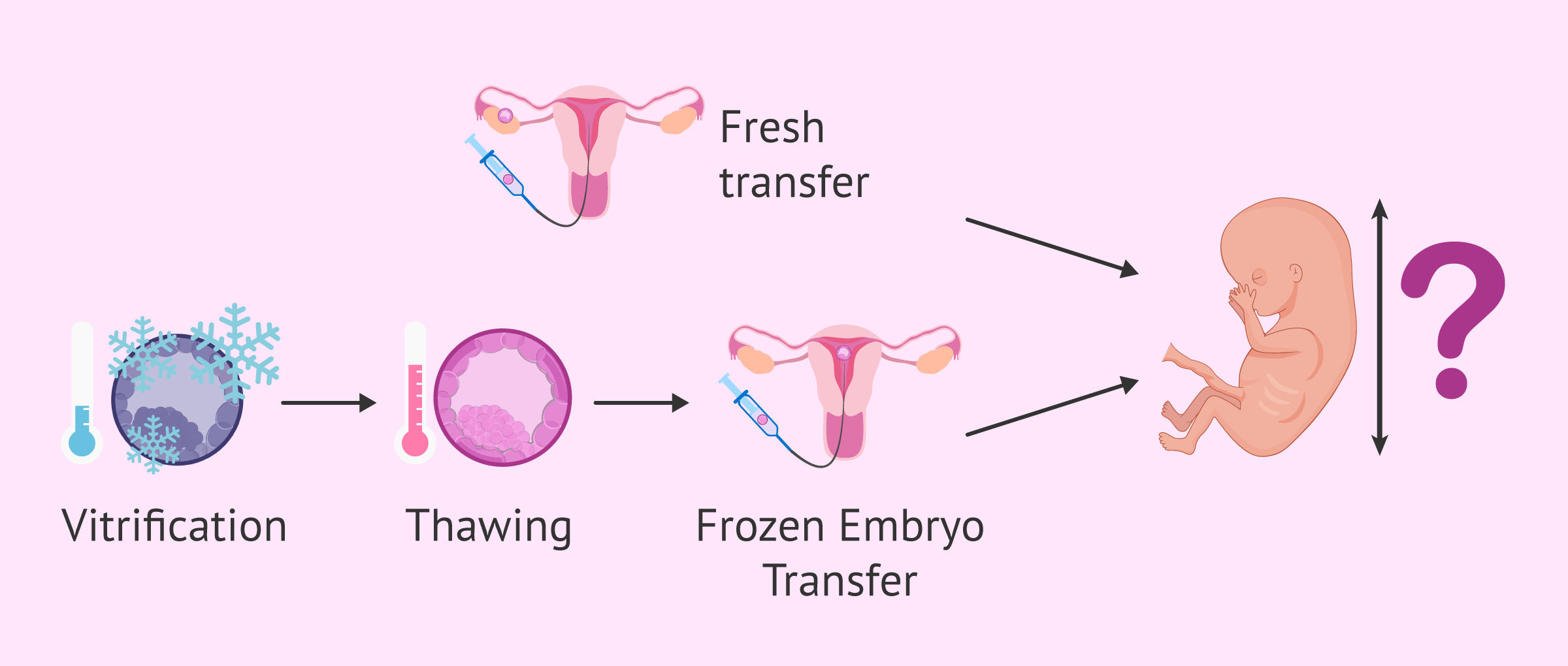
The finding suggests that fetuses from cycles with embryo thawing have a somewhat accelerated early growth pattern compared to fresh cycles, and even compared to natural conception in the first weeks.
Does the embryo stage matter?
Another major question in in vitro fertilization (IVF) treatments is the ideal time to transfer the embryo: at the cleavage stage (day 2-3) or at the blastocyst stage (day 5-6)? The research team wanted to find out if this factor influenced the observed growth.
The results indicated that:
- The larger fetal size in the first trimester after frozen embryo transfers is maintained, regardless of the embryo stage at the time of transfer.
- Whether early cleavage-stage embryos or blastocysts are transferred, transferring frozen embryos is associated with this larger initial fetal length.
This indicates that the determining factor in this growth variation is the cryopreservation process or the hormonal environment of the uterus in a frozen cycle, rather than the day of development the embryo is in when transferred.
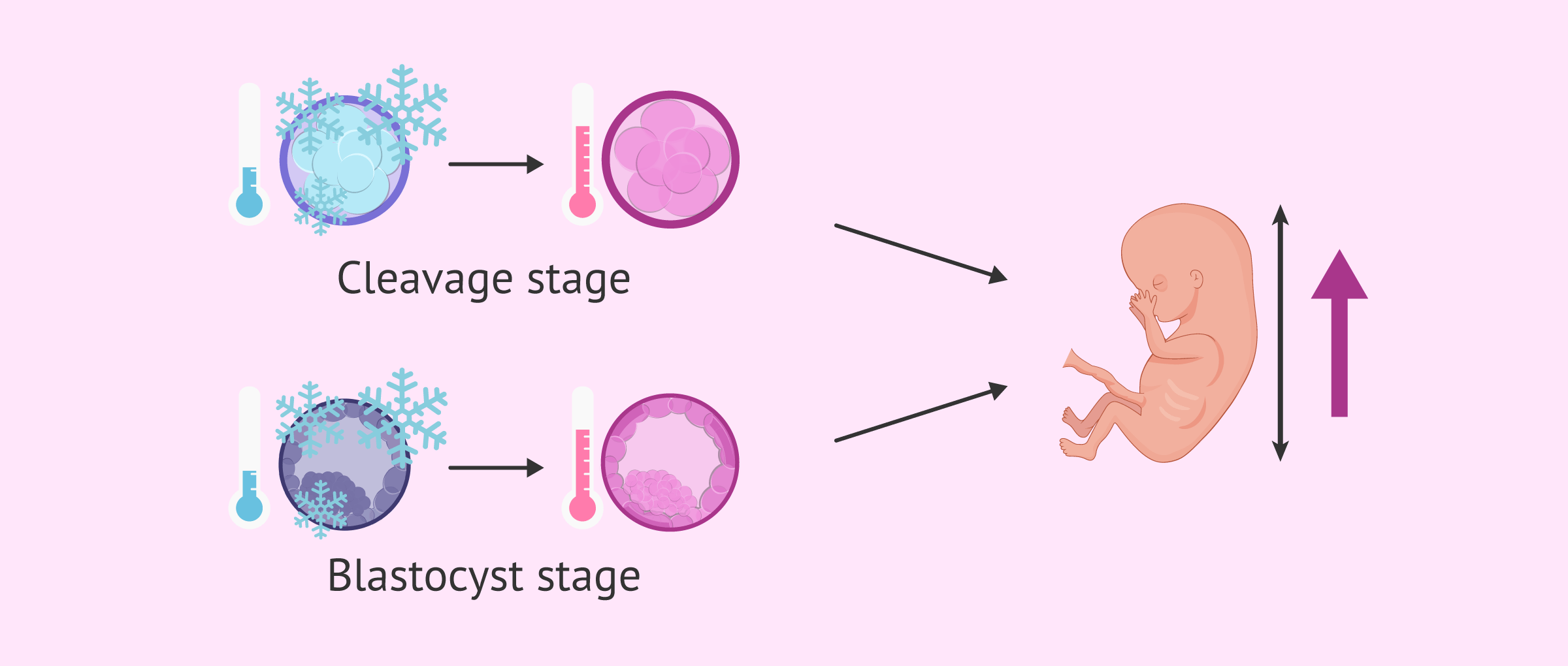
Therefore, the study concludes that the choice between transferring a day-3 embryo or a blastocyst-stage embryo should continue to be based on clinical criteria and not on these early growth variations.
Conclusions for patients
For those undergoing an assisted reproduction process, these data should be interpreted with peace of mind.
The main precaution suggested by the authors is that specialists should take this accelerated growth into account when performing dating ultrasounds, to avoid erroneously estimating the gestational age of the pregnancy.
In summary, embryo freezing remains a safe and effective technique that has allowed the birth of millions of children worldwide.
Community and Support
At inviTRA we work to make monthly and rigorous information accessible to everyone. If this article has helped you, consider supporting us so we can continue accompanying more people on their journey to parenthood.
References
Ye M, Barroso M, Oberg AS, Hadziosmanovic N, Reyes Palomares A, Rodriguez-Wallberg KA. First trimester growth after fresh or frozen single embryo transfer: embryo cleavage vs blastocyst stages. Human Reproduction Open. 2026;1-23. (View)


