14th week of pregnancy: beginning of the second trimester
In the 14th week of gestation, the woman feels much more relaxed and happy, as the uncomfortable symptoms of early pregnancy disappear and the risk of miscarriage decreases considerably.
The 14-week-old fetus has already acquired a more human appearance and the future parents will be able to see its face and all its body parts in an ultrasound scan.
In addition, this week marks the beginning of the second trimester of pregnancy. Therefore, it is the ideal time to share the news of your pregnancy with family and friends, if you have not already done so.
The different sections of this article have been assembled into the following table of contents.
Contents
- 1.
- 2.
- 3.
- 4.
- 4.1.
- 4.2.
- 4.3.
- 4.4.
- 5.
- 6.
What changes does a fetus have in the 14th week of pregnancy?
Although the development of the fetus is still progressing rapidly, by the 14th week of pregnancy all parts of its body and face are already differentiated.
The baby's head is now almost half its full size, its eyes and ears are already in their final position and, as a novelty, eyebrows and the first hairs of the head appear.
The fetus' muscular system is more developed and its facial muscles allow it to open its mouth, simulating a yawn, sucking its hand, and making faces.
At 14 weeks, the fetus is about 8-10 cm long and its weight can reach 25-40 g.
Another important change in the fetus is that its kidneys begin to produce urine from swallowing amniotic fluid. Their bladder fills and empties every 30 minutes. This is very important so that the fetus' digestive system can continue to develop.
Definitely, the yolk sac that nourished the embryo has disappeared, and now the nourishment of the future baby depends solely on the placenta and the nutrients that reach it through the umbilical cord.
Other changes that occur around 14 weeks gestation in the fetus include the following:
- Its skin is still very thin, but less transparent, and it is covered with a fine hair called lanugo.
- Lips appear in the mouth and the tongue begins to have taste buds.
- The vocal cords are located inside the larynx.
- The neck and arms are elongated to be in proportion to the body.
- The sweat and sebaceous glands of the fetus begin to function.

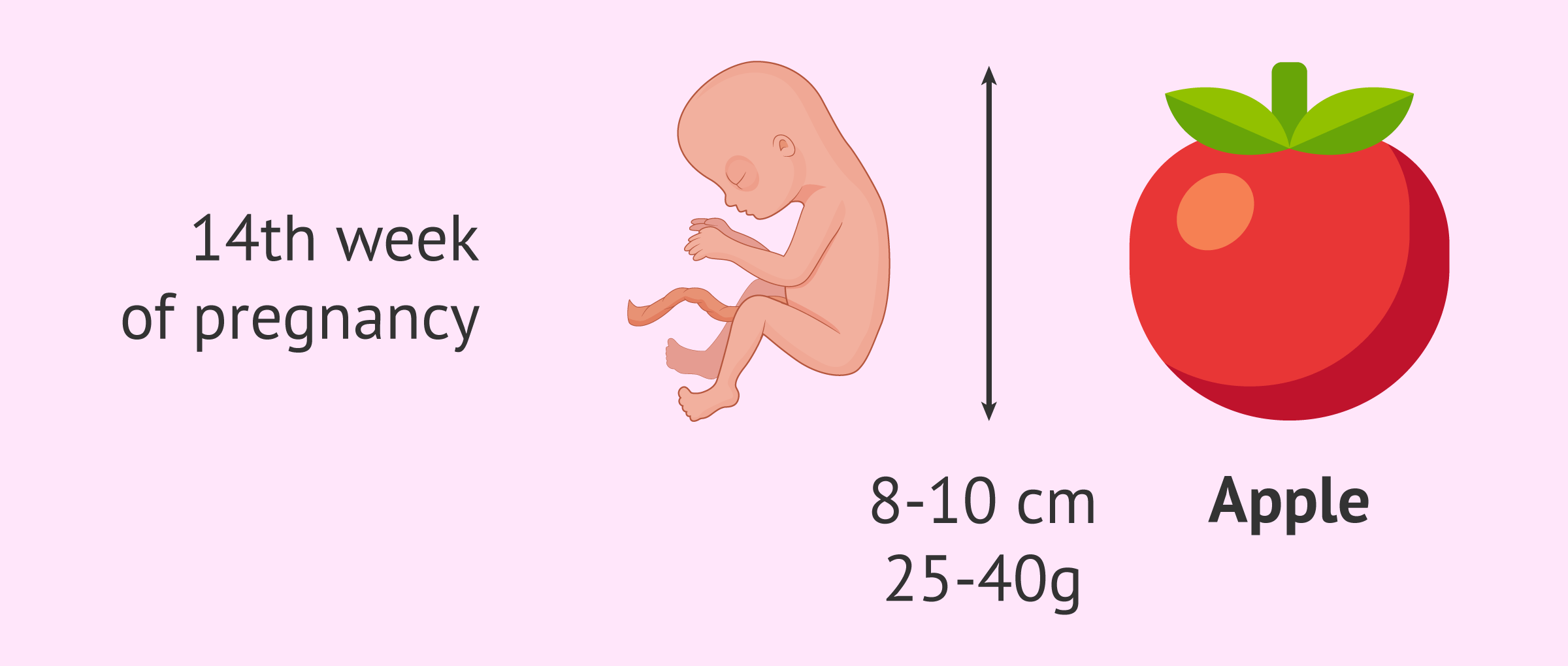
In addition, their skin is still very thin, but less transparent, and is covered with a fine hair called lanugo.
Symptoms and changes in the mother
The main change experienced by the mother in the 14th week of pregnancy is the growth of the belly. The uterus comes out of the pelvis and is situated a little above the pubis. This is why the belly is more bulging. However, it has not yet grown so much that the woman feels heavy or tired.
Another important change occurs in the breasts, as they continue to increase in size and will be much more sensitive. Therefore, it is important for women to start wearing maternity bras, without underwire and with natural fabrics that perspire well.
In addition, the hormonal changes typical of pregnancy also lead to increased sweating and it will be necessary to pay more attention to personal hygiene in order to avoid contracting skin infections.
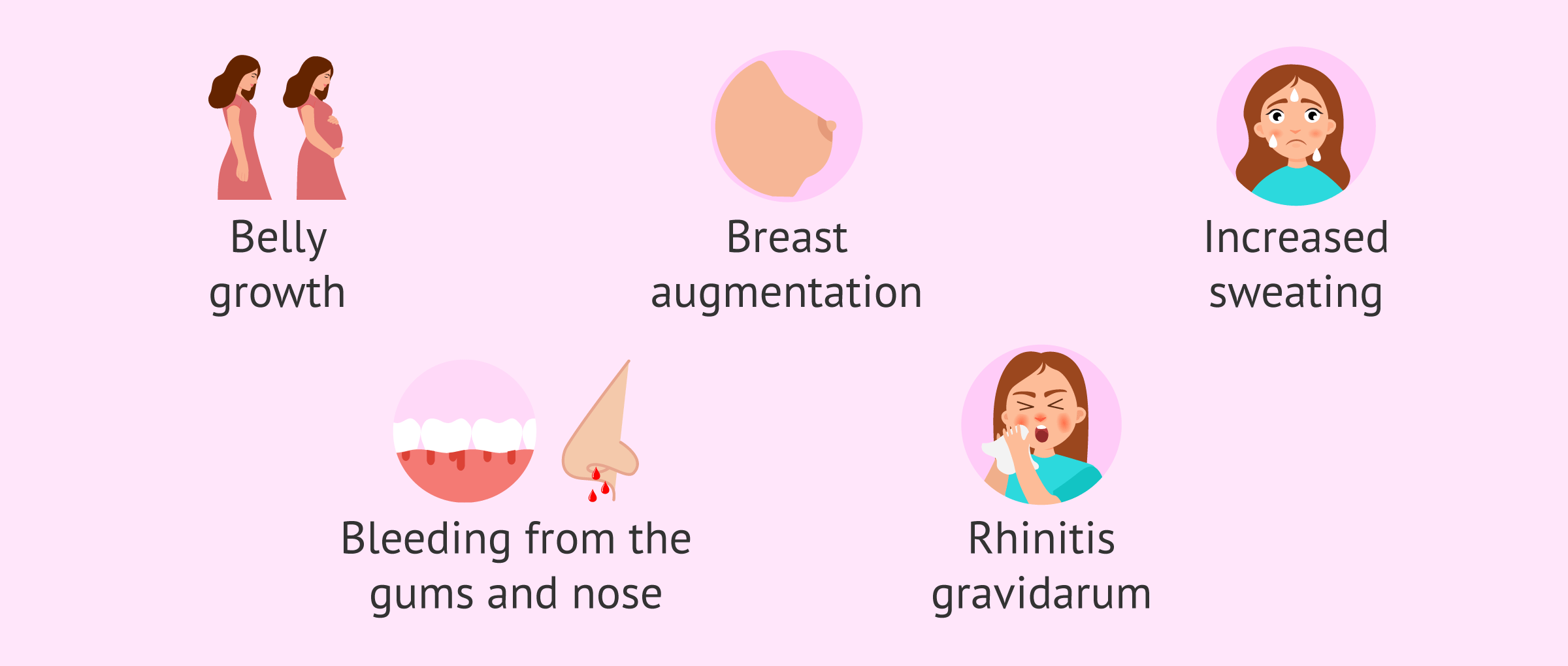
Beginning in the 14th week of pregnancy, a woman may experience bleeding from the gums and nose. This is due to the dilation of the blood vessels, which makes them more congested and fragile. This is completely normal and, as long as the bleeding is momentary and stops quickly, it is not serious.
Rhinitis gravidarum is also common. This is a stuffy feeling in the nose similar to what happens with a cold but is also due to changes in circulation and increased blood flow.
Tips for the 14th week of gestation
In general, it is advisable for women to follow a healthy lifestyle, with the types of diet and exercise that we have been discussing since the beginning of pregnancy. However, it is important to check that the weight gain is correct and that the woman is getting all the calories she needs.
Meat, fish, milk, and nuts will provide all the proteins the fetus needs to continue its development. Similarly, calcium is another very important nutrient for the development of teeth and bones. Dairy products, fruits, and vegetables should not be missing in the diet of pregnant women.

Other important tips and recommendations for the 14th week of pregnancy are as follows:
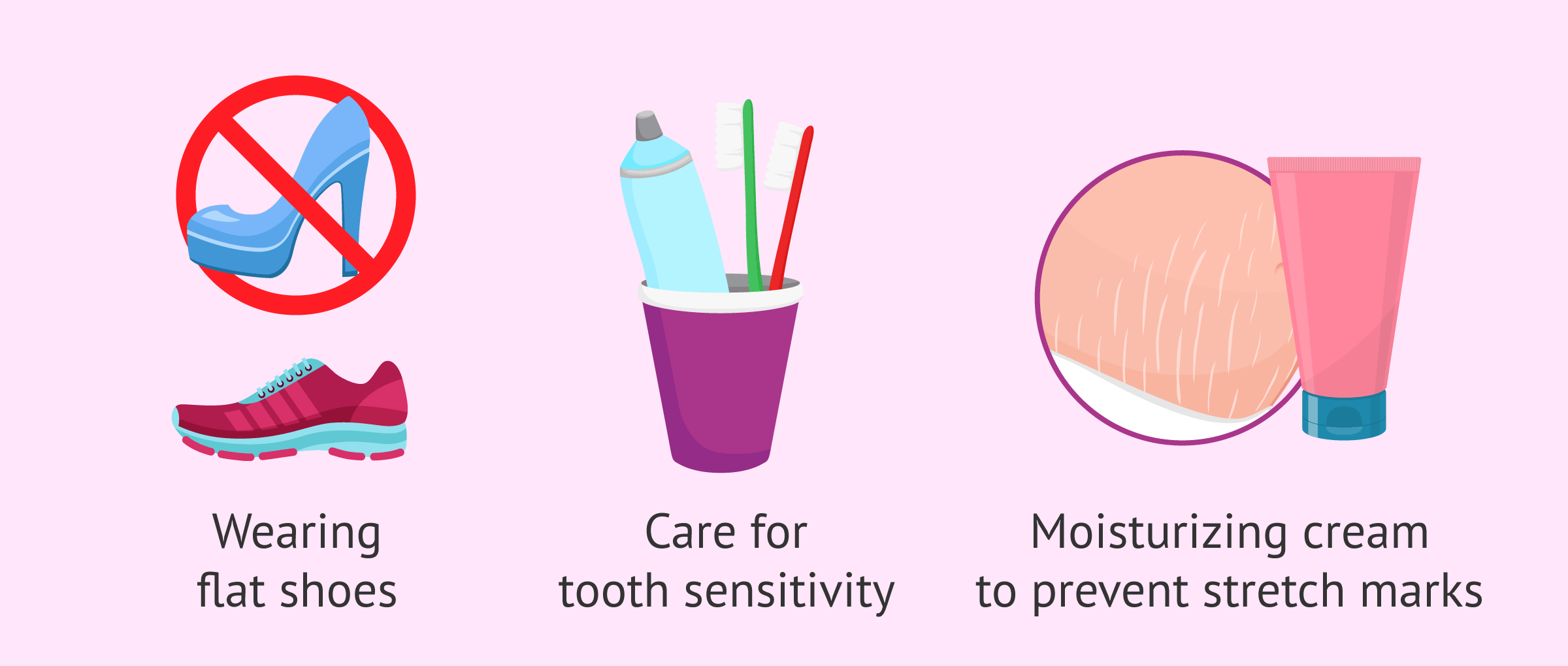
- It's time to start wearing maternity clothes, especially if the increase in the belly is already evident, and flat shoes to avoid back pain and swollen ankles.
- Change your toothbrush for a soft toothbrush and use a special toothpaste for sensitive gums. It is also advisable to use a mouthwash to strengthen the gums.
- Use moisturizing creams or oils to take care of the skin on your belly, as the skin begins to stretch and stretch marks may appear.
- You can use a humidifier to combat nasal congestion.
- Avoid very hot water baths and saunas, as they will cause excessive dilation of the blood vessels.
- It is a good time to sign up for childbirth preparation classes.
Despite all this advice, it is always essential to follow any particular medical indication to avoid risks during pregnancy.
FAQs from users
How many months are 14 weeks of pregnancy?
A woman at 14 weeks gestation is in the middle of the fourth month of pregnancy.
In addition, the 14th week corresponds to the beginning of the second trimester of pregnancy, which ushers in a new stage for both mother and baby.
Is the baby already moving in the 14th week of pregnancy?
Yes, due to the development of the musculature, the baby already makes movements inside the mother's womb in the 14th week of pregnancy.
Women will notice it as a slight tingling in the abdomen, especially if it is the second or third pregnancy, as first-time mothers may take longer to notice the movements of the fetus.
How tall is the baby in the 14th week of pregnancy?
The size of the baby at 14 weeks of pregnancy is about 8-10 cm, although each one has a different growth rate.
The important thing is that at this time 3 parts of the fetus can be measured separately: the head, the abdomen and the femur.
Why do I have tender breasts during pregnancy?
Breast growth is due to the increase in the hormone progesterone during pregnancy. From the third month of gestation, the breasts become larger and heavier, and estrogens promote the development of the ducts for breast milk.
The nipple-areola may become somewhat darker and, especially in the last months of gestation, marked blue veins may appear due to the increased blood flow in this area.
It is advisable to take special care of the breasts throughout the pregnancy, as they will be very important for the baby's nourishment in the first months of life. It is advisable to wear comfortable underwear, without seams or underwire, and preferably made of cotton. To prevent stretch marks from appearing, apply the cream daily.
Recommended readings
The next week of this fourth month of gestation will be number 15 and the pregnant belly is getting bigger and bigger. If you are interested in continuing this reading, you can access the following post: The 15th week of pregnancy.
If you are interested in finding out what the preparatory classes consist of, don't miss the article below: Childbirth preparation classes.
We make a great effort to provide you with the highest quality information.
🙏 Please share this article if you liked it. 💜💜 You help us continue!
References
González Merlo J. (1992). Modificaciones fisiológicas producidas en el organismo materno por el embarazo. En: Williams. Obstetricia (4.a ed.). Barcelona: Masón.
National Health Service (NHS) (UK) (2009). The Pregnancy Book. Your complete guide to: A healthy pregnancy, Labour and childbirth, The first weeks with your new baby. Crown copyright 2009. Produced by COI for the Department of Health.
Health Service Excecutive (Feidhmeannacht na Seirbhíse Sláinte) (2010). A guide to your pregnancy month by month. Breastfeeding.ie - Your breastfeeding support network. Order Code: HPM00341
Alalula LS, Arafat AS, Alhedaithy RA, Elkrim M. Intranasal Lobular Capillary Hemangioma with Multiple Sites of Origin during Pregnancy: A Case Report and Literature Review. Case Rep Otolaryngol. 2018; 7413918.
March of Dimes, Pregnancy & Newborn Health Education Center. Exercise during Pregnancy. Retrieved March 11, 2008