What Does Leaking Amniotic Fluid Feel Like? – Signs & Causes
Amniotic fluid leakage is a worrisome situation during pregnancy, since this fluid is vitally important for the proper development of the baby inside the mother’s uterus and until the time of delivery.
One of the main functions of amniotic fluid is to provide protection against blows or injuries, as well as to prevent heat loss. For all these reasons, amniotic fluid leakage can be a situation of risk and concern.
In addition, many pregnant women often do not know whether they are losing amniotic fluid or if it is urine leakage caused by the pressure of the uterus on the bladder. However, amniotic fluid and urine have different characteristics, especially in terms of color and odor.
The different sections of this article have been assembled into the following table of contents.
Contents
- 1.
- 2.
- 2.1.
- 3.
- 4.
- 5.
- 5.1.
- 5.2.
- 5.3.
- 6.
- 7.
What are the functions of amniotic fluid?
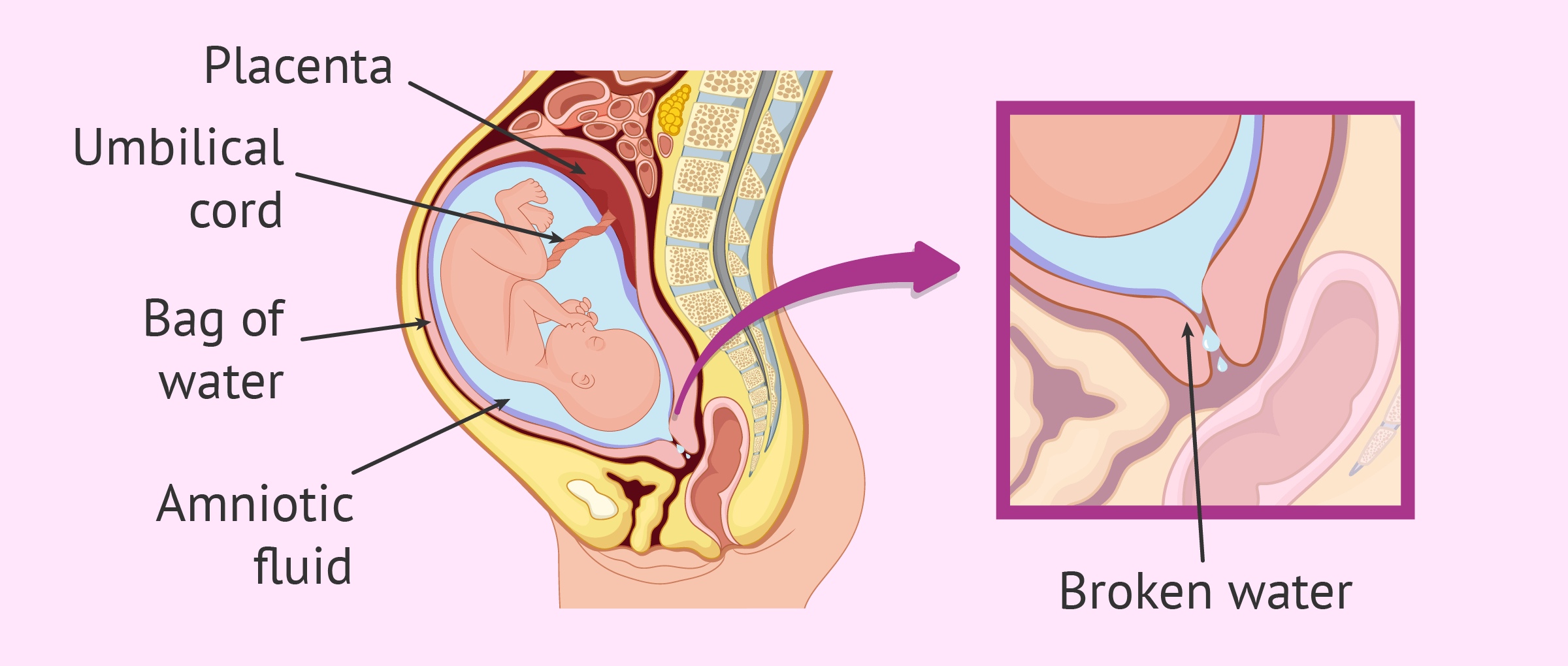
Amniotic fluid is a clear, transparent, and odorless liquid that surrounds the fetus during pregnancy. This fluid is essential to ensure fetal survival. The main functions of this fluid highlight the need to maintain a normal amount of it and reveal the consequences of its absence:
- Regulate the fetus’s temperature.
- Provide nutrients.
- Protect the fetus by cushioning the mother’s movements.
- Allow the fetus to move inside the womb.
- Protect the fetus from external infections.
- Play a role in the proper development of the baby’s lungs.
- Facilitate childbirth.

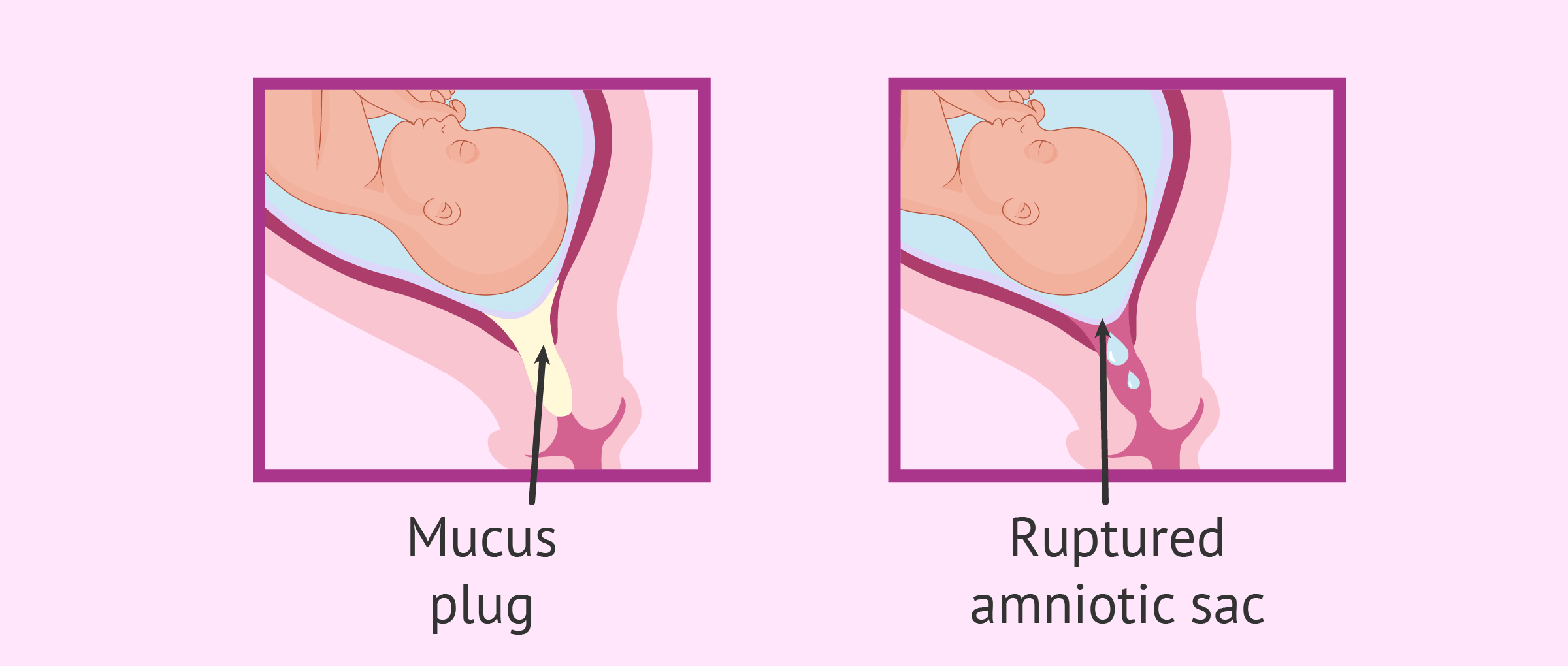
From the second week of pregnancy, amniotic fluid is mainly water. As pregnancy progresses, proteins, carbohydrates, and electrolytes are added to its composition, helping the fetus to develop. The fetus swallows amniotic fluid, incorporates the necessary nutrients, and then eliminates it through urine.
Although it is not normal, it may happen that the amniotic sac breaks or suffers a tear that leads to amniotic fluid leakage. This can be serious for fetal development.
If you want to keep reading more information about amniotic fluid and its functions, you can visit this link: Amniotic fluid: what is it and what is its role in pregnancy?
Urine leakage or amniotic fluid?
Some pregnant women do not know whether they are experiencing amniotic fluid leakage or urine leakage. To be sure whether it is amniotic fluid, underwear should be carefully checked. If it is amniotic fluid leakage, the underwear will be wet with a clear, watery, odorless liquid similar to water. In contrast, vaginal discharge or urine stains are different.

Vaginal discharge is filamentous, thicker, and more viscous, while urine is easily distinguished by its characteristic odor and yellowish color.
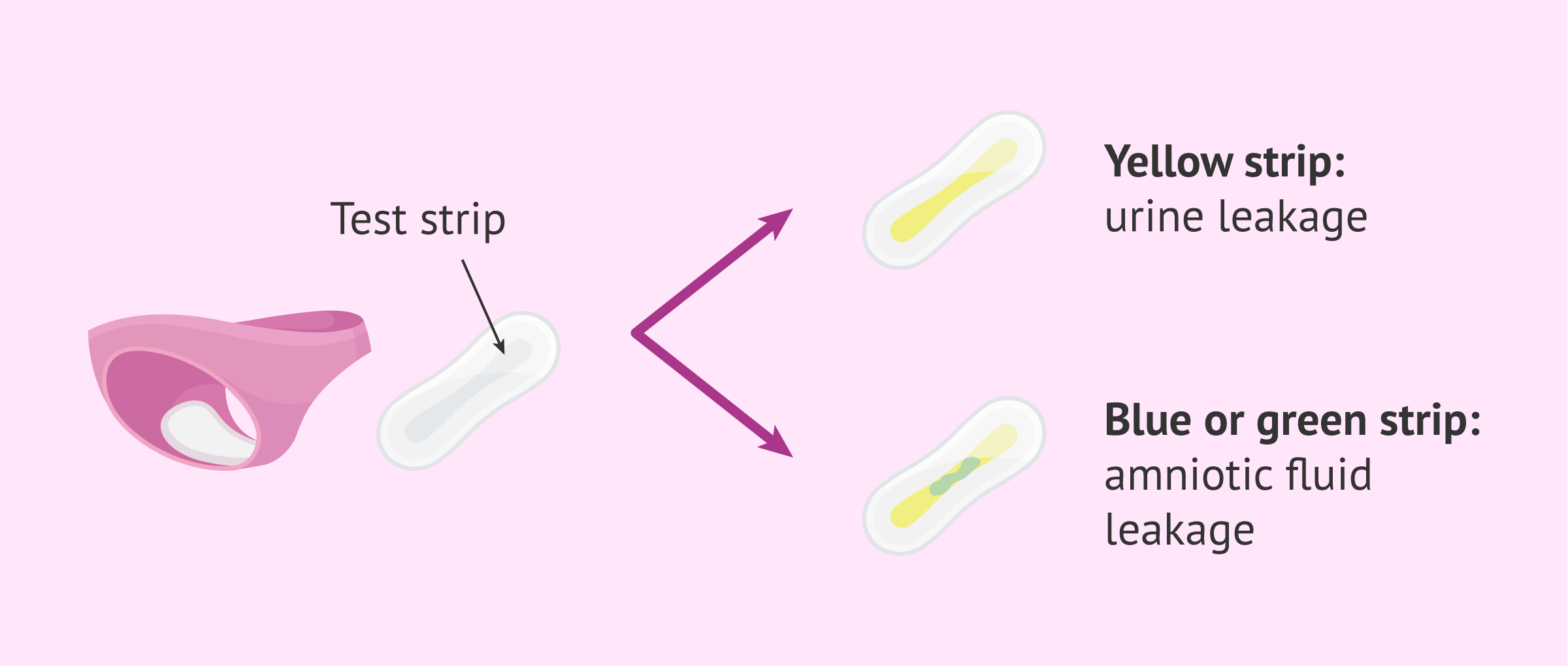
In case of doubt, there are home tests such as AL-Sense. This test is sold in pharmacies and consists of a panty liner that is placed in the underwear to detect amniotic fluid leakage.
This special panty liner contains a test strip. Depending on the color it acquires, the origin of the leakage can be identified. If it turns yellow, it is due to urine leakage, whereas if it turns blue or green, it indicates amniotic fluid leakage.
In addition, when amniotic fluid leakage occurs, aside from noticing wet underwear, the pregnant woman will also feel a reduction in fetal movements.
How to know if the amniotic sac has a tear?
Amniotic fluid leakage in the final stages of pregnancy can be confusing for the expectant mother, as it may raise doubts about whether labor has begun. Furthermore, rupture of the sac before the due date could indicate a risk of premature labor or miscarriage.
There are no other symptoms associated with amniotic fluid leakage, which may cause doubts about whether the sac has broken or not. If the origin of the liquid is not clear, the following measures should be taken:
- Urinate to empty the bladder completely and rule out urine leakage.
- Place a clean (and dark-colored) cloth or towel inside the underwear.
- Take a short walk and cough several times.
If the sac is ruptured, a larger or smaller stain will appear on the cloth. On the other hand, if the sac is intact, the cloth will remain dry or show only a small amount of discharge.
When in doubt, it is always advisable to consult a doctor, who will perform an examination and a quick analysis of the fluid to determine if it is really amniotic fluid.
Why does amniotic fluid leakage occur?
Sometimes, the exact cause of amniotic fluid leakage is unknown. However, the most frequent causes include the following:
- Congenital infections and trauma: weaken the membranes and make them prone to rupture.
- Amniocentesis test: although the fissure usually heals on its own and the leakage stops, after this test amniotic fluid leakage may occur. For this reason, the pregnant woman must be closely monitored after the test.
- Pregnancy complications: premature placental abruption, fetal anomalies, or intrauterine growth restriction.
- Medical history: women with a family history of premature rupture of membranes are more likely to experience it themselves.
- Preterm contractions: the onset of contractions before term (threatened preterm labor) may lead to early amniotic fluid leakage.
- Uterine overdistension: may occur due to polyhydramnios or a twin pregnancy.

Another possible cause of amniotic fluid leakage is fetal malformations or anomalies. From the second trimester onwards, the fetus begins to swallow amniotic fluid and excrete it through urine. If the kidneys are affected, amniotic fluid leakage may occur.
Likewise, twin-to-twin transfusion syndrome may also cause one of the fetuses to receive a smaller amount of amniotic fluid.
What to do in case of amniotic fluid leakage?
Often, amniotic fluid leakage is a sign of fetal malformations, kidney function issues, or growth problems.
At the slightest suspicion of amniotic fluid leakage, the pregnant woman should consult her doctor, who will assess fluid levels and the state of the pregnancy by means of an ultrasound.
Since rupture of the amniotic sac cannot be prevented, it is important to follow appropriate treatment. In cases where there is a suspected serious risk to the fetus, the doctor may decide to induce labor if the pregnancy is in its final stage.
FAQs from users
What does leaking amniotic fluid feel like?
To know whether it's amniotic fluid or urine, we recommend that you lie down for about 30 minutes and then stand. If you feel a small gush, then it could certainly be amniotic fluid. If this is your case, visit your doctor at once.
Can amniotic fluid leak out slowly?
Yes, it can happen when the sac has a small hole and the amniotic fluid drains slowly.
Can your amniotic fluid leak and then stop?
Yes, it can happen after an amnio test for instance. When a small rupture occurs, the two layers of the membrane can slip back over each other, thereby resealing the opening. Anyway, our advice is that you contact your doctor as soon as possible.
Recommended readings
When amniotic fluid leakage occurs, it may result in oligohydramnios. If you want to learn more about this condition, we recommend reading the following article: Oligohydramnios: causes, diagnosis and treatment in pregnancy.
In addition to amniotic fluid leakage, other complications can also occur during pregnancy. In the following article, you can read about the most common ones: What are the most common pregnancy complications?
We make a great effort to provide you with the highest quality information.
🙏 Please share this article if you liked it. 💜💜 You help us continue!
References
Asako Iemura, Eiji Kondoh, Kaoru Kawasaki, Kohei Fujita, Akihiko Ueda, Haruta Mogami, Tsukasa Baba, Ikuo Konishi. Expectant management of a herniated amniotic sac presenting as silent uterine rupture: a case report and literature review. J Matern Fetal Neonatal Med. 2015 Jan;28(1):106-12 (View)
Elad Mei-Dan, Zoe Hutchison, Mark Osmond, Susan Pakenham, Eugene Ng, Jessica Green, Ori Nevo. Preterm Premature Rupture of Membranes in Twins: Comparison of Rupture in the Presenting Versus Non-presenting Sac. J Obstet Gynaecol Can. 2020 Feb;42(2):163-168. doi: 10.1016/j.jogc.2019.06.016. Epub 2019 Oct 31 (View)
Heba Mahdy, Christopher Glowacki, Frederick U. Eruo. Amniotomy. In: StatPearls [Internet]. Treasure Island (FL): StatPearls Publishing; 2022 Jan.2022 Sep 6 (View)
Josephine R. Fowler, Leslie V. Simon. Chorioamnionitis. In: StatPearls [Internet]. Treasure Island (FL): StatPearls Publishing; 2022 Jan.2022 Sep 5.
Wen-Xi Tan, Xue-Jiao Lv, Rui-Qi Yang, Ben-Zheng Zhao, Jun-Yu Chen, Shan Wu, Yan-Hui Zhao, Man-Hua Cui. Spontaneous rupture of an unscarred uterus with an intact amniotic sac extrusion and fetal leg entrapment at 28 gestational weeks: a case report. Gland Surg. 2020 Apr;9(2):459-462. doi: 10.21037/gs.2020.02.16 (View)
Yuki Kinishi, Chiyo Ootaki, Takeshi Iritakenishi, Yuji Fujino. A case of amniotic fluid embolism successfully treated by multidisciplinary treatment. JA Clin Rep. 2019 Nov 28;5(1):79. doi: 10.1186/s40981-019-0296-0 (View)