Recommendations for starting assisted reproduction treatment
When a woman or couple decides to go to a fertility clinic, they usually do so with considerable uncertainty. Assisted reproduction is often unknown to many, so it is common to have doubts about where to go, the process, the risks ... as well as questions that will arise throughout the treatment.
However, this situation leads to stress that can even affect the treatment and, above all, the well-being of the woman or couple. For this reason, it is important to know some general recommendations before seeking pregnancy, as well as others related to the choice of the clinic, the preparation of the consultations, and how to face a fertility treatment.
The different sections of this article have been assembled into the following table of contents.
Contents
- 1.
- 2.
- 3.
- 4.
- 5.
- 5.1.
- 5.2.
- 5.3.
- 6.
- 7.
General recommendations
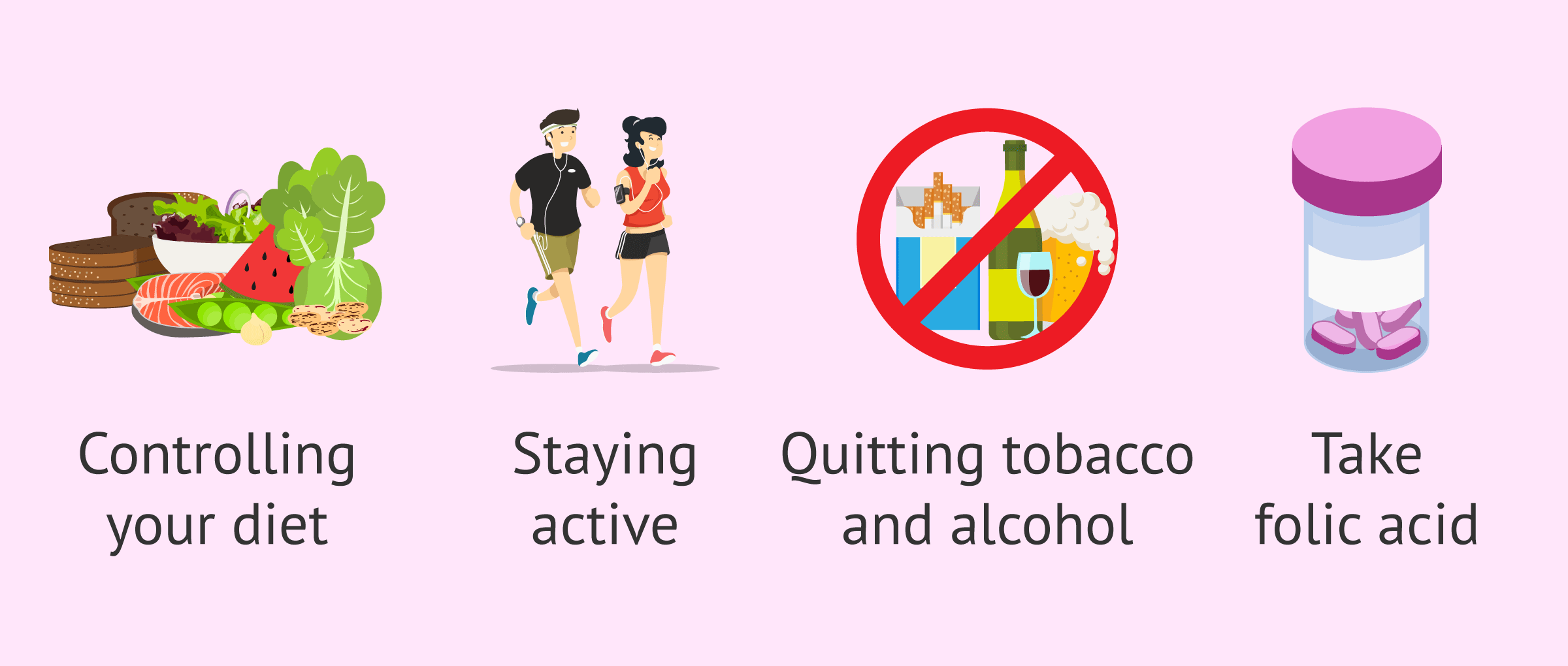
Before beginning fertility treatment, there are certain general recommendations to keep in mind, similar to seeking pregnancy naturally. Among them are:
- Eat a healthy diet that provides all the necessary nutrients and requirements.
- Keep active, doing moderate exercise.
- Quitting tobacco and alcohol.
- Take folic acid, in the case of women. The specialist will be the one to indicate the dose and duration of supplementation.

However, if the woman or couple is going to resort to assisted reproduction, there are other more specific considerations that are useful to know before starting fertility treatment.
Choosing the right fertility clinic
Throughout the entire process prior to the fertility treatment itself, it is important that a doctor-patient relationship of trust is established. This is achieved if the woman or couple feels that she is informed about everything related to her treatment. In addition, the fact that the gynecologist always resolves any doubts provides a great deal of security.
All this will give peace of mind to the woman or couple at a time that can be so complicated. Therefore, it is advisable to visit several assisted reproduction clinics before starting treatment. In this way, it will be possible to compare the treatment received in each of them, as well as the facilities and services they offer.

If you want to read more recommendations for choosing a fertility clinic, you can visit the following link: How to choose the best-assisted reproduction clinic for me?
Adequate preparation for visits
When visiting an assisted reproduction clinic, the woman or couple will receive a great deal of information that, in most cases, is completely new. For this reason, it is not uncommon for questions and concerns to arise once at home that is different from those discussed during the visit.
However, it is very important to make a note of these questions to ensure that they are asked at the next consultation. It is even advisable to carry a small notebook to take note of the gynecologist's explanations.
On the other hand, if it is the first visit, it is always advisable to bring the tests that the woman or couple has previously undergone. In this way, especially if they are recent, the results can guide the specialist in deciding on the most appropriate treatment.
In addition, it is advisable to think about personal and family medical history and background, as the gynecologist will ask about them.

You can read much more information about the first visit to a fertility center in the following article: What is the first assisted reproduction consultation like?
How to deal with the treatment?
When starting an assisted reproduction treatment, it is especially important:
- Avoid feelings of guilt.
- Not to neglect other plans and objectives.
- Seek support from partners (if applicable), family, friends or others who are also undergoing fertility treatment.

However, this whole process can be very hard emotionally for a woman or couple. In addition, it can be especially difficult in cases where gamete or embryo donation is necessary.
Because of this, more and more assisted reproduction clinics to have a psychology service that can help patients manage their feelings and emotions, accompanying them throughout their treatment. The woman or couple who considers it appropriate should not hesitate to request this service, as this professional and specialized support will be of great help.
Fertility treatments, like any other medical treatment, require that you trust the fertility specialists that will be by your side during your journey. Logically, each clinic has a different work methodology. Our Fertility Report will offer you a selection of recommended clinics, that is, fertility centers that have passed our rigorous selection process. Moreover, our system is capable of comparing the costs and conditions of each one so that you can make a well-informed decision.
FAQs from users
How do I prepare to start my fertility treatment?
First of all, it is important to understand that it is a two-way thing. A fertility treatment is a long journey and there must be complicity with your partner, if you have one. Those women who decide to start the journey alone, must also be sure of it and rely on both family and medical staff.
Regardless of the family model, each of the phases of the reproductive treatment must be known, that is to say, there must be communication between the patients and the clinic staff, as well as asking any questions.
Read more
Are there any recommendations for men before assisted reproduction treatment?
Yes, apart from the general recommendations such as leading a healthy life and avoiding tobacco and alcohol, in some cases supplementation with antioxidant compounds to improve semen quality may be of interest. However, it will be the specialist who will indicate whether the male should take these supplements, as well as the dosage and duration.
On the other hand, it is extremely important that the man respects the abstinence times and the indications given at the time of obtaining the semen sample.
On a psychological level, the man should feel involved in the process, support and accompany his partner, seek his own support and, if he considers it convenient, seek professional help to manage the emotions generated.
What tips should a woman follow who wants to get pregnant?
Pregnancy planning is one of the most important moments for a couple, and in many occasions it implies a certain stress for the future parents, who usually have many doubts at this time.
Nowadays, it is recommended to plan the pregnancy, because apart from making it come at the best psycho-social time for the couple (which helps responsible parenthood), some measures can be carried out within the medical field itself that will help the pregnancy to pass normally, avoiding unnecessary risks. These measures are:
- Health examination
- Start of folic acid intake
- Decreasing stress
- Assessing the woman's age
Recommended readings
If you wish to obtain more information about the different assisted reproduction techniques, you can visit the following link: Assisted reproduction techniques: differences and complexity.
On the other hand, if you have already finished your assisted reproduction treatment and you are interested in reading tips for the two-week wait, we recommend you to access the following article: What is two-week wait - Symptoms and tips after the treatment?
We make a great effort to provide you with the highest quality information.
🙏 Please share this article if you liked it. 💜💜 You help us continue!
References
Childress KJ, Lawson AK, Ghant MS, Mendoza G, Cardozo ER, Confino E, Marsh EE. First contact: the intersection of demographics, knowledge, and appraisal of treatment at the initial infertility visit. Fertil Steril. 2015 Jul;104(1):180-7. (see)
Gameiro S, Boivin J, Dancet E, de Klerk C, Emery M, Lewis-Jones C, Thorn P, Van den Broeck U, Venetis C, Verhaak CM, Wischmann T, Vermeulen N. ESHRE guideline: routine psychosocial care in infertility and medically assisted reproduction-a guide for fertility staff. Hum Reprod. 2015 Nov;30(11):2476-85. (see)
Stanford JB, Sanders JN, Simonsen SE, Hammoud A, Gibson M, Smith KR. Methods for a Retrospective Population-based and Clinic-based Subfertility Cohort Study: the Fertility Experiences Study. Paediatr Perinat Epidemiol. 2016 Jul;30(4):397-407. (see)
Stanhiser J, Steiner AZ. Psychosocial Aspects of Fertility and Assisted Reproductive Technology. Obstet Gynecol Clin North Am. 2018 Sep;45(3):563-574. (see)