
Recent analyses are reevaluating traditional beliefs about a very common male problem: the hydrocele. A team of specialists consisting of Ayhan Verit, Mert Verit, and Fatma Ferda Verit, from the Fatih Sultan Mehmet Hospital, the Hamidiye Medical Faculty, and the Haydarpaşa Hospital, has proposed a new perspective.
Historically considered a purely benign problem, this disorder could have negative repercussions on a man's reproductive capacity.
Provided below is an index with the 7 points we are going to expand on in this article.
What is a scrotal hydrocele?
A hydrocele is defined as a scrotal condition characterized by the excessive and painless accumulation of fluid between the visceral and parietal layers. In most diagnoses, the origin of this pathology is unclear and is termed idiopathic.
- Normally, it is treated as a benign scrotal disorder.
- It can manifest congenitally (present from birth) or be acquired throughout life.
- The main complaint usually focuses on physical discomfort and concern about body image.
As a general rule, medical guidelines recommend surgery (hydrocelectomy) only when the patient experiences obvious pain or complications such as infections arise.
Thermal stress and spermatogenesis
Proper sperm production requires the temperature of the testicles to be lower than the body's core temperature. Specifically, it must be maintained between 34°C and 35°C.
The cremaster muscle and its contraction mechanisms help regulate this by moving the testicles away from or closer to the abdomen. However, a hydrocele would hinder this biological process:
- The retained fluid exerts pressure and creates a mass that insulates the testicle.
- According to the laws of thermodynamics, a greater amount of fluid retains heat more effectively.
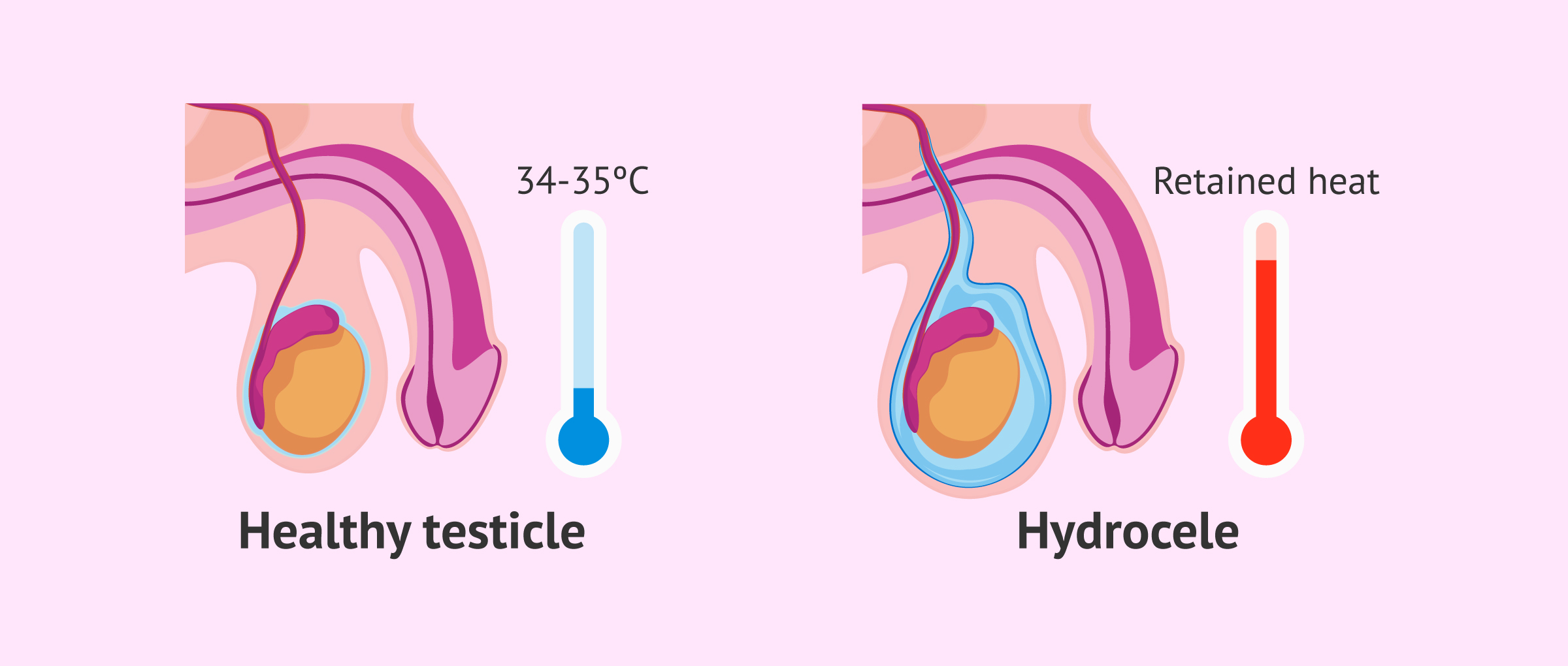
Thus, the magnitude and duration of this thermal stress could directly impair the formation and maturation of sperm (spermatogenesis).
Comparison: varicocele and hydrocele
In the field of fertility, it is widely accepted that a varicocele affects seminal quality. This is because the accumulation of blood in the scrotal veins increases the local temperature and damages the tissues. Interestingly, the hydrocele is downplayed under this same premise.
- In fact, the volume of fluid present in a hydrocele is usually greater than the volume of dilated blood in a varicocele.
- An enlarged scrotum due to a hydrocele is in continuous contact with the thighs, which makes it easier for its temperature to match that of the rest of the body, intensifying heat stress.
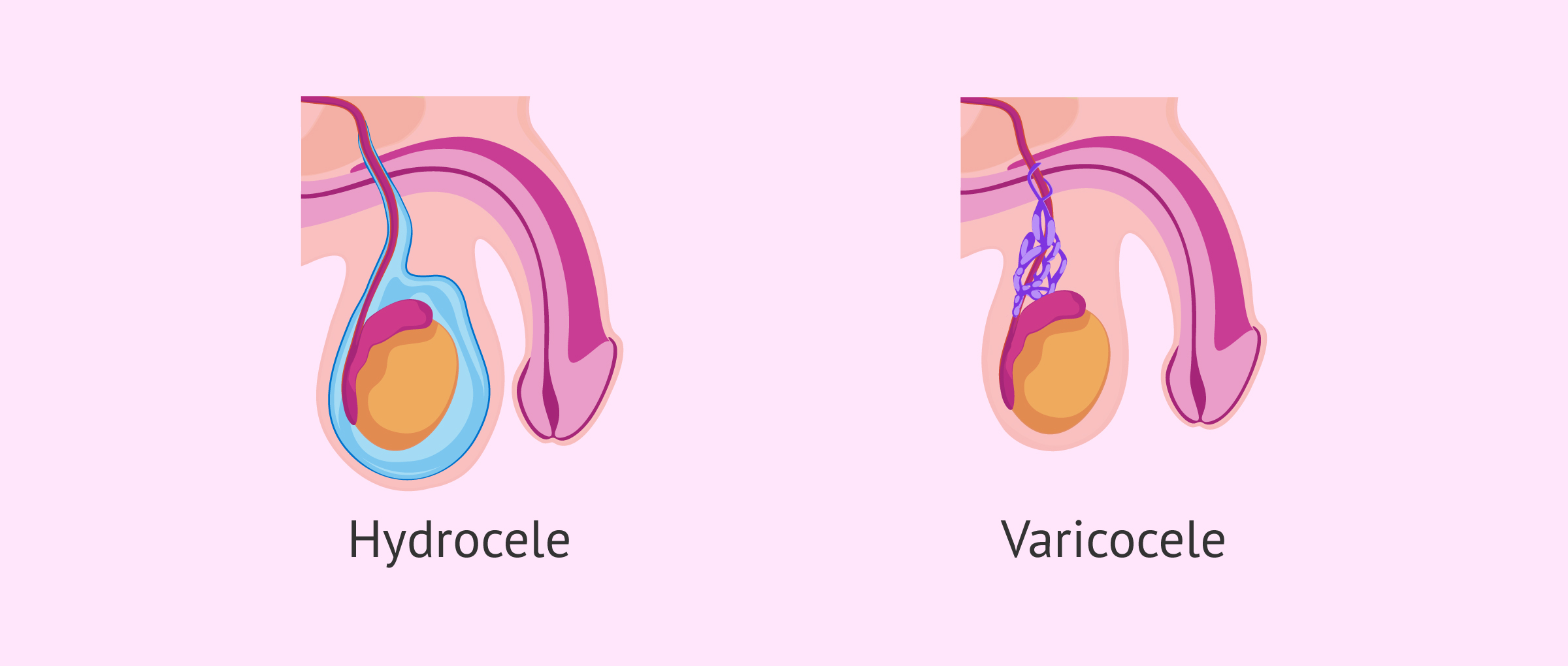
Furthermore, high-grade varicocele has been associated with reduced testosterone levels, and experts wonder if chronic severe hydrocele could have similar endocrine consequences.
New approaches in surgery
All this information suggests a clinical paradigm shift. Leaving a hydrocele untreated should no longer be viewed as completely harmless.
- Various past histological studies observed testicular atrophy and arrest of spermatogenesis in gonads affected by this pathology.
- Chronic intratesticular inflammation caused by sustained pressure and heat would be a predisposing factor in basic tumor pathogenesis.
Therefore, based on this, it would be essential to reconsider corrective surgery to expand its indications, seeking not only aesthetic improvement but the protection of male fertility and sexual health in the long term. However, this entire hypothesis requires further research.
Community and Support
At inviTRA we work to make monthly and rigorous information accessible to everyone. If this article has helped you, consider supporting us so we can continue accompanying more people on their journey to parenthood.
References
Verit A, Verit M, Verit FF. Hydrocele is a benign pathology, an appearance disorder: no, this may be a common misconception. Front Urol. 2026 Mar 5;6:1760748. doi: 10.3389/fruro.2026.1760748. PMID: 41868541; PMCID: PMC12999419. (View)
Author

Find the latest news on assisted reproduction in our channels.

