How Does Sperm Donation Work in Spain?
A man might donate his sperm voluntarily to a woman or couple willing to use it for a fertility treatment, with the goal of achieving pregnancy. Every donor must pass a psychological and medical screening process to determine how safe the treatment will be and how capable the candidate is as to qualify for this treatment.
Donor sperm can be used either for intrauterine insemination (IUI) and in vitro fertilization (IVF), which are the main assisted reproduction technologies (ART) nowadays. Only in cases where, in addition to sperm donation, also egg donation becomes necessary, IVF will be the chosen technique in the first place.
The different sections of this article have been assembled into the following table of contents.
Contents
- 1.
- 2.
- 3.
What does the Law say?
According to Spanish Law regarding Human Assisted Reproduction Techniques (henceforth, LAHRT), sperm donation must be:
- Anonymous: The prospective parents cannot get information about the donor's identity, not the other way around. The donor-conceived child won't be allowed to ask for confidential or contact information related to the donor. The donor will be selected by the fertility clinic.
- Altruistic: Sperm donation will be a free, formal act. Nevertheless, donors can get an economic compensation for any inconvenience caused by the sperm donation process. In Spain, this compensation ranges from €30 to €50 per semen sample.
- Voluntary: Donors must sign an informed consent in order to guarantee that they agree to undergo this process knowingly and voluntarily.


Indications
The most common profiles for those who decide to use donor sperm are the following:
- Single women wishing to be on motherhood
- Lesbian couples
- Heterosexual couples experiencing trouble conceiving a healthy child
Couples trying to conceive for a long period of time with no luck, they are advised to undergo various fertility tests in order to find out what is the reason behind infertility. If it is a case of male factor infertility, sperm donation may turn out to be the solution against whatever the problem is.
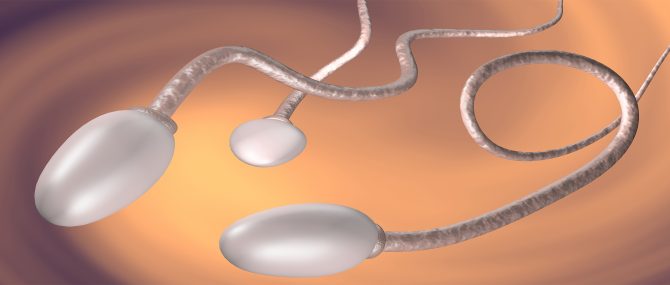
Sperm pathologies such as azoospermia, oligospermia, severe asthenozoospermia, or severe teratozoospermia are examples of alterations in semen quality, something that might pose a problem when trying to conceive and, therefore, indicate that donor sperm is necessary.
Also when the man suffers from some genetic disorder or abnormality likely to be inherited by offspring, using donor sperm for fertilization might help prevent the transmission of chromosomal abnormalities.
Finally, the absence of a male partner, either in cases of lesbian couples or single women, leaves no choice but to use donor sperm in order to undergo the most appropriate fertility treatment for becoming a mother, which could be IUI or IVF.
Sperm donor profile
For a man to become a sperm donor in Spain, he is required to be of legal age and younger than age 50. Nonetheless, many fertility clinics have established 35 years old as the age limit to being accepted as a sperm donor.

In addition, prospective sperm donors must be in an optimal state of health, both physically and mentally. For this to be checked, they must go through a medical and psychological screening that includes:
- Psychological interview as well as questions related to family medical history.
- Blood test: serology, determination of blood type, karyotype (i.e. chromosome analysis)...
- Semen analysis: a thorough seminogram will be carried out in order to evaluate sperm parameters such as sperm motility, sperm concentration, sperm morphology...
Donors make an average total amount of 20 donations, 1 donation each week. Before getting started with the sperm donation process and 6 months after the first semen sample is collected, donors must undergo a series of medical tests to make sure they are free from hereditary conditions such as HIV, hepatitis B and C, syphilis, and rubella.
t is also relevant to note that the number of donations is limited to 6 live births per donor as long as the sperm have been donated to non-related families.
We make a great effort to provide you with the highest quality information.
🙏 Please share this article if you liked it. 💜💜 You help us continue!