13th week of pregnancy: end of first trimester
The thirteenth week of pregnancy marks the beginning of the fourth month of gestation and the end of the first trimester. This means that the baby has made it through its first stage of development successfully and the risk of miscarriage is now lower.
The woman will also have already had her first pregnancy check-up and will have been able to see her future child in an ultrasound. In addition, her belly will have increased significantly in the last month and, at 13 weeks, the pregnancy will already be noticeable to the eye.
The different sections of this article have been assembled into the following table of contents.
Contents
- 1.
- 1.1.
- 2.
- 3.
- 4.
- 4.1.
- 4.2.
- 4.3.
- 4.4.
- 5.
- 6.
How is the fetus?
The main organs and structures of the fetus have already formed in the 13th week of pregnancy and, from this moment on, they will develop and increase in size very rapidly.
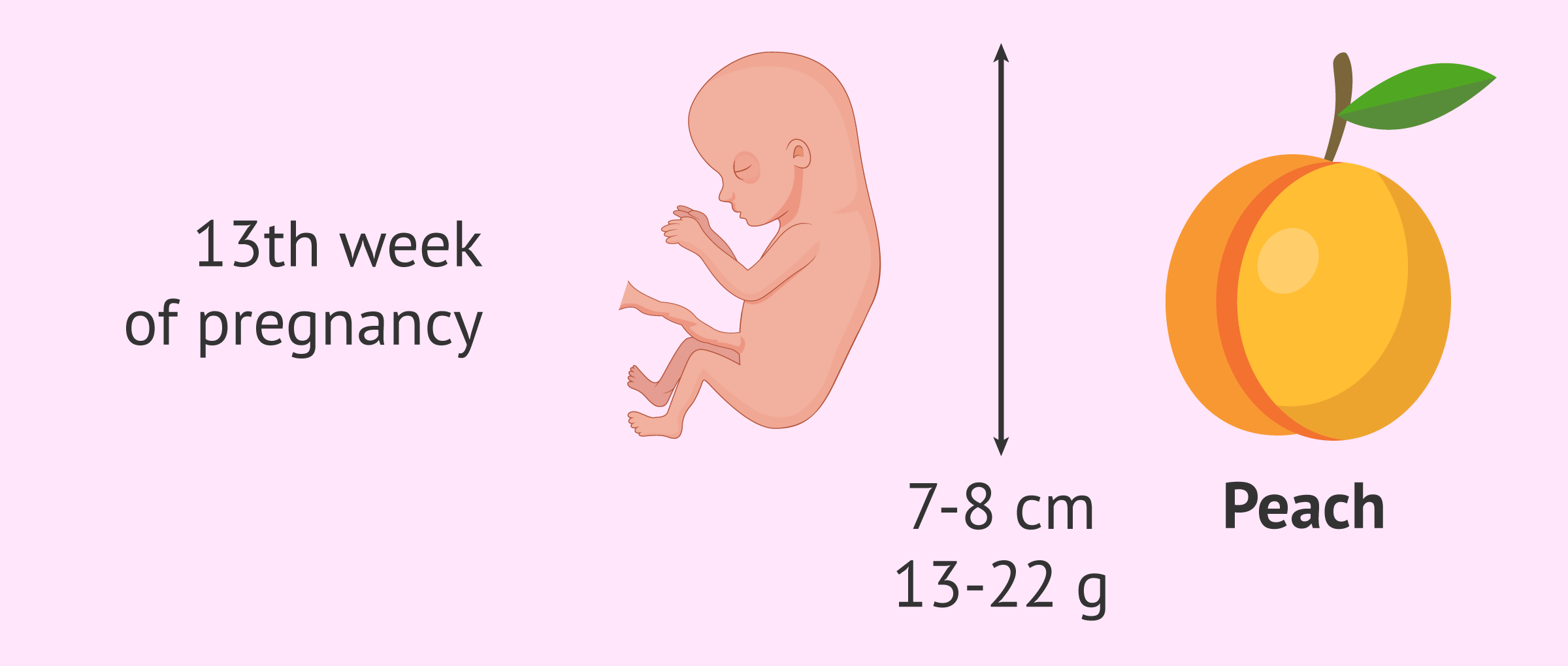
Generally speaking, the size of the fetus at 13 weeks is about 7-8 cm and its weight reaches 13-22 g. Its size at this time of pregnancy is usually compared to the size of a nectarine or a peach, although there may be variations from one pregnancy to another.

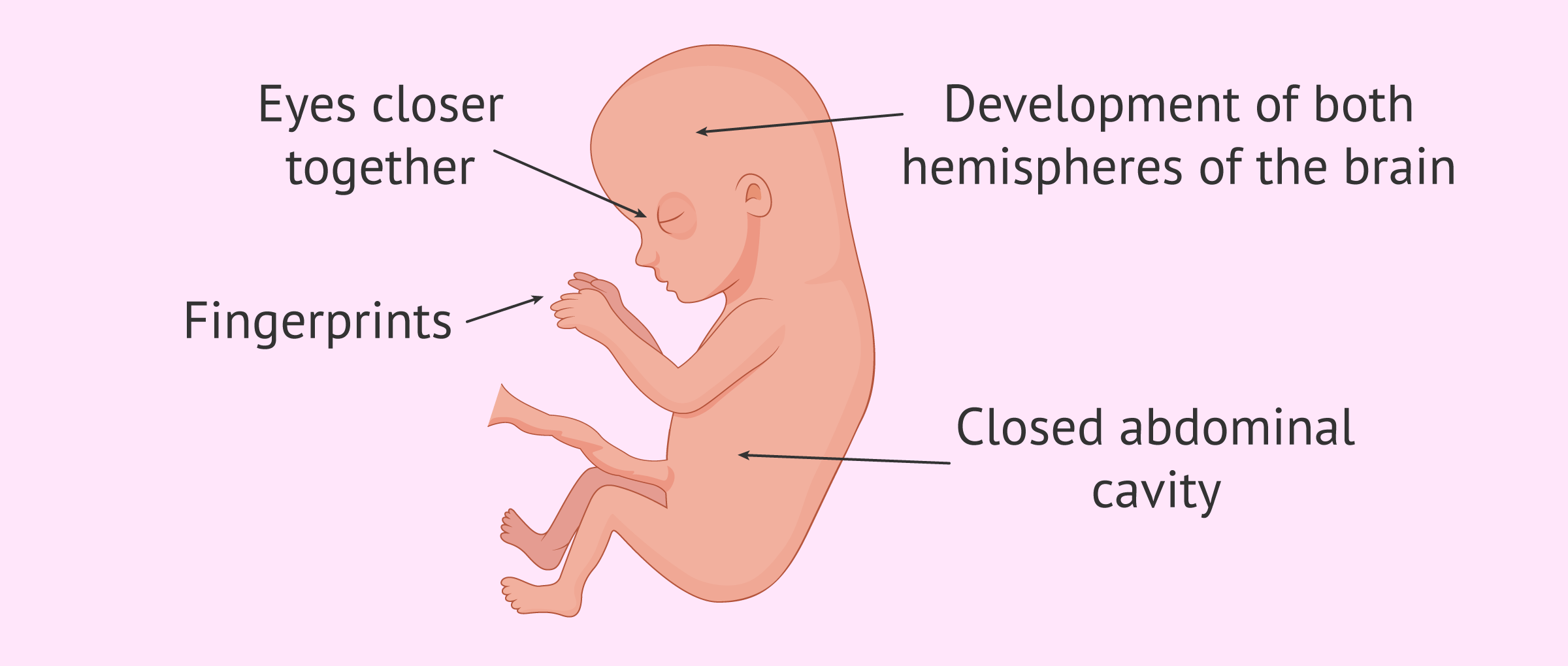
The face of the fetus looks more like that of a baby, although its head is still large: its eyes are already closer together, its forehead is raised and bulging, the ears have also moved forward, etc.
Fetal development in the 13th week of pregnancy
In addition to the changes discussed above, the following changes can also be seen in fetal growth at 13 weeks:
- Brain development: the left and right cerebral hemispheres begin to connect and the motor fibers that control movement mature.
- Hematological system: the red blood cells responsible for transporting oxygen are formed in the liver.
- The external genitalia can already be distinguished.
- The intestinal loops are placed inside the abdominal cavity, whose wall is already closed, and the umbilical cord passes through the already formed umbilicus.
- All the bones of the hand and the fingerprints of its fingers have already formed.
In addition to all this, the fetus is very active within the amniotic sac, as it moves freely floating in the amniotic fluid.
Changes in the mother
The most important change in the woman at thirteen weeks of pregnancy is weight gain and widening of the body. The belly may look more bulging and, from now on, the woman will have to buy looser clothes that are not too tight.
Other symptoms and changes in the woman's body at 13 weeks gestation are as follows:
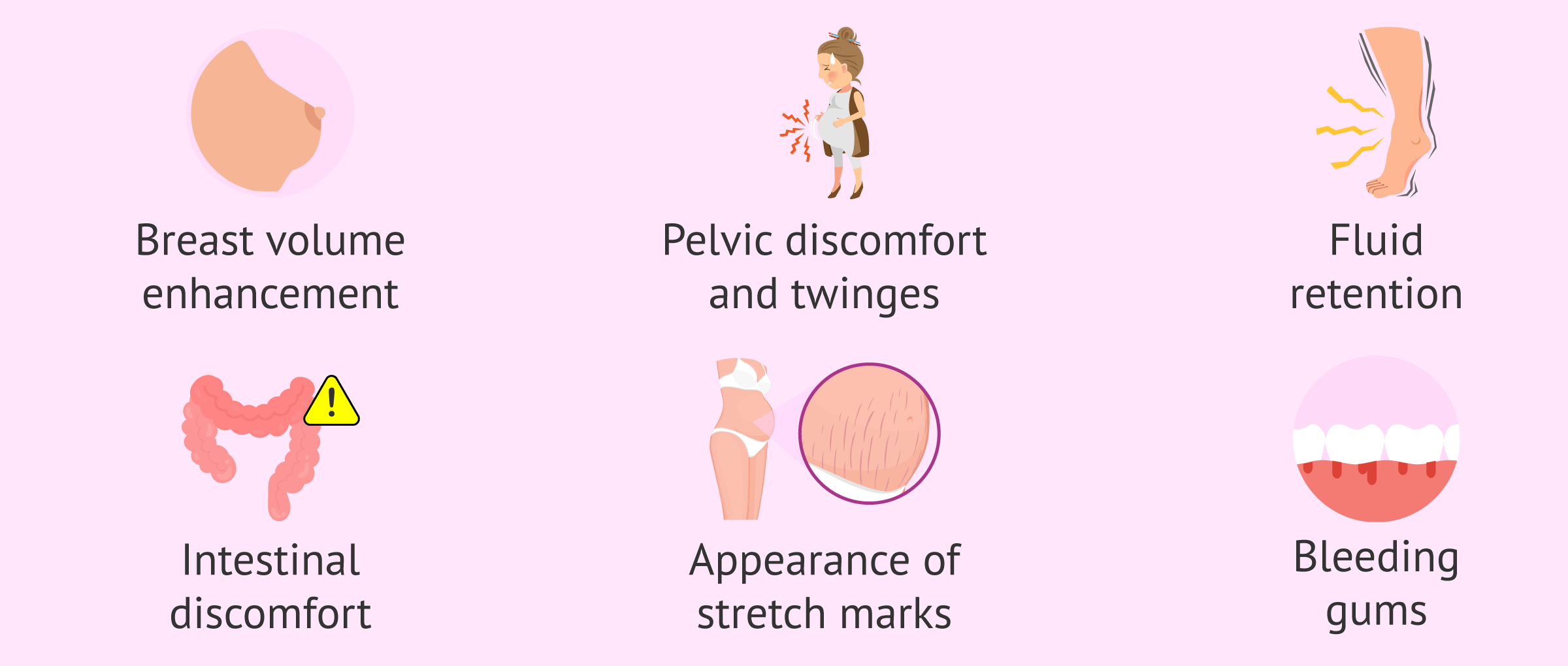
- The breasts increase in volume, the aureoles also become larger and darken.
- Pelvic discomfort and throbbing caused by the growing uterus. The ligaments that attach the uterus to the abdominal wall may be pulled.
- Fluid retention, which causes swelling of feet and ankles.
- Intestinal discomfort, burning, heartburn, gas and constipation.
- Appearance of stretch marks.
- Difficulty breathing, stuffing of the nose and bleeding gums due to increased blood volume.
The tiredness and nausea of the first weeks of pregnancy disappear in this fourth month. The woman feels more energetic and it is now when she really starts to enjoy her pregnancy.
Recommendations
Pregnant women should take care of themselves at all times so that the baby can grow healthy and strong. In addition, a healthy lifestyle will also help them feel better and reduce bothersome symptoms.
As for food, it should be taken into account that caloric needs in the second trimester of pregnancy range between 2,100 and 2,500 calories per day, depending on the physical activity of each woman, which should be ingested with a healthy and balanced diet. It is also important to include plenty of fiber in the diet to reduce constipation.

To combat fluid retention, women should stay active, go for walks, reduce salt in meals, do not wear high heels or very tight pants, among other recommendations.
In general, it is very important to practice some sport or moderate-intensity physical exercise during pregnancy, as this will help strengthen the muscles to support the extra weight.
On the other hand, since pregnant women are more prone to tooth decay, a visit to the dentist would be a good idea.
FAQs from users
Can I have an ultrasound in the 13th week of pregnancy?
Yes, although it is most common to have the ultrasound done in week 12 or earlier for the triple screening test, it could also be done in week 13 of pregnancy.
How many months is 13 weeks gestation?
Week 13 corresponds to the first week of the fourth month of gestation. It also corresponds to the last week of the first trimester of pregnancy.
What symptoms does the mother have in the 13th week of pregnancy?
Most commonly by 13 weeks of pregnancy, you will have gained some weight as your body changes shape and you lose the shape of your pelvis. Discomfort caused by uterine stretching, heartburn or distress is also likely to increase.
Another possible symptom is bowel slowing. Smooth muscles, those without voluntary movement, become slower with pregnancy. As a result, intestinal transit is slower and more time is needed to digest food.
What are stretch marks?
Stretch marks are lines that appear on certain parts of the body as a result of an abrupt stretching of the skin, which breaks the collagen and elastin fibers. They are usually located on the abdomen, hips, breasts, thighs, or buttocks.
Dry skin and a poor diet favor their appearance, as well as an excess of hormones. Some studies also indicate that they have a hereditary component.
During pregnancy, it is advisable to hydrate the skin well, drink plenty of water and take care of your diet to prevent stretch marks. Moderate physical exercise and massaging the affected areas can also help.
Recommended readings
Next week will be the 14th week of gestation. Gradually the fetus becomes more human-shaped. On fetal growth, you can continue reading the following article: The 14th week of pregnancy.
If you want to get more information on how the diet should be during the whole pregnancy, we recommend you to enter the following post: Diet during pregnancy.
We make a great effort to provide you with the highest quality information.
🙏 Please share this article if you liked it. 💜💜 You help us continue!
References
José A Sainz, Laura Gutierrez, José García-Mejido, Zenaida Ramos, María J Bonomi, Ana Fernández-Palacín, Adriana Aquise. Early fetal morphological evaluation (11-13 + 6 weeks) accomplished exclusively by transabdominal imaging and following routine midtrimester fetal ultrasound scan recommendations. Since when can it be performed? J Matern Fetal Neonatal Med. 2020 Apr;33(7):1140-1150 (View)
Junichi Hasegawa, Seiji Wada, Atsushi Kasamatsu, Masamitsu Nakamura, Haruka Hamanoue, Eriko Iwata, Jun Murotsuki, Ryuhei Nagai, Yoko Tateishi, Rei Sunami, Atsushi Tajima, Susumu Murata, Keiichi Matsubara, Masahiko Nakata, Akane Kondo, Miyuki Nishiyama, Aiko Sasaki, Akihiko Sekizawa, Haruhiko Sago, Yoshimasa Kamei. Distribution of PAPP-A and total hCG between 11 and 13 weeks of gestation in Japanese pregnant women. J Matern Fetal Neonatal Med. 2020 Jun;33(12):2017-2022 (View)
Meng Gong, Hua Shi, Yu-guo Zhang, Lei Ming. Prenatal screening at 11-13+6 weeks in assisted reproductive technology singleton pregnancies and those conceived naturally. J Obstet Gynaecol Res. 2015 Oct;41(10):1514-9. doi: 10.1111/jog.12752. Epub 2015 Jul 14 (View)
Voicu Dascau, Gheorghe Furau, Cristian Furau, Cristina Onel, Casiana Stanescu, Liliana Tataru, Cristina Ghib-Para, Cristina Popescu, Luminita Pilat, Maria Puschita. Uterine Artery Doppler Flow Indices in Pregnant Women During the 11 Weeks + 0 Days and 13 Weeks + 6 Days Gestational Ages: a Study of 168 Patients. Maedica (Bucur). 2017 Jan;12(1):36-41 (View)