
Ovulation refers to the period of the menstrual cycle in which the ovary releases a mature egg or oocyte, susceptible to fertilization. In a regular 28-day menstrual cycle, this process occurs around day 14 of the cycle, so there is a pre-ovulatory and post-ovulatory period.
Changes in the levels of hormones produced by the pituitary gland (specifically gonadotropins: follicle-stimulating hormone and luteinizing hormone) and by the ovary (estrogens and progesterone) will direct each phase of the menstrual cycle, including ovulation.
Provided below is an index with the 8 points we are going to expand on in this article.
- 1.
- 2.
- 3.
- 4.
- 4.1.
- 4.2.
- 4.3.
- 4.4.
- 5.
- 6.
- 7.
- 8.
Preovulatory phase
The pre-ovulatory phase is the period of time preceding ovulation itself. Therefore, this phase extends from the beginning of the menstrual cycle, i.e., the day menstruation arrives, until the luteinizing hormone (LH) peak occurs, which we will explain below.
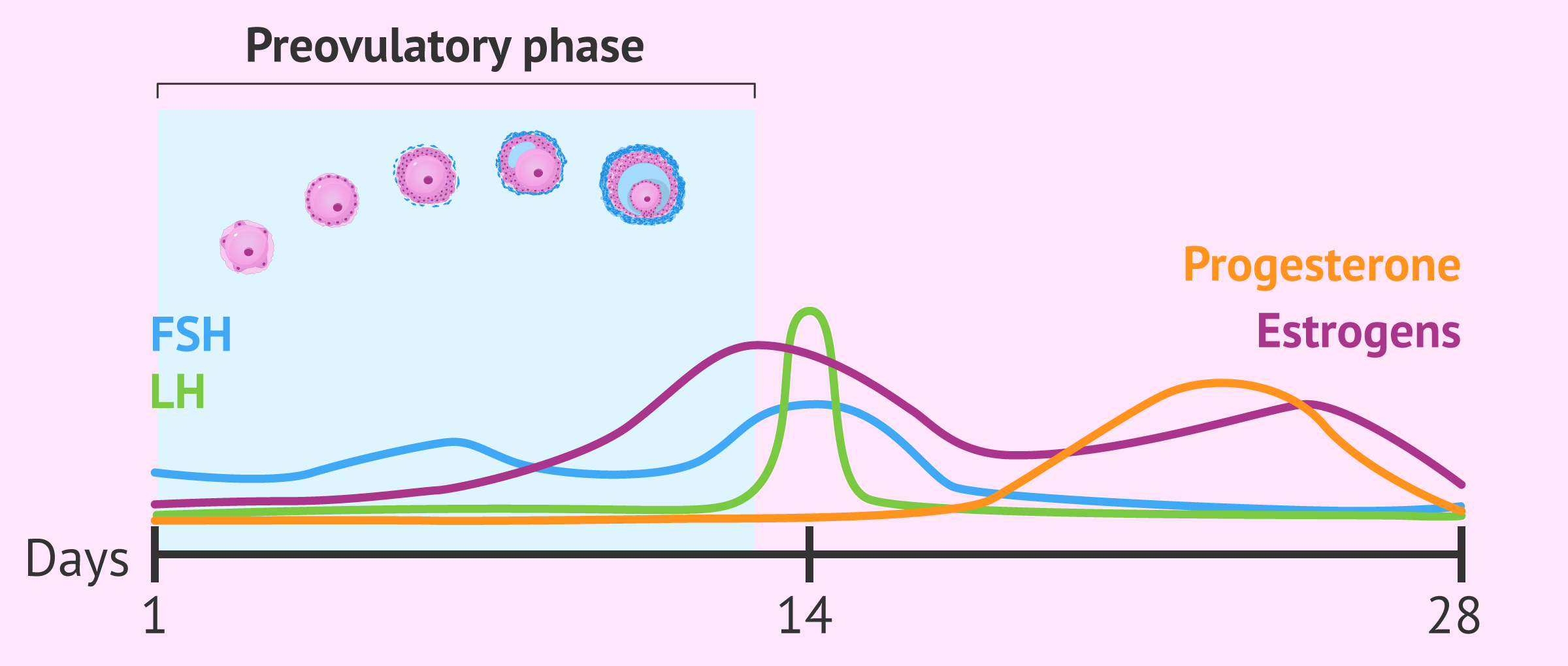
The preovulatory stage is characterized by the release of follicle-stimulating hormone (FSH) by the pituitary gland. FSH promotes ovarian follicular development, although only one follicle will complete this development and release a mature egg at ovulation. This follicle is known as dominant follicle.
Follicular development is responsible for an increase in estrogen levels, which will eventually cause large amounts of LH (and FSH to a lesser extent) to be released. However, progesterone could also be the trigger for the gonadotropin spike. This fact determines the end of the preovulatory phase and the beginning of the ovulatory period.
Ovulatory phase
Once the preovulatory phase is over, the ovulatory phase would begin. This stage lasts about 32-36 hours, the time between the onset of the LH peak until ovulation occurs.
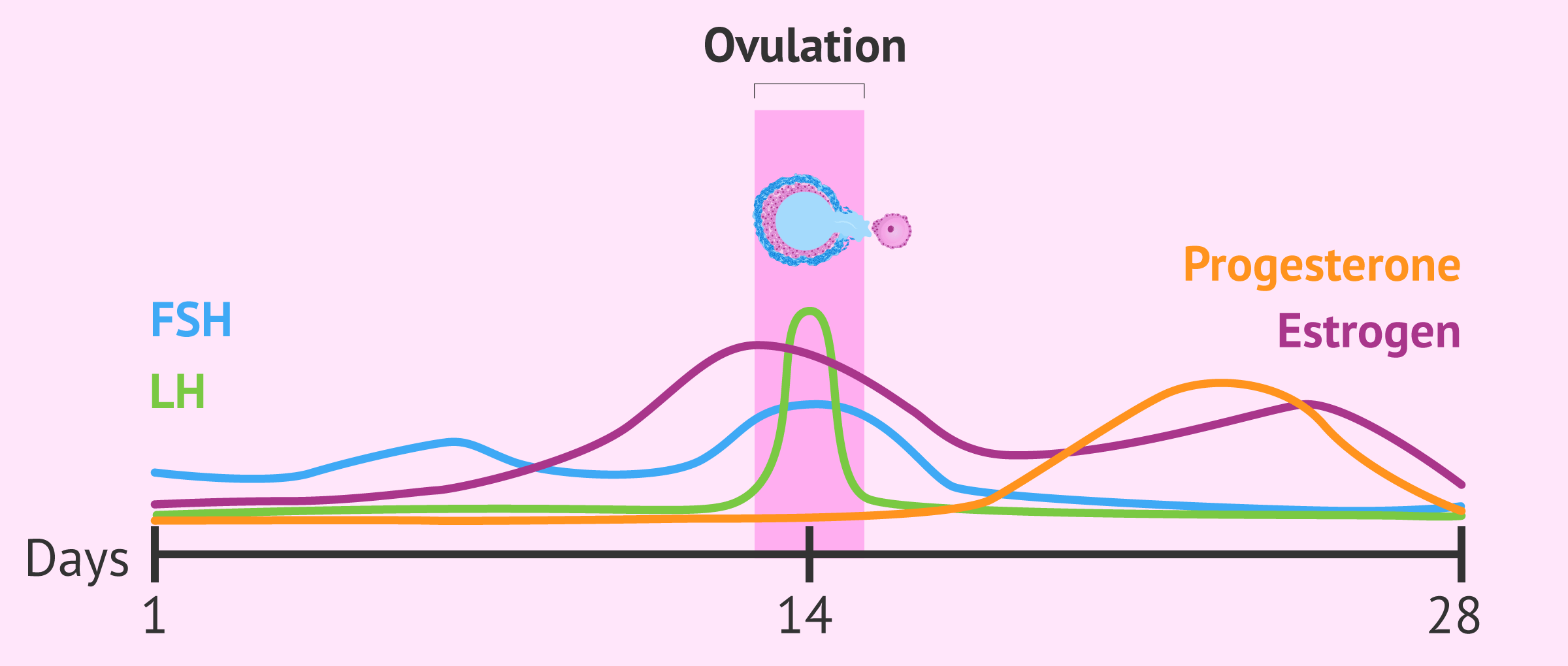
This peak of luteinizing hormone allows the oocyte inside the dominant follicle to complete its maturation, becoming an oocyte in metaphase II. In addition, this LH surge also triggers the expulsion of the mature oocyte out of the dominant follicle, i.e., the ovulationprocess itself.
This oocyte must be captured by the fallopian tubes, where it will remain to await the sperm and possible fertilization.
The periovulatory period is the woman's most fertile days. Therefore, if you are seeking pregnancy, it may be helpful to determine when ovulation will occur with menstrual calendars or ovulation tests.
Postovulatory phase
The postovulatory phase begins once ovulation has occurred and ends with the end of the menstrual cycle. Therefore, this phase has a duration of 12-16 days.
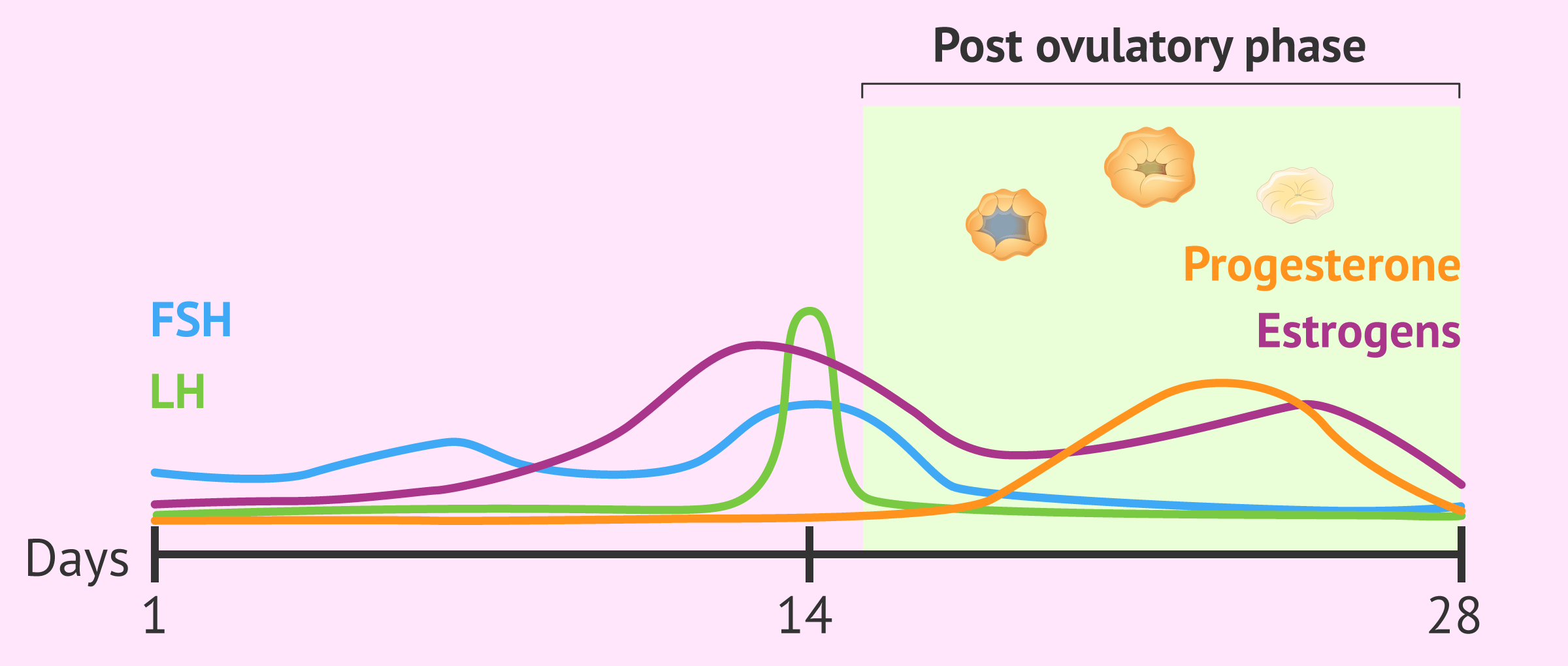
Once the oocyte has been expelled, the corpus luteum forms in the ovary from the empty follicle. This corpus luteum will begin to produce progesterone, which prepares the endometrium for possible embryo implantation.
If implantation does not occur, the corpus luteum stops secreting progesterone and will degenerate into corpus albicans. The uterine endometrium undergoes desquamation and is eliminated by menstruation, giving rise to the beginning of a new menstrual cycle. In addition, this drop in progesterone allows FSH to begin to rise, thus stimulating the development of a new follicular cohort.
The corpus albicans or ovarian white body is the "scar" produced by the degeneration of the corpus luteum.
However, if embryo implantation occurs, the corpus luteum will continue to produce progesterone and estradiol in the early stages of pregnancy, until the placenta takes over.
FAQs from users
What are the causes of anovulation?
There are several causes that can cause us not to ovulate. One of the most common is Polycystic Ovary Syndrome, a benign condition that affects many young women. It consists of an endocrine disorder that does not allow correct ovulation.
There could also be anovulation of hypothalamic or pituitary cause, such as intense physical exercise, low weight, etcetera. Other hormonal alterations such as alterations in thyroid hormone (TSH) or prolactin, can cause ovulation not to occur properly.

Advanced age would also be a cause why, in spite of having periods, in many cycles ovulation does not occur regularly.
Is it possible to ovulate while still bleeding from menstruation?
For women who have regular and normally long menstrual cycles, it would be unlikely that ovulation would occur during menstrual bleeding. However, this may happen on occasion.
Read more
Does the flow vary in the phases of ovulation?
Yes, the cervical secretion, cervical mucus, undergoes changes throughout the menstrual cycle.
In the pre-ovulatory phase, the cervical mucus is not very abundant and very viscous. However, in the ovulatory phase, this secretion is more abundant, thin (it stretches up to 10 cm when placed between two fingers) and transparent. Thus, near ovulation, the cervical mucus resembles raw egg white. Finally, in the postovulatory phase, the cervical secretion becomes thin and viscous again.
What are the symptoms of ovulation?
There exist certain signs and symptoms within the female body that might be indicative of the precise moment of ovulation and, consequently, the fertile window. They would be as follows:
- Alterations in the vaginal discharge: The volume increases, the consistency changes, and it becomes clearer. It grows more elastic in order to permit the passage of the spermatozoa through the uterine neck. This is due to the increase of estrogen in the body.
- Changes in the cervix: It is positioned higher with a softer consistency and a more open orifice. This is how spermatozoa can enter.
- Pain: Discomfort or sharp pains felt in the lower abdomen area when the ovarian follicle ruptures.
- Increase in libido: The woman may notice an increase in sexual desire due to the rise in estrogen.
- Breast tenderness: It's possible that the breasts are more sensitive and there is greater breast tenderness.
- Changes in your mood: Some women begin to notice emotional changes due to the hormonal shifts occurring.
- Spotting or some light vaginal bleeding: It is not always produced, but certain women have this slight vaginal spotting that coincides exactly with the time of their ovulation.
- Temperature changes: Following ovulation, there is an elevation in temperature ranging from 0.2 to 0.5°C. This is due to the increase in progesterone after the release of the egg and the formation of the corpus luteum.
Normally, many of these signs of ovulation go unnoticed by the woman, but they could be detected by paying a little attention to our body. However, it should be noted that not all women are just the same, which means that not all women will have the same symptoms when they are ovulating.
Read more
Recommended readings
The periovulatory period is the time of maximum fertility for women. If you are interested in ovulation tests, we recommend you to visit this link: Ovulation tests: how do they work and what are they for?
However, if you are interested in learning more about the phases of the menstrual cycle, we invite you to read the following article: The menstrual cycle: what happens in each of its phases?
Community and Support
At inviTRA we work to make monthly and rigorous information accessible to everyone. If this article has helped you, consider supporting us so we can continue accompanying more people on their journey to parenthood.
References
Baerwald AR, Adams GP, Pierson RA. Ovarian antral folliculogenesis during the human menstrual cycle: a review. Hum Reprod Update. 2012 Jan-Feb;18(1):73-91.
Berga S, Naftolin F. Neuroendocrine control of ovulation. Gynecol Endocrinol. 2012 Mar;28 Suppl 1:9-13.
Dozortsev DI, Diamond MP. Luteinizing hormone-independent rise of progesterone as the physiological trigger of the ovulatory gonadotropins surge in the human. Fertil Steril. 2020 Aug;114(2):191-199.
Marcozzi S, Rossi V, Salustri A, De Felici M, Klinger FG. Programmed cell death in the human ovary. Minerva Ginecol. 2018 Oct;70(5):549-560.
Robker RL, Hennebold JD, Russell DL. Coordination of Ovulation and Oocyte Maturation: A Good Egg at the Right Time. Endocrinology. 2018 Sep 1;159(9):3209-3218.
Son WY, Das M, Shalom-Paz E, Holzer H. Mechanisms of follicle selection and development. Minerva Ginecol. 2011 Apr;63(2):89-102.
FAQs from users: 'What are the causes of anovulation?', 'Is it possible to ovulate while still bleeding from menstruation?', 'Does the flow vary in the phases of ovulation?' and 'What are the symptoms of ovulation?'.
Authors and contributors


More information about Cristina Algarra Goosman
Find the latest news on assisted reproduction in our channels.


Hello, I´ve been TTC for a couple of months now and I quite don´t understand the phases. In my app, they refer to a follicular phase, what does that mean?
Hi Alice,
The follicular phase is synonymous with the pre-ovulatory phase, it is the phase in which follicular development occurs that will lead a follicle to ovulate.
This phase begins on the first day of the cycle (or first day of menstruation) and ends at ovulation. The chances of pregnancy are low in this phase, people generally start testing for ovulation on the 10th day of the cycle to catch the rise of LH.
I hope I have helped you.
Best regards.
Hello, are the phases of the cycle so accurate? I am going to try to conceive and my cycles are not 28 days long, rather 33 days and therefore the days do not match what I have read.
Hi Leslie21,
Menstrual cycles are generally 28 days which does not imply that all women have cycles of the same length, cycles of between 21 and 35 days are considered normal, so your cycle would be considered within normal.
I recommend that you use different methods to identify when you usually ovulate, such as ovulation tests, basal temperature control or cervical mucus.
I hope I have helped you.
Best of luck!