Clínica Tambre


The different sections of this article have been assembled into the following table of contents.
Contents
- 1.
- 2.
- 3.
- 3.1.
- 3.2.
- 3.3.
- 3.4.
- 3.5.
- 3.6.
- 3.7.
- 4.
- 5.
- 5.1.
- 5.2.
- 5.3.
- 6.
- 7.
- 8.
- 8.1.
- 9.
Description
Clinica Tambre is a private medical-surgical center specializing in gynecology and assisted reproduction.
It is located in a residential and very central area of Madrid, near Nuevos Ministerios station, in a large townhouse of about 1.300m2.
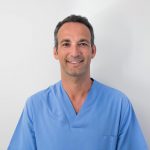
The medical director of Clinica Tambre is Dr. Laura García de Miguel, the director of the laboratory is Dr. Susana Cortés Gallego and in total the entire team is made up of some 44 professionals from different areas.
On the other hand, since 2018, the CEO and director of Tambre is Inge Kormelink, whose work has been vital in promoting the clinic's international department.
Today, as well as attending patients from Madrid and other Spanish cities, 40% of Clinic Tambre patients are foreign.
If you need information on how to get to the clinic, either by public or private transport, you can access this link.
Clinic History
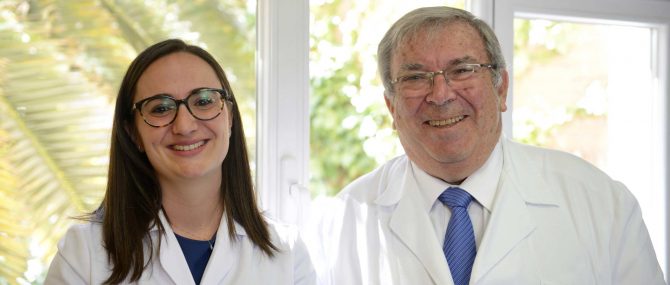
The founder of Clinica Tambre is Dr. Pedro Caballero Peregrin, who began working in the field of assisted reproduction more than 40 years ago.
In 2000, after a long career as a fertility gynecologist, he created Tambre fertility clinic.
Another important fact is that in 1980 Dr. Pedro Caballero created the second Sperm Bank in Spain, the first in Madrid, and pioneered the techniques of sperm freezing.
During its long history, Clinica Tambre has obtained several quality certificates and official recognition, such as the ISO 9001:2015 quality certificate.
Recently, they have also been awarded the IVF CLINIC AWARDS 2019 in the Innovations and Egg Donation Program categories.
Facilities
Clinica Tambre's facilities are divided between two 4-story terraced houses, which have been integrated to form a single center.
The clinic was completely renovated in 2018, so it now has very comfortable and modern features. Below, you will find all the facilities of the clinic detailed, with the resources and technology available to perform assisted reproduction treatments.
Building and facade
Despite being located in the center of Madrid, Clinica Tambre enjoys a very peaceful setting, as it is a quiet street, with no tall buildings around and large trees on the pavements, giving it a picturesque atmosphere.
At the entrance to the Tambre clinic, once past the exterior door, one can see that there is a fountain in the center with two stairs on either side that lead up to a common door.
At this entrance, there is also a small garden with various plants and trees, and two small wooden stools to sit on. This whole set provides a very relaxed atmosphere as soon as you walk in the door.
The clinic's façade is light salmon, with the Tambre logo in large and several small windows on all floors.
People with reduced mobility cannot access the clinic through this entrance because of the stairs, but there is a ramp on the right side that leads to another entrance door and elevators inside the center.
Reception and waiting room
The entrance to the Tambre reception has double, automatic doors. The counter is located on the left-hand side, where 4 patient care people work, speaking Spanish, English, and German.
Just in front of the entrance, there are the stairs and the lift, on the left a long corridor leading to the consultation rooms and on the right the waiting rooms.
Clinica Tambre has a total of 5 individual waiting rooms, adequately sized to accommodate between 2 and 4 people.

The furniture that can be found in each of them is a sofa with cushions, an armchair, a modern glass table, and a floor lamp. The doors of these small rooms are very modern sliding wood doors, the floor is made of light parquet and the walls are in a grey tone.


A Nespresso coffee machine, a water dispenser, and entertainment magazines are located in the waiting room aisle.
Consultations
Tambre has 5 medical offices with an examination room equipped with a gynecological table, screen, sink, and a state-of-the-art Samsung ultrasound machine.

A total of 6 gynecologists specializing in fertility and assisted reproduction work in the clinic. In addition to Spanish, they speak English, French, and Italian to communicate with international patients. They are also on duty on weekends and holidays in case it is necessary to make any puncture or embryo transfer.
Furthermore, Tambre's medical team is made up of two other specialists in gynecology and obstetrics, an anesthetist, a urologist, an immunologist, and an endocrinologist.
Operating Room
Tambre's operating theatre and laboratory area is on the third floor, accessible by stairs or lift.
The operating room is large and equipped with everything needed to perform fertility treatments and major outpatient surgery: operating table, instrument tables, a monitor, a Philips ultrasound machine, anesthesia delivery system, peripheral venoclysis, defibrillator, a crash cart, and an ultra-purified air line.
Communication with the IVF laboratory is direct to ensure that the embryos do not undergo any change in their culture conditions. In addition, the walls and floor of the operating room are designed so that dirt does not accumulate and maximum sterile conditions are maintained.

The staff present in all the interventions carried out in this operating room are the gynecologist, the anesthetist, and the nurses.
Laboratories
Clinica Tambre has 3 laboratories on its premises: andrology, in vitro fertilization, and cryobiology.
A total of nine people work here, including embryologists and laboratory technicians. They also work on weekends and holidays so that there are at least 2 embryologists working.
In the next section, we will describe Tambre's laboratories:
Andrology Laboratory
This laboratory is located on the second floor and is where sperm analysis and processing of semen samples for freezing are carried out.
Specifically, three of Tambre's embryologists work here and carry out the following procedures:
- Semen analysis
- Hormone determinations
- Sperm DNA fragmentation test with Comet FertilityTM and Chip FertileTM
- Sperm freezing
- Sperm selection with MACS
- Genetic analysis of sperm by Chromosperm
- Washing of infectious seminal samples
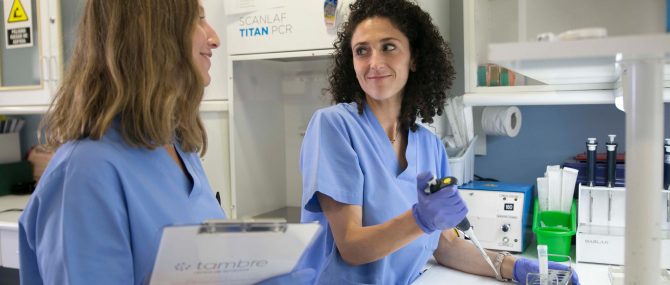
The equipment and material they have are the following: a laminar flow hood, a phase-contrast microscope, two incubators, two centrifuges, a fluorescence microscope, a biochemical analyzer for blood samples, and a sperm bank.
IVF Laboratory
This laboratory, which is directly connected to the operating room, also has all the technology needed to carry out assisted reproduction techniques: two laminar flow hoods with heated surfaces, two binocular magnifiers, two inverted microscopes, heated blocks, two microinjectors, and five automatic pipettes.
Clinica Tambre has a total of 10 incubators for embryo culture:
- Four HERA cell incubators
- Four incubators MINC™ that work at low oxygen concentrations
- Two state-of-the-art GERI incubators with the time-lapse system
The furniture is made of stainless steel, there are no windows, the light is very dim, the corners of the wall and the baseboards of the floor are rounded, the walls are covered with epoxy paper and the ventilation system is controlled by filters. All this is necessary to guarantee the optimal conditions for embryo culture and to make the laboratory completely sterile.
Besides, three of Tambre's embryologists have experience in embryo biopsy, which they perform using lasers in order to study the embryos genetically. This treatment is known as preimplantation genetic diagnosis (PGD).

On the other hand, Tambre has the RI WITNESS security system to identify biological samples. It is an automated system that uses radio frequency identification chips, which are attached to each sample so that it is known at all times which patients they belong to and human error is avoided.
Cryobiology Laboratory
This lab is right next to the IVF lab. This is where the eggs and embryos are frozen for cryopreservation using the vitrification technique, and also thawed when an IVF with frozen eggs or a frozen embryo transfer is to be performed.
In addition, in this laboratory, sperm is also capacitated for in vitro fertilization or intracytoplasmic sperm injection (ICSI).
For this purpose, it has two laminar flow hoods with a heated surface, two binocular magnifying glasses, and six banks for cryopreservation of oocytes and embryos.
Recovery room
Clinica Tambre has 6 individual recovery rooms, all with private bathrooms.
Some of these rooms also have a shower inside the toilet for those international patients who have made a long journey and appreciate this type of service.
The furniture that can be found in each room is a bed, an armchair with a footrest, a wardrobe, and two small tables with a lamp.

After each operation, Tambre offers breakfast service to all its patients in the room. This consists of juice, tea, and cookies.
Nursing room
This is where the blood draws are done. It's located on the ground floor, just past the reception.
The resources found are a stretcher with armrests, a sink, a refrigerator, a storage area, and a centrifuge.

As we have already said, the equipment for the biochemical analysis of blood samples is in the andrology laboratory, not sent to a laboratory outside Tambre.
How is the first visit?
The first visit that patients make to Clinica Tambre is free of charge. This is an informative visit with the gynecologist, lasting approximately one hour, during which the test results provided by the patients are reviewed and orientation is given.
Patients can also hire a diagnostic test package on the same day for only 90 euros, which is also discounted from the cost of treatment if they decide to have it done. This package includes the following:
- Ultrasound
- Semen analysis
- Blood tests
- Consultation of results
After this first medical visit, patients meet with a patient care coordinator, who explains the steps of the process in detail, resolves doubts, and gives a quote.
Clinica Tambre has 8 patient care coordinators who speak the following languages: Spanish, English, French, Italian, German, and Dutch. The Italian and Dutch coordinators are native speakers.
Finally, it is worth noting that Tambre has financing options for treatments from 3 to 60 months and special discounts for unemployed people.
What treatments do they perform?
The fertility treatments that can be carried out in Clinica Tambre are specified in the following table.
If you're still unsure which fertility treatment is right for you and would like to know more about it, we suggest you read on here: Fertility Treatment Overview.
The treatment costs may vary significantly depending on the tests or techniques included or not, such as the seminogram, medication, fertility testing, medical visits, prolonged culture or embryo vitrification.
This Tool helps you to find out the exact costs of the different fertility clinics (what's included and what's not) and provides you with lots of useful tips for your first appointment.
Complementary techniques
In addition to all the treatments indicated in the previous section, Tambre has the technology and professionals necessary to carry out the following complementary techniques, in order to increase the possibilities of treatment success:
- Embryo culture with Time-Lapse technology in a Geri incubator
- Long culture up to blastocyst stage
- Assisted hatching
- Genetic analysis of sperm by Chromosperm
- Testicular biopsy to obtain sperm
Diagnostic Tests
The diagnostic tests that can be performed at Tambre before determining the appropriate fertility treatment are as follows:
- Semen analysis
- Ultrasound review
- Male fertility testing
- Female fertility testing
- Single and double-stranded sperm DNA fragmentation
- Genetic compatibility test
- First trimester ultrasound
Gamete donors
All those who wish to become sperm or egg donors can come to Clinica Tambre to pass all the necessary medical and psychological tests and, if they are suitable, proceed with the donation.
The center does not have specific facilities for donors, but by having individual waiting rooms, donors never come into contact with patients.
Something very interesting is that Tambre has the Fenomatch donor allocation software. This is a biometric facial recognition program that allows the selection of the sperm or egg donor that most closely resembles the patient.
However, in compliance with the requirements established in Law 14/2006 on Assisted Human Reproduction Techniques, patients will not be able to choose the physical features of the donors or know their identity.
Other services
Clinica Tambre has various specialized units with the aim of facilitating work between medical professionals and providing patients with comprehensive care, which is especially necessary in highly complex cases.
- Psychological support
- this service is free of charge for all those patients who are undergoing assisted reproduction treatment and require some kind of emotional support. The head of the unit is Dr. Silvia Moreno Golmar.
- Immunology and Reproductive Failure Unit
- Tambre has Dr. Juana Gil Herrera, a specialist in immunology, to study, evaluate and treat cases of infertility with an immune origin, especially in patients with implantation failures and recurrent pregnancy loss.
- Urology Unit
- is focused on the diagnosis and treatment of male infertility problems, but also on providing solutions to pathologies related to the urinary system and the adrenal glands of both men and women. Its responsible is Dr. Ricardo García Navas.
- Breast unit
- Tambre has Dr José María Román Santamaría, a gynecologist specializing in senology, in order to offer his patients a service of prevention and early detection of breast cancer.
Success rates
The Spanish Fertility Society is in charge of compiling the results of all the Spanish assisted reproduction clinics every year and making a statistical analysis. In fact, the SEF is the only scientific and independent organization of the clinics that collects and publishes these data in an objective manner.
Although our analysis of this clinic was carried out in 26th October, 2020, we have to indicate that the last report published by the SEF shows the success rates obtained in the year 2018 (National Activity Register 2018-SEF Register).
Normally, there is a delay of about 2 years in the publication of these statistics due to the difficulty in data collection and the controls that are carried out. It should be noted that, to collect data from a gestation achieved in December 2017, we must wait until delivery, which will be approximately in September 2018.
It should also be taken into account that directly comparing pregnancy rates between different clinics can lead to misunderstandings because there are many factors that influence the results, such as the cause of sterility or the particular characteristics of each treatment.
Therefore, the SEF data shown below should be taken as a mere guide. In addition, we recommend reading this article for a better interpretation of the statistics.
IVF/ICSI
Realized cycles
Number of total cycles performed by the clinic in a year.
The SEF does not provide an exact number of annual cycles that each center performs, but rather it does so in the form of ranges as follows: less than 100 annual cycles, between 100 and 500 annual cycles, or more than 500 annual cycles.
From inviTRA we consider that for a better interpretation of the results it would be good that the SEF provides more exact data or smaller ranges for the number of annual cycles.
This is the total number of cycles performed by Tambre in a year.
Implantation rate per transfer
The probability that an embryo will implant in the woman's uterus after the transfer.
This success rate refers to the probability that a transferred embryo will nest in the woman's uterus. It is calculated as follows: number of gestational sacs observed on ultrasound divided by the number of embryos transferred.
The SEF shows this value in the form of an interval, since it is very complicated to provide an exact percentage due to the variability of factors that we have already discussed.
It should also be taken into account that the more assisted reproduction cycles the clinic performs, the narrower this interval will be and the better the interpretation.
Below, we show the implantation rates per embryo transfer in Tambre.
Pregnancy probability per transfer
Probability that an embryo transfer will lead to a pregnancy, regardless of the number of embryos transferred.
This success rate refers to the probability of pregnancy for each embryo transfer, regardless of the number of embryos transferred and the type of gestation obtained, that is, whether it is a single or multiple gestation.
The SEF divides this success rate according to the woman's age and is also shown in the form of an interval, so it is likely that very large intervals will be found in clinics that perform few cycles.
These are the pregnancy rates per embryo transfer obtained by Tambre.
Fresh embryo transfer
Frozen embryo transfer
Percentage of transferred embryos
Percentage of embryo transfers made with one, two or three embryos
According to Law 14/2006 on Assisted Human Reproduction Techniques, in Spain it is only permitted to transfer a maximum of 3 embryos at each attempt.
Even so, a higher percentage of single-embryo transfers is now considered a quality parameter for clinics, since although transfers of two or three embryos increase the rate of gestation, twin or multiple pregnancies have many risks for the mother and babies and must be avoided at all costs.
The recommendation of inviTRA is to transfer only 1 or 2 embryos whenever possible.
In Tambre they have the following percentages in terms of number of embryos transferred.
Fresh embryo transfer
Frozen embryo transfer
Type of pregnancy per transfer
Types of pregnancies achieved according to the number of embryos transferred
As we have said, a single gestation is the best result that can be obtained after an assisted reproduction treatment.
In the following graphs, the percentage of each type of gestation obtained in Tambre is shown according to the number of embryos transferred.
Due to the risks associated with multiple pregnancies (lower birth weight, higher probability of premature birth, etc.), the ideal would be to always obtain a single gestation rate of 100%, regardless of having transferred 1, 2 or 3 embryos.
Transfer of fresh embryos
Transfer of frozen embryos
IVF with egg donation
Realized cycles
Number of total cycles performed by the clinic in a year.
As far as egg donation is concerned, these are the ranges of annual cycles performed by Tambre.
As we have indicated above, the SEF does not provide the exact number of cycles performed by a center and that makes it difficult to interpret.
Implantation rate per transfer
The probability that an embryo will implant in the woman's uterus after the transfer.
The probability of a successful egg donation is usually higher than that of IVF with own eggs.
Taking this into account, these are the implantation rates obtained in Tambre for IVF with donated eggs.
Pregnancy probability per transfer
Probability that an embryo transfer will lead to a pregnancy, regardless of the number of embryos transferred.
In the case of egg donation, the probability of achieving a pregnancy does not depend so much on the age of the recipient woman. Still, the SEF divides this success rate equally into age ranges.
It should also be noted that the current trend is to perform IVF with frozen donor eggs rather than fresh ones.
These are the pregnancy rates by embryo transfer obtained in Tambre for egg donation.
Fresh embryo transfer
Frozen embryo transfer
Percentage of transferred embryos
Percentage of embryo transfers made with one, two or three embryos
Given the high probability of achieving a pregnancy with donated eggs, it is always preferable to transfer a single embryo in this treatment in order to avoid a multiple pregnancy.
In Tambre the embryos resulting from egg donation are transferred in the following manner.
Transfer of fresh embryos
Transfer of frozen embryos
Type of pregnancy per transfer
Types of pregnancies achieved according to the number of embryos transferred
Finally, these are the types of pregnancies achieved by Tambre according to the number of embryos transferred in egg donation IVF.
Fresh Embryo transfer
Frozen Embryo transfer
Artificial insemination with partner's sperm
Pregnancy rate per cycle
Number of pregnancies per cycle according to the woman's age.
This success rate refers to the probability of achieving a pregnancy for each artificial insemination performed.
The SEF divides this success rate according to the woman's age and is also shown in the form of an interval, so it is likely to be found with very large intervals in clinics that perform few cycles.
Below are the pregnancy rates per cycle obtained in Tambre.
Type of gestation by pregnancy
Type of pregnancy obtained after performing an artificial insemination treatment
Single gestation is the best result that can be obtained after an assisted reproduction treatment, either by artificial insemination or by in vitro fertilization.
In the following graphs, the percentages of each type of pregnancy obtained in Tambre are shown for each pregnancy achieved with artificial insemination. These data are also divided according to the woman's age.
Due to the risks associated with multiple pregnancies (lower birth weight, higher probability of premature birth, etc.), the ideal would be to always obtain a single gestation rate of 100%.
Women under 35 years
Women between 35-39 years
Artificial insemination with donor sperm
Pregnancy rate per cycle
Number of pregnancies per cycle according to the woman's age.
To show the pregnancy rate of donor artificial insemination, the SEF divides the results according to the woman's age.
These are the probability intervals of pregnancy achieved by Tambre for donor artificial insemination.
Type of gestation by pregnancy
Type of pregnancy obtained after performing an artificial insemination treatment
As for the type of pregnancy obtained after getting a positive result with donor artificial insemination, these are the data obtained by Tambre according to the woman's age.
It is worth noting the risks that a multiple pregnancy entails for both mother and babies, so the ideal result in any assisted reproduction treatment is a single gestation.
Women under 35 years
Women between 35-39 years
What patients say
The patients reviews about Clinica Tambre on the internet are very positive. In the following section, we will show some of the comments made on Google Business.
Catalina, for example, made a very positive experience at Clinica Tambre. The patient describes the treatment as personalized and communication as fluent. According to Claire, the staff is friendly and professional. After 9 years of trying, she was able to get pregnant on the first cycle at this clinic.
Also, Lucinda coincides with the positive statements from above. She highlights the kind and personalized attention and would recommend the clinic.


If you are patient at Clinica Tambre and want to tell us about your experience, we invite you to do so at our comment section.
Medical team





















Clinic location
Clinica Tambre is located in Calle Tambre N/8-10, in the El Viso district of Chamartín. This is a fairly central location, north of Madrid.
Nearby is the Paseo de la Castellana, at the Santiago Bernabéu stadium.
Calle Tambre 8, 28002 Madrid, Community of Madrid, SpainHow to get there?
To reach the Tambre clinic by car, we recommend following the Paseo de la Castellana until you take the Paseo de la Habana and then turn right into the Calle de Balbina Valverde until you reach the Calle Tambre. However, this depends on the patient's start direction.
As for parking, it is not possible to park in Calle Tambre because it is reserved for residents. The nearest car parks are about 600 meters away and are the Garaje Gayarre and the Parking Bernabéu Silos 6.
As far as public transport is concerned, the nearest suburban train and metro station is Nuevos Ministerios. Other nearby subway stations are República Argentina, Cruz del Rayo, and Concha Espina, which are reached by lines 6, 8, 9, and 10.
On the other hand, the city bus lines with the closest stop to the clinic are 7, 16, 19, 51, C1, and C2.
Conclusion
Tambre is an assisted reproduction clinic with many years of experience. They carry out a large number of cycles per year and their success rates are very good according to the SEF.
Its facilities are perfect for carrying out any fertility treatment, as there is a calm and pleasant atmosphere.
Furthermore, their team of professionals is very close and treats all their patients with great kindness and professionalism.
Another advantage of Tambre is that it has various medical specialities, so that its patients can receive comprehensive and very complete care.
In case you have doubts when choosing a fertility clinic, we can give you more recommendations and advice like the ones you will find in this article: How to choose the fertility clinic for me? or in the Fertility Report tool.
We make a great effort to provide you with the highest quality information.
🙏 Please share this article if you liked it. 💜💜 You help us continue!