What are the effects of caffeine on fertility in men and women?
Caffeine, found in coffee, tea, energy drinks and some soft drinks, is a stimulant widely consumed by the general population. However, there are studies that seem to indicate that caffeine has negative effects on both male and female fertility.
These negative effects on fertility occur when one consuemes excessive amounts. In moderation, for example if just one caffeinated drink a day is ingested, it seems to have no influence on fertility or general health.
The different sections of this article have been assembled into the following table of contents.
Contents
- 1.
- 1.1.
- 2.
- 3.
- 4.
- 4.1.
- 4.2.
- 4.3.
- 4.4.
- 5.
- 6.
Caffeine and female fertility
The general recommendation is to moderate caffeine consumption in women who are trying to conceive since it could influence their fertility.
According to some studies, caffeine decreases the motility of the Fallopian tubes. This can hinder the encounter between the egg and the sperm, as well as the movement of the embryo to the uterus.
Fallopian Tube Obstruction
According to different electrophysiology experiments, signs point to the fact that caffeine affects some internal filiform structures of the tube. These structures are in charge of producing the movements by which the oocytes can descend towards the uterus and meet the spermatozoa. They are the so-called pacemakers.


If the tubes are not able to produce these micro-movements of contraction, there will be no descent of the oocyte and, therefore, fertilization will not occur.
Caffeine consumption and male fertility
The effect of caffeine on male fertility is also unclear. Some studies seem to indicate that the consumption of coffee or caffeine in general could alter the metabolism of Sertoli cells. If this is the case, caffeine would affect sperm production.
However, this effect would occur only if large quantities of caffeine were consumed. Low or moderate coffee consumption appears to have no effect on the amount of sperm in the semen or on male fertility in general.
Caffeine in pregnancy
It is recommended a priori that all women who intend to become pregnant should control the amount of caffeine ingested.
Other scientific studies have shown that the consumption of more than 200 mg of caffeine daily increases the risk of miscarriage. Care must be taken with the amounts of caffeine ingested to prevent it from reaching the fetus. The fetus is not capable of eliminating caffeine because its metabolism is still immature.
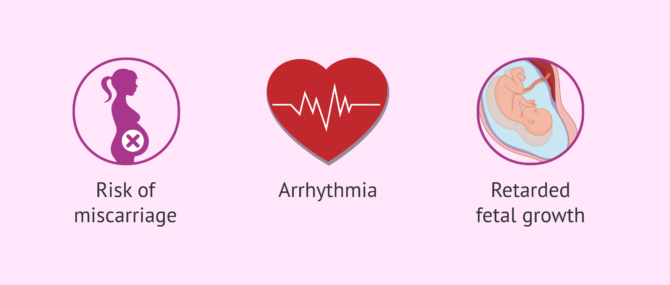
There are studies that suggest that caffeine causes arterial vasoconstriction. Such narrowing of the blood vessels can lead to arrhythmias and retarded fetal growth. However, there are no clear and robust conclusions in this regard. More studies on the subject are needed to confirm the possible effects of coffee on pregnancy.
FAQs from users
How much coffee can I drink so as not to affect my fertility?
Specialists recommend consuming less than 200g per day of caffeine, which would be equivalent to approximately two to three cups of coffee or tea. These amounts of caffeine do not seem to affect fertility and, therefore, the possibility of achieving pregnancy.
It is ok to drink decaffeinated coffee during my pregnancy?
Yes, decaffeinated coffee contains minimal amounts of caffeine and, therefore, it is the alternative to coffee consumption since it is not recommended during pregnancy.
However, if it is a high-risk pregnancy, it would be advisable to consult your doctor, since in some cases it is not possible to drink decaffeinated coffee either.
What effects does coffee have on male fertility?
Generally, specialists recommend a decrease in coffee consumption in men who are seeking to achieve pregnancy. This is because caffeine can alter the metabolism of Sertoli cells involved in sperm formation and thus spermatogenesis.
One study confirmed that IVF rates decrease by approximately 30% in men who consume more than one cup of coffee a day. However, it is important to note that coffee consumption will decrease sperm motility but not sperm quality. However, further studies are needed to confirm these findings.
Can drinking too much coffee cause oligospermia?
Consuming excessive amounts of caffeine might indeed be linked to a reduction in sperm concentration. However, it might just be one additional element within a combination of poor habits, such as neglecting nutrition or overusing tobacco, alcohol, or other substances.
Read more
Recommended reading
Despite the aforementioned effects of caffeine on fertility, lifestyle in general also influences reproductive capacity. If you want to learn more about this topic, we recommend visiting the following article: Influence of lifestyle on fertility and assisted reproduction.
However, lifestyle is not the only cause of infertility. In the following link you can read more information about other factors: What are the main causes of sterility and infertility?
We make a great effort to provide you with the highest quality information.
🙏 Please share this article if you liked it. 💜💜 You help us continue!
References
Hakim R. et al. Consumo de Alcohol y cafeína y decremento de la fertilidad. Fertil Steril. 1998; 70 (4):632-637. Doi: https://doi.org/10.1016/S0015-0282(98)00257-X
Lyngsø J. et al. Asociación entre el consumo de café o cafeína y la fecundidad y la fertilidad: una revisión sistemática y metanálisis de dosis-respuesta. Clin Epidemiol . 2017; 15 (9): 699-719. doi: 10.2147 / CLEP.S146496.