
Despite the fact that this condition was discovered almost a century ago, the exact cause that triggers this gynecological and metabolic disorder remains unknown. Many of the theories regarding the possible origin of polycystic ovary syndrome (PCOS) are unclear. In fact, it is sometimes difficult to determine whether a suspected cause is actually a consequence of the condition itself.
It is known that there is a significant genetic component in the development of PCOS. Therefore, genetic factors along with environmental influences (lifestyle, diet, etc.) may be responsible for the development of polycystic ovary syndrome.
This disease is, therefore, a multifactorial condition. As a result, its diagnosis can be a complex process.
Provided below is an index with the 7 points we are going to expand on in this article.
- 1.
- 1.1.
- 2.
- 2.1.
- 3.
- 3.1.
- 3.2.
- 3.3.
- 4.
- 4.1.
- 4.2.
- 4.3.
- 4.4.
- 4.5.
- 5.
- 6.
- 7.
Insulin Resistance
Insulin is a hormone produced and released by the pancreas, necessary for organs to take up glucose from the blood so that their cells can obtain energy and function properly.
Insulin resistance plays a key role in the clinical picture of PCOS. In fact, 50% to 70% of women with this syndrome, regardless of weight, show insulin resistance. However, it is currently unknown whether insulin resistance is a cause or a consequence of PCOS.
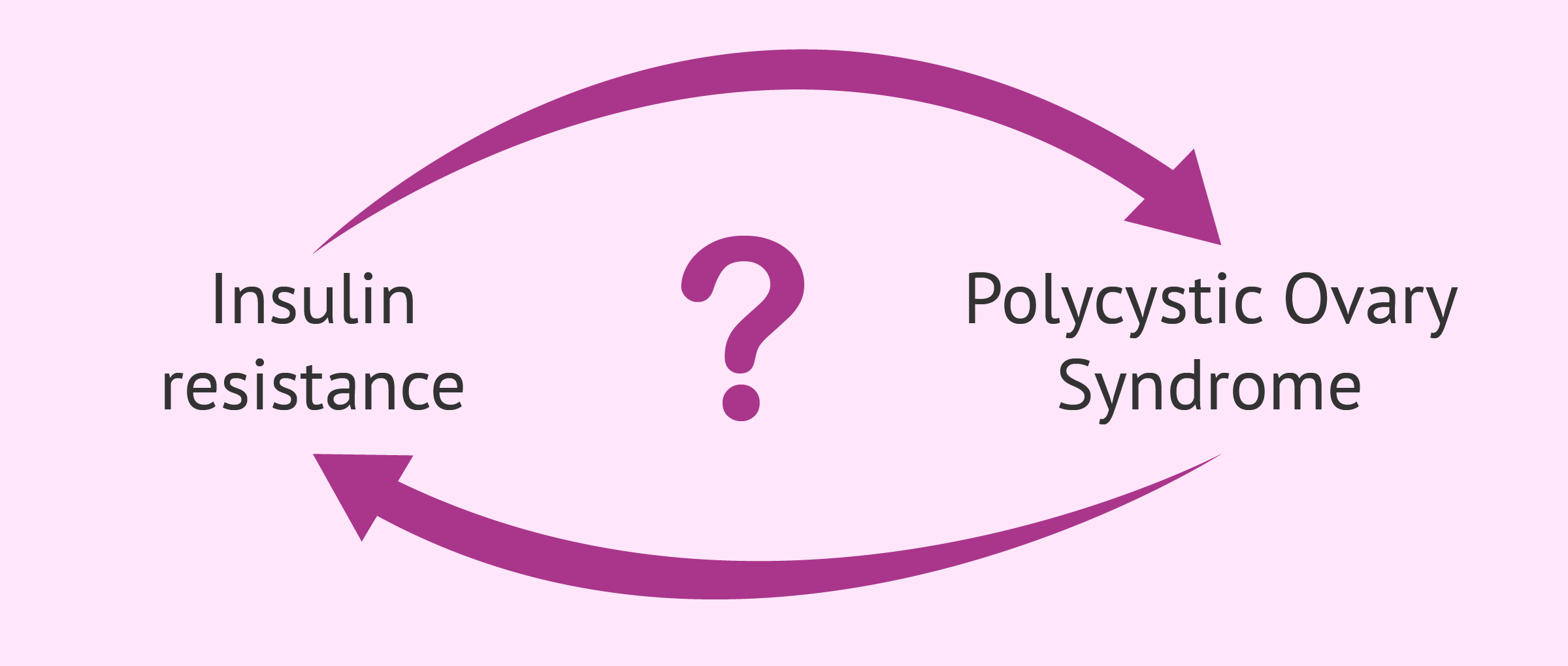
Insulin resistance means that although this hormone is produced correctly, it is not able to perform its function effectively. The body, therefore, perceives these insulin levels as insufficient.
To compensate for the inefficiency, the pancreas responds by overproducing insulin, resulting in excess levels in the blood. This leads to what we know as hyperinsulinemia.
Insulin resistance leads to excess insulin in the blood.
What are the effects of elevated insulin levels?
Insulin resistance and the resulting hyperinsulinemia promote the following processes:
- Increased androgen production: Insulin promotes androgen synthesis in both the ovaries and adrenal glands, contributing to anovulation.
- Stimulation of LH secretion: Increased LH levels enhance the hyperandrogenic effect, as LH promotes androgen production in ovarian follicles.
- Decreased hepatic synthesis of SHBG: SHBG (Sex Hormone Binding Globulin) is the main protein responsible for transporting androgens in the blood. Lower SHBG levels result in more free androgens in the bloodstream, which can act on the ovaries and other tissues.

Thus, insulin resistance, through hyperinsulinemia, becomes a powerful amplifier of what is known as hyperandrogenism.
Elevated Androgen Levels
Androgens are a group of hormones that includes testosterone—the primary male sex hormone. One of their main roles is to promote the development of male sexual characteristics.
In women, androgens are produced by the ovaries and adrenal glands, although in much lower amounts than in men.
However, when androgen levels exceed normal limits in women, the ovarian cycle is significantly disrupted. The follicles fail to develop properly and remain encapsulated in the ovaries. As a result, cysts form without ovulation, as the follicles do not reach the necessary level of maturity to be released.

This leads to anovulatory cycles, making it much more difficult to achieve pregnancy naturally, and often requiring assistance from a fertility clinic.
Consequences of Hyperandrogenism
Besides indirectly causing anovulation, hyperandrogenism is the main cause of several clinical signs of PCOS, such as:
- Hirsutism
- excessive hair growth in unusual areas like the face, chin, chest, back, or arms.
- Acne
- appearance of pimples and blackheads due to excess oil production in the skin.
- Biochemical androgenism
- elevated testosterone levels in the blood.
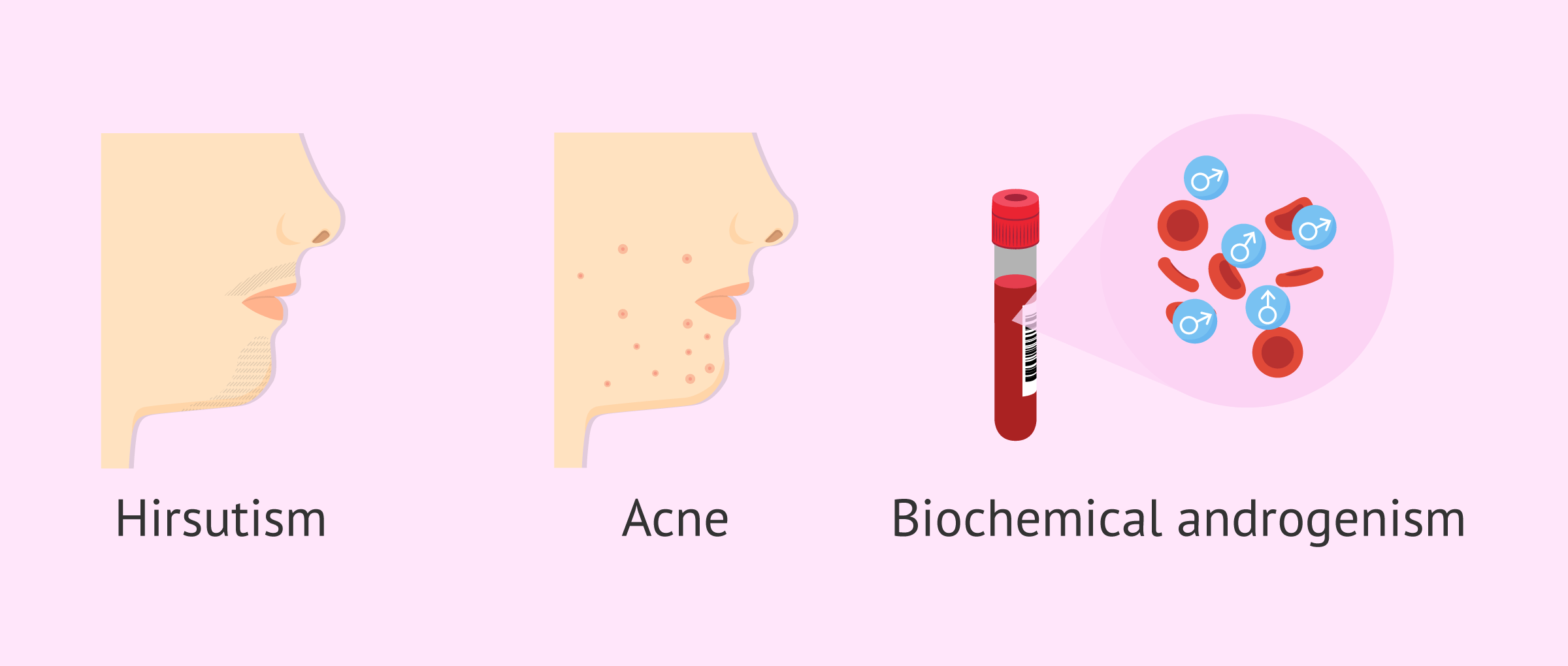
The symptoms caused by elevated androgen levels require medical treatment to restore hormonal balance.
Obesity can also be part of this syndrome, as PCOS is strongly linked to metabolic disorders such as insulin resistance mentioned earlier. If a woman with PCOS is also overweight, the masculinizing effects of excess androgens may be intensified. This is because adipose tissue is a significant producer of these hormones.
Other Possible Causes of PCOS
In addition to the causes mentioned above, there are other possible explanations for the origin of this syndrome, as outlined below.
Hypothalamic Disorders
The hypothalamus is a brain gland that regulates many bodily functions. Among them, it produces one of the most important hormones involved in the female menstrual cycle: Gonadotropin-Releasing Hormone (GnRH).
This hormone has a unique feature: it is released in a pulsatile manner to the pituitary gland, following rhythmic peaks.
The release of GnRH to the pituitary triggers the release of the gonadotropins FSH and LH. If there is a dysfunction in the hypothalamus, the GnRH release rhythm is altered. Consequently, the production and secretion of gonadotropins will also be affected.
Therefore, one theory about the origin of polycystic ovary syndrome suggests that a disruption in GnRH release is responsible for this syndrome.
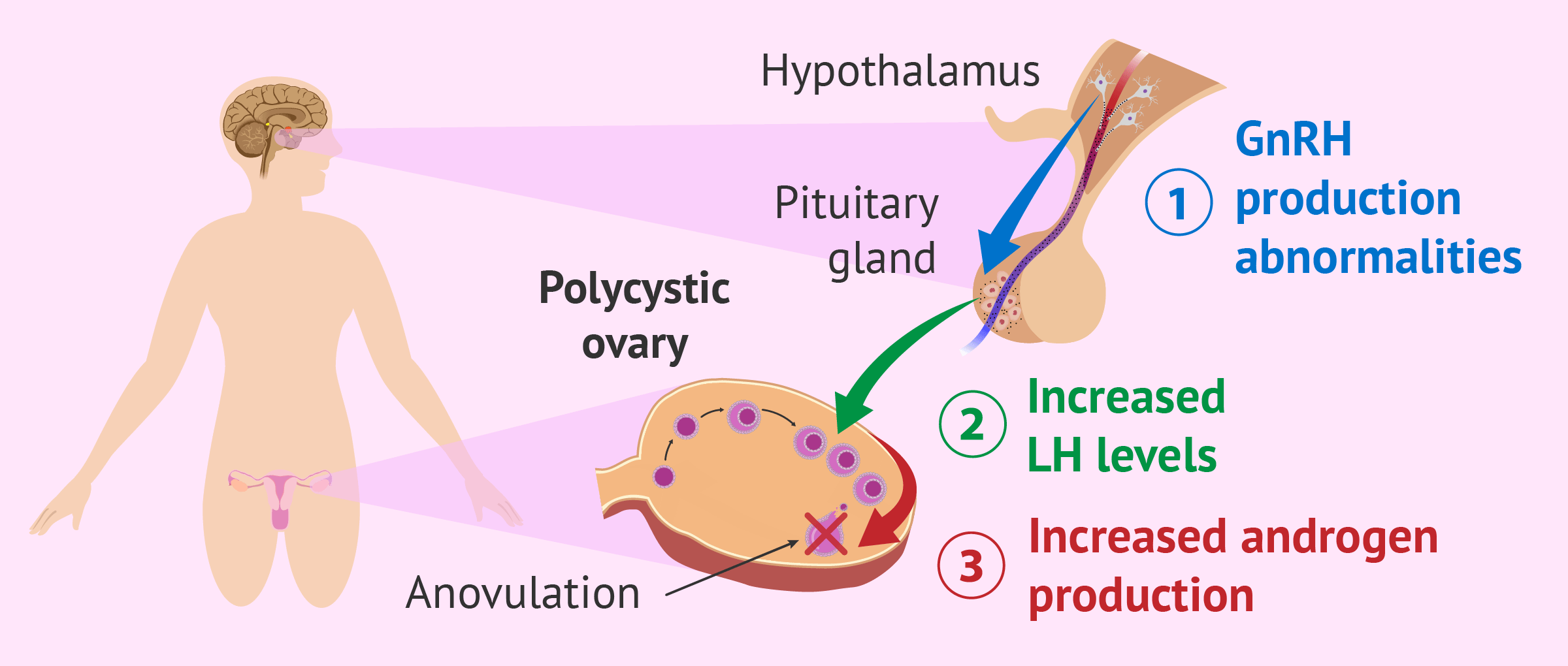
A higher pulsatility in GnRH release leads to higher LH production, increasing its concentration up to three times that of FSH. This results in greater androgen production that inhibits ovulation, since LH induces androgen synthesis in the ovaries.
Liver Abnormalities
Among its many functions, the liver synthesizes SHBG, the protein responsible for transporting testosterone through the bloodstream.
If the liver's ability to synthesize SHBG is impaired, there will be more free androgens in the blood, potentially causing typical PCOS symptoms.
As previously mentioned, this situation can also be exacerbated by abnormally high insulin levels.
Folliculogenesis Dysfunction
Through ultrasound studies and ovarian tissue biopsies, it has been observed that PCOS patients have 2 to 3 times more growing follicles than healthy women.
This pool of follicles, which have matured from their primordial state and grown large enough to be seen on ultrasound, are the ones potentially ready for ovulation.

It is proposed that in PCOS, the number of follicles recruited each month is abnormally high because estrogen levels are insufficient for full follicular maturation. As a result, these follicles become atretic and form the characteristic ovarian cysts.
FAQs from users
What is Polycystic Ovary Syndrome caused by?
Polycystic Ovary Syndrome (PCOS) remains, to this day, a hormonal pathology with many unknowns as to its origin and clinical expression and one of the most frequent hormonal causes of infertility.
PCOS is a hormonal pathology encompassed within the hyperandrogenisms and caused by a hormonal imbalance in the secretion of gonadotropins (FSH and LH), male hormones and can be associated with resistance to the action of insulin.
Read more
Do too elevated LH levels translate into PCOS?
No. In the past, the results of LH levels were used as a criterion to diagnose a woman with PCOS. However, since too high LH levels are not an indicator of PCOS in all cases, this criterion was dismissed finally.
I have PCOS but my body mass index is normal, should I lose weight to improve my insulin levels?
Diet and physical exercise to lose weight are general recommendations in cases of PCOS where, additionally, the woman is overweight. If you are already on your weight, you do not need to start a weight loss diet plan. In fact, losing weight can even worsen the situation.
Do all women with PCOS develop hirsutism?
Although symptoms can vary from woman to woman, given the variety of symptoms associated with PCOS, hirsutism is present in almost 80 percent of the cases. In most women, androgen levels are too high, which causes this peculiar side effect.
Are there emotional and psychological causes of PCOS?
PCOS has been related to certain emotional and psychological aspects, which would rather be consequences of PCOS. However, the reasons for this association are not entirely clear.
On the one hand, it could be that certain manifestations of PCOS, such as acne, hirsutism or infertility, trigger stress, anxiety, depression, anguish, sadness and low self-esteem in the patient. However, on the other hand, it could be that psychological aspects could also be related to hormonal alterations in these patients.
Suggested for you
As one shall see, determining a specific cause of PCOS is a hard task. This can complicate the diagnosis at the same time. To learn more about the criteria taken into account, we recommend that you read this: Which Methods Are Used to Diagnose PCOS?
One of the main symptoms of PCOS is anovulation. Follicles are unable to develop properly, and therefore the egg cannot be releases into the Fallopian tubes. Want to learn more about this disorder? Click here: What Is Anovulation?
We make a great effort to provide you with the highest quality information.
🙏 Please share this article if you liked it. 💜💜 You help us continue!
References
Adams J, Polson DW, Franks S 1986 Prevalence of polycystic ovaries in women with anovulation and idiopathic hirsutism. British Medical Journal 293, 335–359 (View)
Balen A, Mitcehlmore K. What is polycystic ovary syndrome? Human Reproduction 2002;17:2219-2227 (View)
Carmina E, Wong L, Chang L, Paulson RJ, Sauer MV, Stanczyk FZ et al, Endocrine abnormalities in ovulatory women with polycystic ovaries on ultrasound, Hum Reprod 1997;12:905-9 (View)
Checa Vizcaíno, M.A., Espinós Gómez, J.J., Matorras Weining, R. (2005). Síndrome del ovario poliquístico. Buenos Aires; Madrid: Médica Panamericana. Sociedad Española de Fertilidad (SEF). ISBN 84-7903-599-4.
ESHRE/ASRM Revised 2003 consensus on diagnostic criteria and long-term health risks related to polycystic ovary syndrome. Fertil Steril 2004; 81:19-25.
FAQs from users: 'What is Polycystic Ovary Syndrome caused by?', 'Do too elevated LH levels translate into PCOS?', 'I have PCOS but my body mass index is normal, should I lose weight to improve my insulin levels?', 'Do all women with PCOS develop hirsutism?' and 'Are there emotional and psychological causes of PCOS?'.
Authors and contributors




Are there any natural remedies against PCOS? I was recently diagnosed with PCOS and want to get pregnant in the future.THX