4 Weeks Pregnant: Embryo Implantation in the Uterus
The fourth week of pregnancy corresponds to the fourth and last week of the menstrual cycle before the period. Therefore, in case of a positive pregnancy, the menstrual delay will take place, which will cause the mother to suspect a possible gestation.
Although it is a very early time in pregnancy, the embryo is already more than a week old and has undergone changes in its size and structure along the way from the fallopian tubes to the uterus.
In the 4th week of pregnancy will be when this embryo implants in the endometrium ( uterine internal layer) and the mother begins to suffer changes in her body, such as the well known implantational bleeding.
The different sections of this article have been assembled into the following table of contents.
Contents
- 1.
- 1.1.
- 1.2.
- 1.3.
- 2.
- 2.1.
- 3.
- 4.
- 4.1.
- 4.2.
- 4.3.
- 4.4.
- 4.5.
- 4.6.
- 5.
- 6.
What happens in the 4th week of pregnancy?
Because weeks of pregnancy begin from the date of the last menstrual period (LMP), they do not coincide with the gestational age of the fetus. In the fourth week of pregnancy, the embryo is actually only 2 weeks old from conception.
In spite of this, all reproduction professionals take the LMP as a reference to count the weeks of pregnancy in a gestation of 40 weeks in total.
Embryo implantation
In the fourth week of pregnancy, when the embryo reaches the uterus, it is in a state of blastocyst and has two differentiated structures: the inner cell mass (ICM), from which the baby will develop, and the trophoblast, which will originate the placenta.


After a couple of days in the uterine cavity approximately, the embryo has to implant in the endometrium in order for an evolutionary pregnancy to take place.
If you want to learn more about this subject, you can read the following post: What Is Embryo Implantation? – Process & Stages.
Formation of the placenta
The placenta is the organ that connects the baby to the mother and takes care of the baby's nutrition during the nine months of pregnancy.
Its formation begins with embryo implantation and culminates in the fourth month of pregnancy, when it finally acquires its full functionality.
To do this, the blastocyst trophoblast, also called trophectoderm, is differentiated into the following layers:
- Syncytiotrophoblast (outer layer) : its cells erode the maternal capillaries of the endometrium, blood flows and a utero-placental circulation is established.
- Cytotrophoblast (inner layer): its cells proliferate in the syncytiotrophoblast forming the primary chorionic villi. The cells migrate, proliferate and form the definitive yolk sac.
With all this, blood vessels develop and blood volume increases by about 50% to meet the oxygen demand of the fetus. In addition, the fragment of attachment of the embryo to the endometrium will become the umbilical cord.


Fetus & amniotic cavity
Before implantation, the blastocyst is detached from the zona pellucida that surrounds it in a process called hatching, which will allow it to establish connections with the endometrium to adhere to and invade it.
Once implantation has taken place, the embryo measures approximately 1 mm and the amniotic cavity begins to form, a kind of sac limited by a membrane called amnion and inside which the fetus will develop suspended in the amniotic fluid.
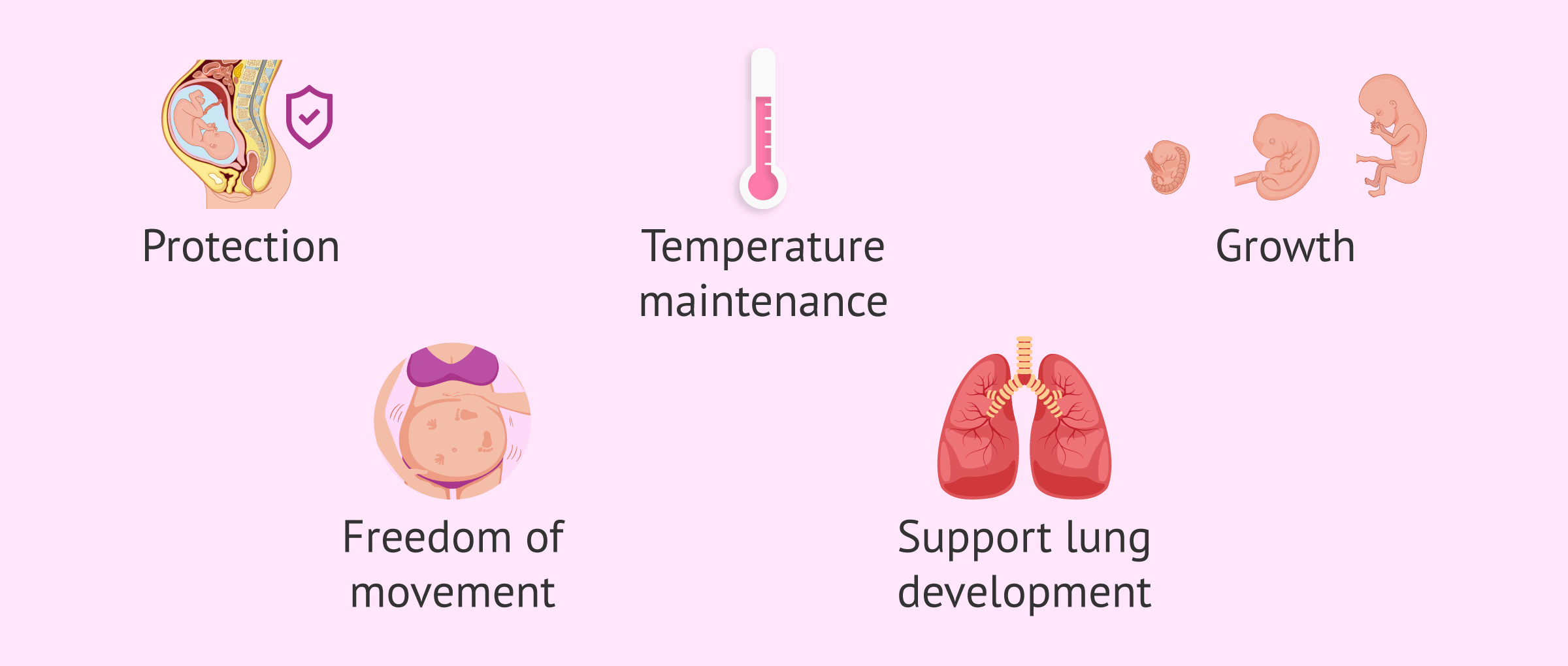
The functions of the amniotic fluid with respect to the fetus during pregnancy are as follows:
- Protect the fetus.
- Keep him/her at a suitable temperature.
- Allow his/her growth to be symmetrical.
- Allow it to move freely.
- Help the development of the lungs.
In addition to the amniotic cavity, the yolk sac or yolk vesicle is also formed, an embryonic annex that fulfils the function of nourishing the fetus before the complete formation of the placenta.
In week 5 it is already possible to see the yolk sac inside the gestational sac by ultrasound, even before the embryo, and it usually disappears at the end of the first trimester.
Symptoms in the mother
The main symptom a woman feels during this fourth week of pregnancy is bleeding from implantation. This corresponds to a brown spotting or slight bleeding that occurs as a result of the rupture of small veins in the endometrium when the embryo joins.
It is important to be able to differentiate this bleeding from menstruation, as if it were a period it would indicate that pregnancy had not been achieved during this menstrual cycle.
In addition to this, the woman can also begin to experience other changes in her body, although most do not feel symptoms during the fourth week.
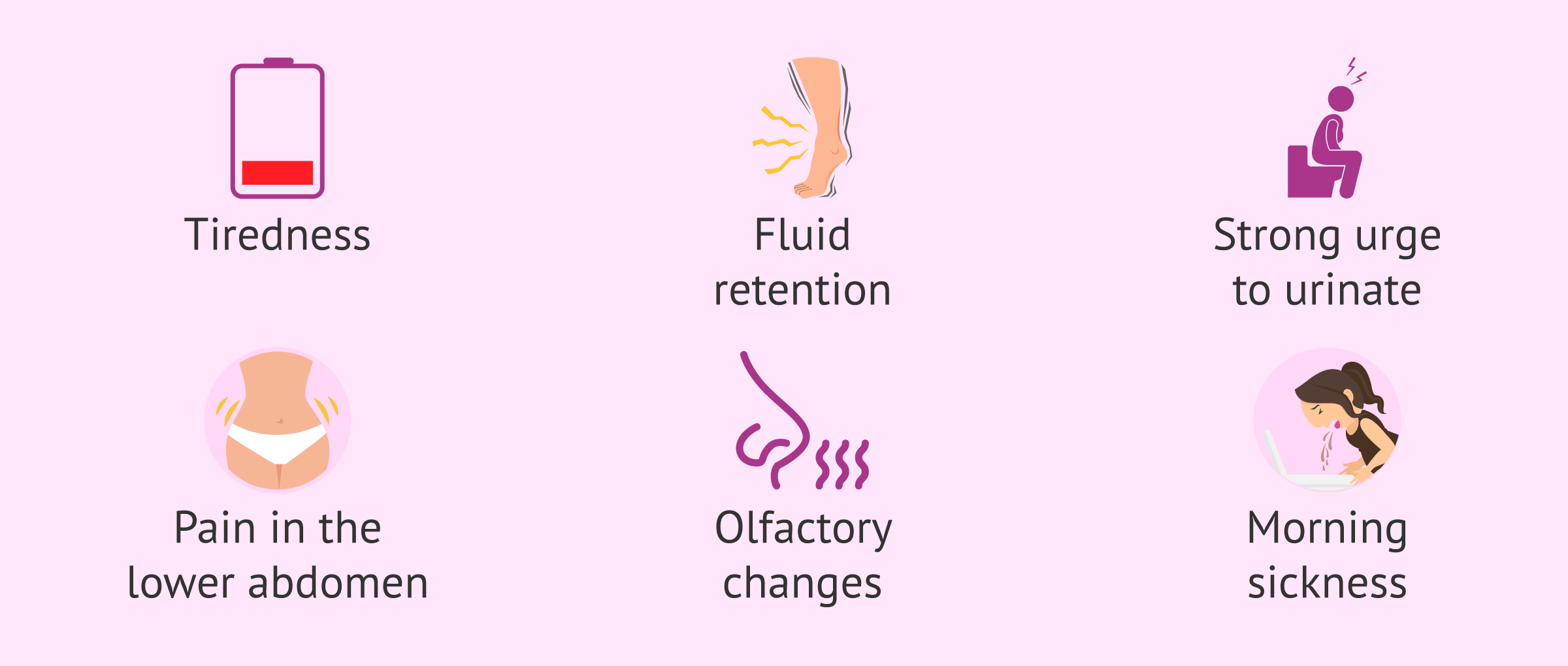
Some of these signs and symptoms can be confused with premenstruals, which can be very changeable among women. However, the most common at this stage is to notice the following:
- Increased tiredness or sleep.
- Liquid retention.
- Strong urge to urinate.
- Pain in the lower abdomen.
- Tension in the chest.
- Changes in smell and some flavours.
- First morning sickness.
Il you want more informations about Embryo Implantation, we recommend you to read the following post: What Are the First Signs & Symptoms of Embryo Implantation?
Pregnancy Test
At the end of this fourth week of gestation the menstrual delay will take place which will make the woman suspect of the possibility of pregnancy. It is then the right time to do a pregnancy test to resolve the doubt.
Home pregnancy tests measure the level of the hormone beta-hCG, also known as pregnancy hormone, in the urine. Therefore, they are a very simple, economical and fast test that the woman can get at the pharmacy.
It should be noted that if performed before menstrual delay, the test may not detect the beta-hCG hormone yet and result in a false negative.
On the other hand, women who try to get pregnant through fertility treatment such as in vitro fertilization (IVF) often have a blood pregnancy test. Their sensitivity to detect the hormone beta-hCG is higher and, therefore, their reliability as well.
In addition, the blood test can be quantitative, so it is possible to know the exact value of the beta-hCG hormone and compare it with the reference levels for week 4.

If you have any doubts about pregnancy test, you should read this post: When to Do a Pregnancy Test? – How to Use, Results & Accuracy.
Cares in week 4
The moment a woman discovers that she is pregnant, she must change her habits and adapt her daily routine to this new state.
Among the multitude of tips and guidelines that specialists can give for a healthy pregnancy, we highlight the following in terms of food and exercise:
- Taking folic acid: helps prevent birth defects in the brain and spinal cord in the baby. A daily supplement of 400 mg a day is usually recommended.
- Increasing milky intake: skimmed or semi-skimmed milk and yoghurt, as well as semi-cured cheese, provide the calcium necessary for the development of the baby's nervous and muscular system.
- Adapting physical exercise: reduce the intensity of physical activity or, if you don't play any sport, start gentle physical exercise to improve muscle tone, strength and endurance, which will be beneficial throughout pregnancy and childbirth.
- Food to Eat: Fruits and vegetables with fibre. Also meat and fish that provide the necessary amount of iron and omega-3 acids.
- Substances to prevent: coffee, tobacco, alcohol or other drugs.

When a woman knows she is pregnant, the first thing she should do is call her gynaecologist to make an appointment and have a first ultrasound.
FAQs from users
What is embryo implantation?
Embryo implantation is the process by which the embryo joins the internal uterine wall known as the endometrium. The embryo is able to penetrate the uterus. From this moment on, the formation of the future placenta will begin, which will provide nutrition, sustenance and protection for the pregnancy.
What if I have a urinary tract infection 4 weeks pregnant?
It is possible to treat urinary tract infections during pregnancy with antibiotics that do not harm the baby. The most important thing is to start fighting the infection as soon as possible, as it can have serious consequences on the pregnancy.
In addition, it is important to take into account other considerations such as drinking plenty of water to urinate frequently and take special care with intimate hygiene.
Is it normal to bleed in the fourth week of pregnancy?
During this period it is possible to experience bleeding from implantation due to the nesting of the embryo in the endometrium. This is a symptom of pregnancy that consists of blood loss or a more or less intense spotting and that does not suppose a threat of abortion.
In the case of heavy bleeding, it could be menstruation and, therefore, the woman would not be pregnant.
Is it possible to see the embryo in the fourth week of pregnancy?
The embryo is so small in this fourth week that it is not possible to see it by ultrasound. The first structure detected in an ultrasound is the gestational sac, which usually measures about 2 millimeters (mm) in diameter in week 4 + 2 and usually grows 1 mm per day.
Sometimes, it is also possible to visualize the yolk sac, a small sphere filled with fluid that is inside the gestational sac. Although the yolk sac is detected before the embryo in an ultrasound scan, its presence is positive, as it rules out a possible anembryonic pregnancy.
Can I have an abortion after 4 weeks of pregnancy?
In the first weeks of pregnancy it is possible for the woman to suffer a spontaneous abortion without this having any implication for future pregnancies. In fact, biochemical or microabortion abortions take place during this fourth week of gestation and the woman may confuse them with a simple menstruation.
If the woman wishes to terminate a pregnancy voluntarily, it is possible to take drugs such as Cytotec composed of misoprostol once the pregnancy is confirmed to cause the abortion, always under medical supervision.
Is it normal to feel a swollen belly in the fourth week of pregnancy?
Yes, many women experience heaviness in the belly area and swelling of the belly. Your body must be preparing and adapting for the growing fetus in the coming months. The endometrium will thicken and take up more space, which causes this feeling of abdominal swelling. However, the uterus has not yet increased in size in the fourth week of pregnancy.
Suggested for you
If you are interested in the types of ultrasound that exist and when it should be done throughout pregnancy, we recommend entering the following post: Fetal ultrasound.
We have talked about the risk of miscarriage during the first trimester of pregnancy. If you are interested in the symptoms or types of abortion that exist, you can read on in the next post: Why Does a Miscarriage Happen? – Causes, Symptoms & Treatment.
We make a great effort to provide you with the highest quality information.
🙏 Please share this article if you liked it. 💜💜 You help us continue!
References
Ashary N, Tiwari A, Modi D. Embryo Implantation: War in Times of Love. Endocrinology. 2018 Feb 1;159(2):1188-1198 (View)
Baryiah Rehman 1, Maria Rosaria Muzio. Embryology, Week 2-3. In: StatPearls [Internet]. Treasure Island (FL): StatPearls Publishing; 2022 Jan.2021 May 8.
Belle M, Godefroy D, Couly G, Malone SA, Collier F, Giacobini P, Chédotal A. Tridimensional Visualization and Analysis of Early Human Development. Cell. 2017 Mar 23;169(1):161-173.e12 (View)
Borini A, Lagalla C, Cattoli M, Sereni E, Sciajno R, Flamigni C, Coticchio G: Predictive factors for embryo implantation potential. Reprod Biomed Online 2005, 10:653–668 (View)
Mardon H, Grewal S, Mills K. Experimental models for investigating implantation of the human embryo. Semin Reprod Med 2007; 25:410 – 417 (View)
Norberto López Serna. Biología del desarrollo. Cuaderno de trabajo. Capítulo 9: Implantación. McGraw-Hill 2012; ISBN: 978-607-15-0657-3