When does week 1 of pregnancy start? – Are there any symptoms?
As a general rule, the first week of pregnancy starts with the beginning of the last menstrual period (LMP).
At this point, embryo implantation and pregnancy per se have not taken place yet. Gynecologists consider the first day of the LMP as the beginning of pregnancy because determining the exact day in which fertilization takes place is quite complicated.
The different sections of this article have been assembled into the following table of contents.
Contents
- 1.
- 2.
- 3.
- 3.1.
- 3.2.
- 3.3.
- 4.
- 4.1.
- 4.2.
- 4.3.
- 4.4.
- 4.5.
- 5.
- 6.
What happens in the first week?
In reality, during what we refer to as first week of pregnancy, the woman is not yet pregnant. This week just marks the beginning of a new menstrual cycle—the one in which pregnancy is going to happen. So, throughout week 1 there is the normal menstrual period, which usually lasts between 3 and 7 days.
From this week onwards, the body starts releasing gonadotrophic hormones FSH and LH again. As a consequence, the ovaries start developing new follicles and secreting sex hormones.
Thanks to the release of estrogens by the ovary, the endometrium (lining of the uterus) proliferates again and starts thickening right after the last menstrual period ends.
The endometrium is the inner lining of the uterus, which thickens with each new menstrual cycle and is shed during menstruation. To learn more, read: What's the Role of the Endometrium?
In women whose menstrual cycles are very short or irregular, ovulation may occur during this week. In other words, they can get pregnant while on their period if they engage in unprotected sexual activity.
Pregnancy symptoms at week 1
The symptoms that you are likely to notice at week 1 are the ones typically associated with the menstrual period. The following are the most usual discomforts:
- Bleeding
- Abdominal pain
- Side pain
- Ovarian pain
- Sore breasts
- Cramps
- Headache, fainting and/or dizziness
- Gastrointestinal symptoms: nausea, vomiting, stomach pain, gas, diarrhea, constipation, etc.
- Water retention and bloating
- Hormonal acne and/or breakout of pimples
- Mood swings

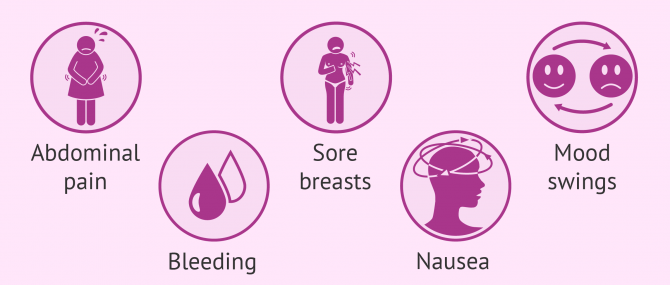
Broadly speaking, the very early signs of pregnancy at first week are actually the common menstrual discomforts. These symptoms may be noticed before your period, a phase that is known as Premenstrual Syndrome or PMS and is commonplace during the week(s) prior to a woman's menstruation.
Dos and don'ts for the first week
If the woman has fallen pregnant unintentionally, it is likely that she won't have changed any habits during the weeks prior to taking the positive pregnancy test.
However, if trying to get pregnant, whether naturally or through a fertility treatment, women should start taking care of themselves and prepare the body for a future pregnancy. Here are some basic tips:
Healthy foods & diet
There is no special diet to follow or specific foods to eat at week one of pregnancy. However, healthy habits are recommended, such as eating nutritious foods from all food groups and not skippng meals.
Including protein-rich foods like meat, fish, and eggs is crucial. Eating fruits, vegetables, and cereals on a daily basis is highly recommended as well.
When pregnant, all women need an extra dose of calcium and folic acid. For this reason, women trying to conceive should include dairy products in their diet, and folic acid supplements.
There are certain foods that she should avoid or limit, including coffee and tea. Caffeine inhibits iron absorption, an essential nutrient to prevent anemia in pregnant women.
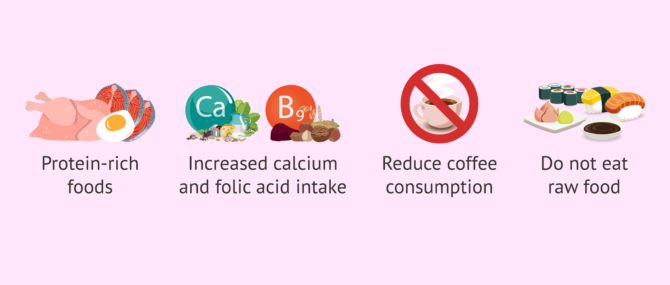
Finally, she should take a series of precautions to prevent the risk of toxoplasmosis and listeria, two serious diseases for pregnant women. Avoid unwashed foods and vegetables, as well as raw or undercooked meats, fish, or seafood (e.g. ham or sushi).
Things not to do
Giving up smoking and drinking not only during pregnancy, but also in the time before conception is key to a healthy, ongoing pregnancy. Pre-conception cigarette smoke and alcohol drinking can affect fetal development and increase the risk of miscarriage or preterm birth.
Nicotine hinders the transfer of oxygen to the fetus through the placenta and can cause respiratory diseases in newborns.
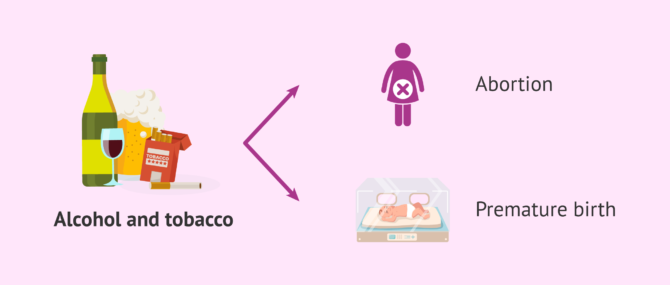
Also, alcoholic drinks can cause physical and mental birth defects. Alcohol use in pregnancy increases the chances for the baby to develop Fetal Alcohol Syndrome (FAS), which effects include malformations of the skeletal system.
Preconception planning
Are you trying to get pregnant? If so, you should consider getting yourself checked and well informed as soon as possible. In the era of technology, you have plenty of resources for you to get trustworthy information about pregnancy.
Visit your doctor, attend support groups or even talk to women who have been pregnant recently. They are all great opportunities for you to get answers regarding what to eat, dos and don'ts, exercising, fetal development, etc.
FAQs from users
How can I work out the week of pregnancy?
To calculate the gestational age we look at the first day of the last menstrual period. We will be able to confirm with more certainty the gestational age by means of the ultrasound scan of the 12th week.
Can you test for pregnancy at 1 week?
No, the first week of pregnancy does not correspond to the first week of embryonic development, but to the period and the beginning of the menstrual cycle. The embryo has not yet formed, it does not exist and, therefore, it is not possible to detect pregnancy with a pregnancy test or blood test.
Given that conception has not occurred at this point, the hCG hormone is still not present in your body, which is the hormone detected by pregnancy tests.
Learn more: When to Do a Pregnancy Test? – Instructions for Use, Results & Accuracy.
What if I have a urine infection in the first week of pregnancy?
Urinary tract infection is a common occurrence in pregnant women. It is important to receive antibiotic treatment as soon as possible so that it does not affect the pregnancy or the fetus.
If you are seeking pregnancy in the first week of your menstrual cycle, you should ideally take into account some recommendations to avoid getting a urinary tract infection in early pregnancy:
- Drink lots of water and urinate frequently
- Take good care of intimate hygiene, from the vagina to the anus
- Empty your bladder after sexual intercourse
- Don't use soaps or detergents that could irritate the area.

It is also important to maintain these habits during pregnancy in order to prevent urinary tract infections.
Can you get pregnancy symptoms at 1 week?
The first week of pregnancy coincides with the last menstrual period before the woman gets pregnant. Therefore any symptoms that the woman has during this week are the typical discomforts of the menstrual period: stomach pain, cramps, headaches, nausea...
Pregnancy symptoms may start as early as a few days before you miss your next period.
Can 1 week pregnancy be aborted?
No, it is not possible, because embryo implantation and the subsequent pregnancy has not taken place yet. For this reason, taking abortion pills such as Cytotect, which is composed of Misoprostol, is not recommended until a pregnancy is confirmed with a positive pregnancy test.
If you think you may be pregnant, it is possible for you to use the morning-after pill or emergency pill in order to avoid an unplanned pregnancy. This birth control method inhibits ovulation and alters the endometrium so that embryo implantation is not possible.
Recommended reading
Are you looking for the very early signs and symptoms of pregnancy? Then you should know that they start being noticed as early as on the third week of pregnancy. Find them out here: 3 Weeks Pregnant – Symptoms & Size of the Fetus.
To get an overall idea of the changes women go through in the first month of pregnancy, read: What Happens in the First Month of Pregnancy? – Symptoms & Tips.
We make a great effort to provide you with the highest quality information.
🙏 Please share this article if you liked it. 💜💜 You help us continue!
References
Ashary N, Tiwari A, Modi D. Embryo Implantation: War in Times of Love. Endocrinology. 2018 Feb 1;159(2):1188-1198 (View)
Georgadaki K, Khoury N, Spandidos DA, Zoumpourlis V. The molecular basis of fertilization (Review). Int J Mol Med. 2016 Oct;38(4):979-86 (View)
Soares SR, Simon C, Remohí J, Pellicer A. Cigarette smoking affects uterine receptiveness. Hum Reprod. 2007 Feb;22(2):543-7 (View)