Prostatitis: Types, Causes, Symptoms & Treatment
Prostatitis or inflamation of the prostata is a condition that involves a group of diseases affecting the prostate gland. Common symptoms include fever, difficult or painful urination, and pelvic pain.
Prostatitis is usually caused by an Escherichia coli infection, although another possible cause is sexually transmitted diseases (STDs).
The different sections of this article have been assembled into the following table of contents.
Contents
- 1.
- 2.
- 2.1.
- 3.
- 4.
- 4.1.
- 4.2.
- 4.3.
- 4.4.
- 4.5.
- 5.
- 5.1.
- 5.2.
- 6.
- 6.1.
- 6.2.
- 6.3.
- 6.4.
- 6.5.
- 6.6.
- 6.7.
- 7.
- 8.
Types of Prostatitis
This condition can be classified into 4 different types:
- Acute Prostatitis: occurs suddenly and has severe symptoms.
- Prostatitis crónica: is called chronic when the infection persists for at least 3 months. It appears recurrently and in most cases derives from untreated or inadequately treated acute prostatitis.
- Chronic pelvic pain syndrome: this disorder is the most common and is characterized by severe pain in the genital and/or pelvic region. It may or may not be accompanied by the presence of leukocytes in the semen.
- Asymptomatic inflammatory prostatitis: also called prostatodinia. Since the typical symptoms of prostatitis are not observed, its diagnosis is more difficult. It can only be detected when there is a high presence of leukocytes in a seminal sample.


In any case, it is important to consult a physician as soon as possible if symptoms associated with prostate inflammation appear.
What causes prostatitis?
The causes of prostatitis depend on the infectious agent that has caused the infection in the prostate.
In the case of bacterial prostatitis, as its name suggests, the bacteria are the cause of the infection. These invade the man's urinary tract, entering through the urethra and reaching the prostate, producing an immune reaction and therefore an inflammation.
One of the bacteria most commonly involved in the development of prostate infections is Escherichia coli.
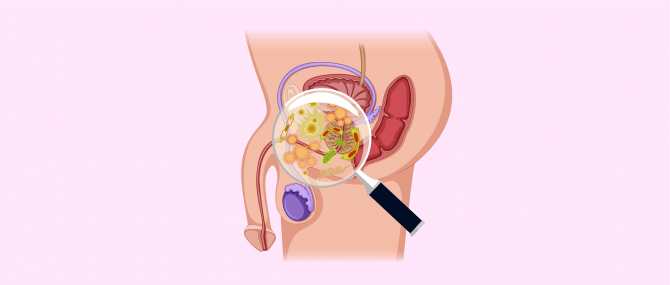
Agents that cause sexually transmitted diseases such as gonorrhea or chlamydia infections can also cause bacterial prostatitis.
In the case of non-bacterial prostatitis, the passage of urine into the prostate is also a cause of prostatitis, as the contact of the chemicals in the urine with the prostatic tissue can cause inflammation.
This can happen for different reasons such as:
- An obstruction that reduces or blocks the flow of urine to the bladder
- Phimosis or or inability to retract the foreskin.
- Traumatisms in the perineum.


The prostate can also become inflamed by an excessive increase in its size, both benign and malignant. Infection with virus or fungi can also cause prostatitis.
Risk Factors
In addition to the possible causes of prostatitis mentioned earlier, there are certain factors that increase the risk of developing inflammation of the prostate:
- Advanced age in men.
- Having had prostatitis previously.
- Having infections of the reproductive or urinary tract.
- Being diagnosed with AIDS.
- Use of a urinary catheter.
- Undergoing a prostate biopsy.

It is important to note that these are risk factors, which means they increase the likelihood of developing prostatitis, but do not necessarily imply that the person will experience inflammation of the prostate.
Symptoms
Depending on the type of prostatitis, the symptoms are different both in their appearance and in their degree of illness. The most common signs which can occur when the prostate is inflamed are:
- Fever
- Chills
- Difficulty or pain in urination (dysuria)
- Urinary problems
- Turbidity in urine
- Sexual dysfunction

Symptoms of acute bacterial prostatitis are usually more severe than those of chronic or asymptomatic prostatitis.
Although some of the symptoms listed above may occur, the most common in chronicpelvic, testicular, or anal pain.
Diagnosis
In order to correctly treat prostatitis, it is necessary to make a precise diagnosis as there are different causes that provoke this pathology and it is essential to detect which one of them is it. Below we present the different diagnostic tests that exist:
Urine culture
Urine culture is a basic test in the diagnostic of urinary pathologies. It consists of collecting and evaluating urine for the presence of pathogens and/or leukocytes that would indicate an infection.
Before the test is carried out, it is usually accompanied by a prostate massage to stimulate the evacuation of the contents of the prostate along with the urine.
In addition to certifying the presence of bacteria, this test also allows identifying the agent causing the infection in order to apply the specific treatment.
Semen culture
As with urine, it serves to determine the presence of bacteria in the semen and signs of infection. Since the fluids produced by the prostate converge in the seminal fluid, it is logical that, in the case of prostatitis, bacteria or inflammatory cells may be found in the semen.

Rectal Exam
This medical examination consists of feeling the prostate gland through the rectum for signs of enlargement or swelling.
Prostate Ultrasound
Using a rectal probe, the urologist can examine the appearance and size of the prostate and the possible accumulation of pus in this gland.
Blood tests
In a blood test, in addition to the metabolites and biochemical elements normally analyzed, the levels of serum prostatic antigen (PSA) are especially evaluated in the case of prostatitis. This protein, produced exclusively by the prostate, is released into the blood when the prostate is inflamed.

In addition to all the above tests, the doctor will perform a complete anamnesis on the patient. This process consists of asking questions about the patient's clinical history in order to better reach an accurate diagnosis.
Treatment of prostatitis
There are medical and natural treatments to help cure prostatitis. Some of them are described below:
Medical treatment
Acute prostatitis is treated with oral or intravenous antibiotics. The average treatment time is usually between 2-3 weeks. The improvement in symptoms begins to be noticed after 48-72 hours of treatment.
In cases of chronic prostatitis, antibiotic treatment can be prolonged up to 12 weeks. Because the infection often returns, tissue damage may be greater, and sometimes surgical techniques may be needed to remove the inflamed tissue.

Apart from the medication used to stop bacterial growth, it may also be necessary to use anti-inflammatory drugs.
The treatment of chronic pelvic pain syndrome is complicated and nonspecific, as in most cases its cause is not completely determined. When the origin of the pathology cannot be determined, the medication usually used consists of analgesics to alleviate the pain.
Natural treatment
The natural remedies for the cure of prostatitis are focused on reducing the pain that can cause inflammation of the prostate and in no case should be used as a substitute for medical treatment.
Since the most common symptom is difficulty or pain when urinating, it is recommended to drink plenty of liquids throughout the day to facilitate the expulsion of the bacteria.
It is also advisable to consume foods with high liquid content such as pineapple or melon. These fruits can help eliminate toxins and reduce fluid retention.

Likewise, taking infusions with diuretic properties such as field horsetail or dandelion helps to reduce discomfort, as they have depurative and anti-inflammatory properties.
Another natural remedy that is beneficial in curing prostatitis is taking hot water baths. Contact of the inflamed area with water can help relieve the pain caused by the infection.
FAQs from users
Is prostatitis related to prostate cancer?
Much research has tried to correlate prostatitis with prostate cancer. However, this association has not yet been scientifically proven. It is true that prostatitis has been observed in many samples of cancer patients but, at present, the association between the two is not clear.
Read more
Is prostatitis contagious?
No, prostatitis is not a contagious disease and is not considered a sexually transmitted disease. However, inflammation of the prostate can be a symptom of an STD.
Can you have sexual relations if you have prostatitis?
In principle, there is no problem in having sexual relations, since this pathology does not prevent it physiologically speaking. The possibility of maintaining them will depend on the degree of illness suffered by the man as a result of the infection.
Can prostatitis cause impotence?
There is no clinical evidence that prostatitis causes impairment of erection, since this gland participates in ejaculation but not in erection.
Achieving an erection does not depend on the functioning of the prostate, but on good vasodilation and correct functioning of the nervous and hormonal systems in men.
Does stress cause prostatitis?
Although its effect is less evident, stress can cause prostatitis, especially in asymptomatic cases where the infection is not derived from a pathogenic organism.
During stressful times there is a tendency to increase muscle tension which can affect the pelvic floor area and encourage urine retention.
Is inflammation of the prostate the same as a urinary tract infection?
Although discomfort may occur when urinating, no, prostatitis is not the same as a urinary tract infection. Prostatitis affects the prostate, while a urinary tract infection affects the urinary tract.
Is it normal for a young man to have prostatitis?
Prostatitis is the most common urogenital infection in men. Although it is common in middle-aged men, it can also occur in young men.
From a later age the most common prostatic complaint is usually benign enlargement of the prostate.
Recommended Reading
If you would like to learn more about possible seminal infections, you can continue reading here: Sperm Infections: orchitis, epididymitis and prostatitis.
These infections in the semen can be a cause of male infertility. Therefore, you might be interested in visiting the following article: Testicular Disorders & Infertility - Impact on Reproductive Function.
We make a great effort to provide you with the highest quality information.
🙏 Please share this article if you liked it. 💜💜 You help us continue!
References
Bradley A Erickson, Anthony J Schaeffer, Brian Van Le. Chronic prostatitis. BMJ Clin Evid. 2008 May 22:2008:1802 (View)
G J Domingue Sr, W J Hellstrom. Prostatitis. Clin Microbiol Rev. 1998 Oct;11(4):604-13. doi: 10.1128/CMR.11.4.604 (View)
Hailan He, Hui Luo, Hui Xu, Biao Qian, Xiaofeng Zou, Guoxi Zhang, Fei Zeng, Junrong Zou. Preclinical models and evaluation criteria of prostatitis. Front Immunol. 2023 May 9:14:1183895. doi: 10.3389/fimmu.2023.1183895 (View)
John N Krieger, Shaun Wen Huey Lee, Jeonseong Jeon, Phaik Yeong Cheah, Men Long Liong, Donald E Riley. Epidemiology of prostatitis. Int J Antimicrob Agents. 2008 Feb;31 Suppl 1(Suppl 1):S85-90 (View)
Timothy J Coker, Daniel M Dierfeldt. Acute Bacterial Prostatitis: Diagnosis and Management. Am Fam Physician. 2016 Jan 15;93(2):114-20 (View)
Victoria J Sharp, Elizabeth B Takacs, Charles R Powell. Prostatitis: diagnosis and treatment. Am Fam Physician. 2010 Aug 15;82(4):397-406 (View)
Wei-Jie Song, Jun Gao, Ji-Wei Huang, Yuan Liu, Zhi Long, Le-Ye He. Is type III prostatitis also associated with bacterial infection? Front Cell Infect Microbiol. 2023 Jul 3:13:1189081. doi: 10.3389/fcimb.2023.1189081 (View)