Birth Control Implant: Advantages and Disadvantages
The birth control implant is a contraceptive method that is applied under the skin. It consists of a flexible rod that is placed on the inside of the arm.
Its mechanism of action is based on releasing progestogens, i.e. hormones. Release takes place continuously, preventing ovulation among other effects.
This contraceptive method is designed to be used for a prolonged period of time, without the need to change it in 3 or 5 years. During all this time it continues to offer 99% protection against pregnancy.
Once the implant is removed, the contraceptive effect disappears. Therefore, ovulatory cycles resume normally.
The different sections of this article have been assembled into the following table of contents.
Contents
- 1.
- 2.
- 3.
- 4.
- 4.1.
- 4.2.
- 5.
- 5.1.
- 5.2.
- 6.
- 7.
- 7.1.
- 7.2.
- 7.3.
- 7.4.
- 8.
- 9.
What is the mechanism of action of the implant?
The contraceptive implant acts by slowly releasing a small amount of progestins, which inhibit the action of the gonadotropins in charge of controlling the menstrual cycle. Consequently, the following effects occur:
- Ovulation inhibition.
- Inhibition of endometrial growth. This prevents the endometrium from reaching the thickness necessary for embryo implantation to occur.
- Modification of the cervical mucus, making it thicker to prevent the passage of sperm. This also makes it difficult for sperm and embryos to pass through the fallopian tubes into the uterus.

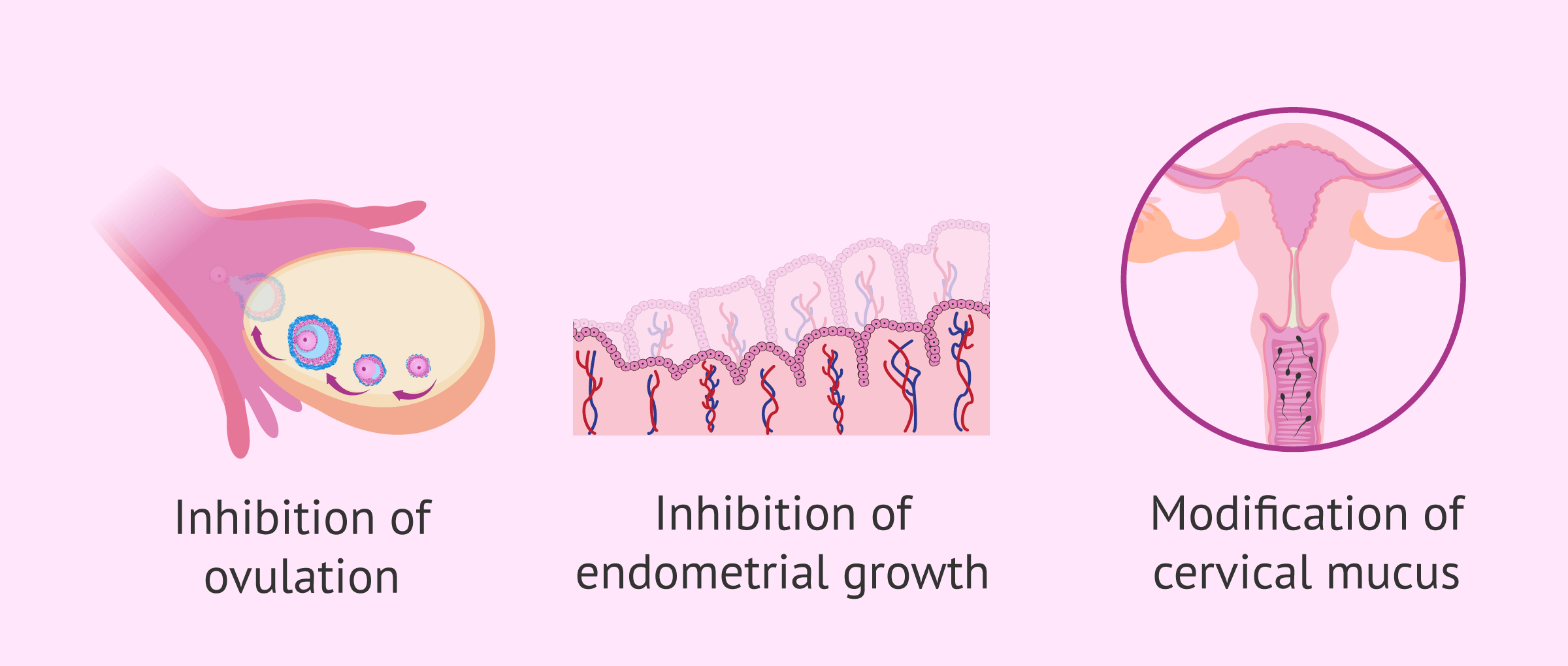
The amount of progestogens released by the subdermal implant is usually around 80-100 micrograms in the first months but then decreases.
The effects of the contraceptive implant are reversible. Thus, it is only necessary to remove the implant to regain fertility in a short period of time.
Types of contraceptive implants
There are currently two formats of contraceptive implants for clinical use:
- Implanon
- consists of a single rod and can be used for a maximum of 3 years from its placement. Its mechanism of action consists in the release of a progestin called etonogestrel. Implanon is effective 24 hours after placement.
- Jadelle
- is made up of two rods. This device can be used for 5 years from its placement. Its active ingredient is levonorgestrel. In addition, it produces a continuous release of low-dose hormones immediately after insertion into the arm. Therefore, Jadelle is effective from the moment of collocation.
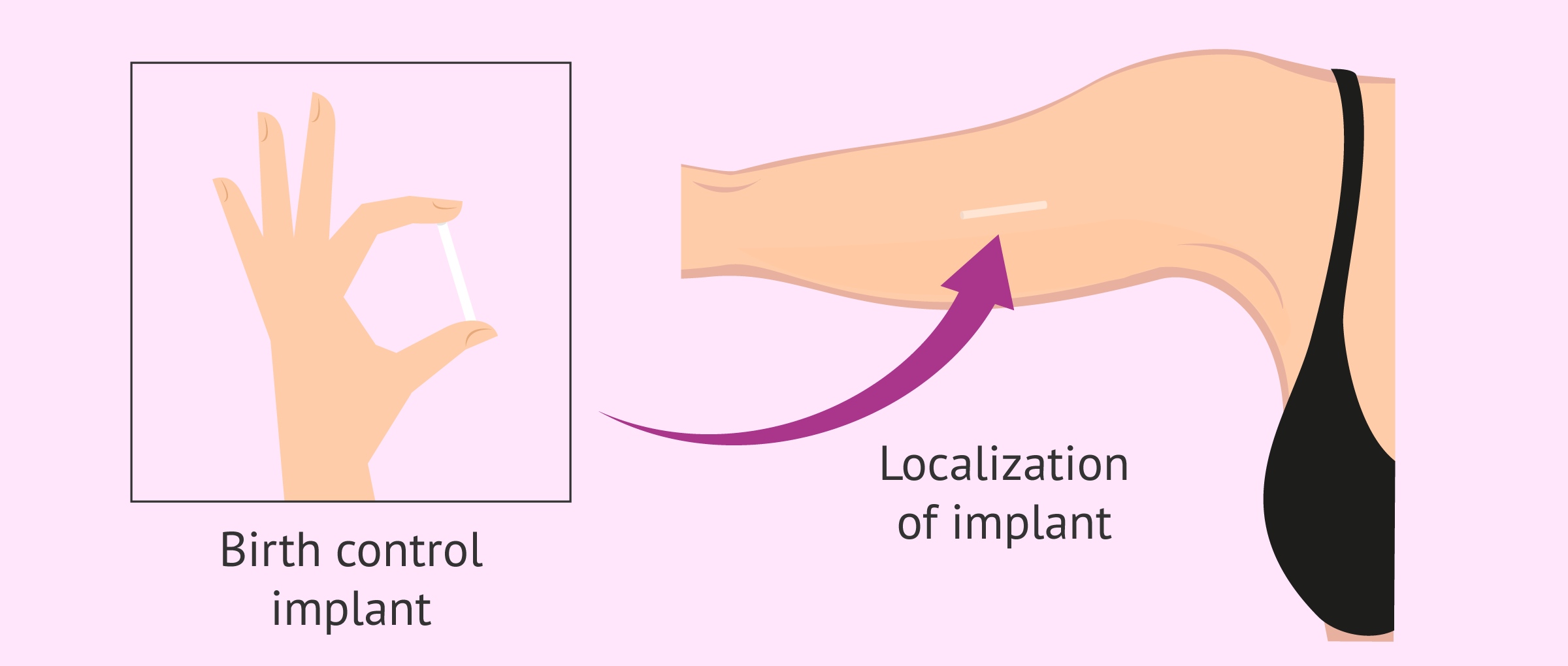
As can be seen, the only difference between these two models of contraceptive implants is the duration of their effectiveness and the time in which they must be replaced. In addition, these two types of contraceptive implants are not available in all countries.
Indications and contraindications
The subdermal birth control implant is indicated for women of childbearing age who desire continued contraception, especially those who:
- Do not tolerate the adverse effects of oral contraceptives.
- Have contraindicated the use of the intrauterine device (IUD).
- Have difficulty remembering to take pills or insert birth control pills such as monthly rings or patches.
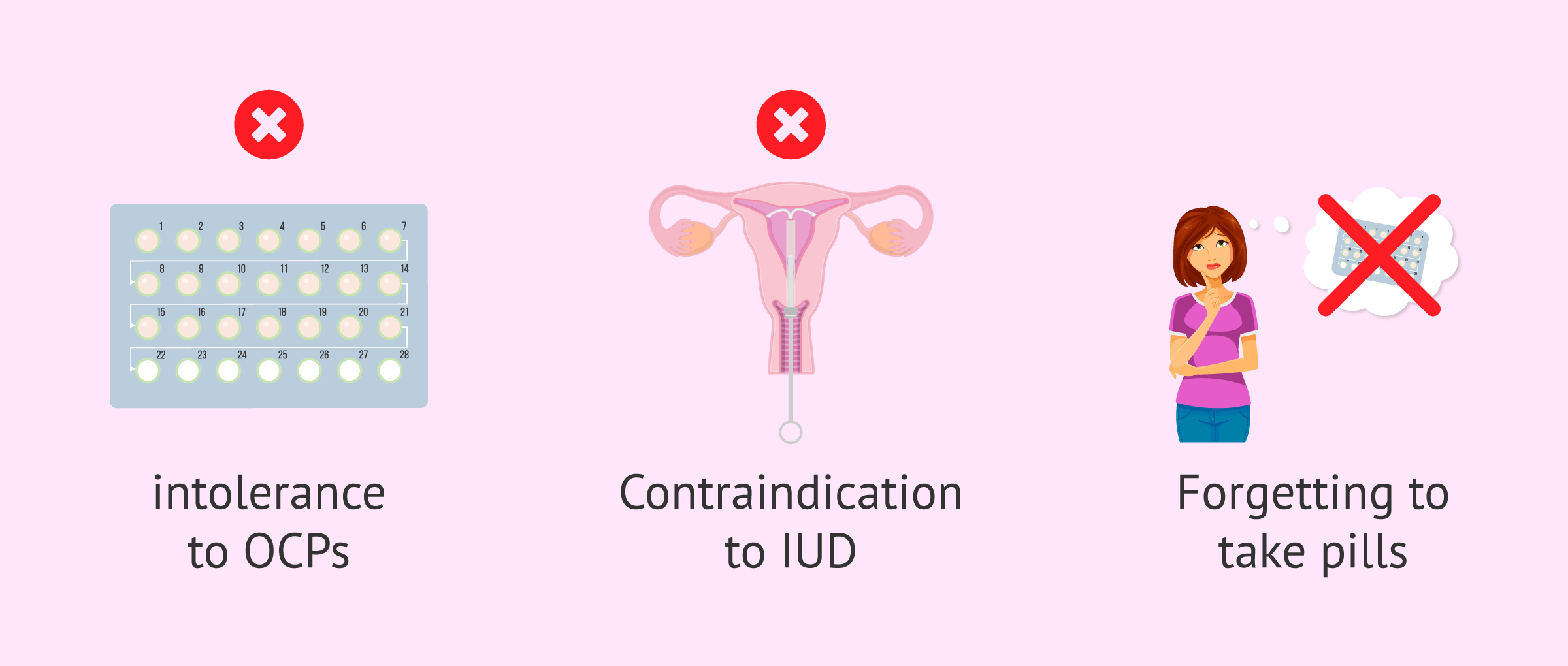
However, contraceptive implants are not recommended in some of the following cases:
- Women who suspect they may be pregnant.
- Women who have undiagnosed vaginal bleeding
- Women who are allergic to the active principle of the implant.
- Other reasons, such as active venous thromboembolism, heart attacks, strokes, liver disease, migraines, headaches, etc..

Therefore, it is always advisable to consult with a specialist in each particular situation so that he/she can decide if it is possible to place a contraceptive implant. Otherwise, the specialist will suggest the use of another contraceptive method.
Use of the contraceptive implant
Although the effectiveness of the contraceptive implant is 99%, it is necessary to know that it has both advantages and disadvantages.
A woman should know all the aspects related to the implant and its effects before choosing this contraceptive method.
What are the advantages of the contraceptive implant?
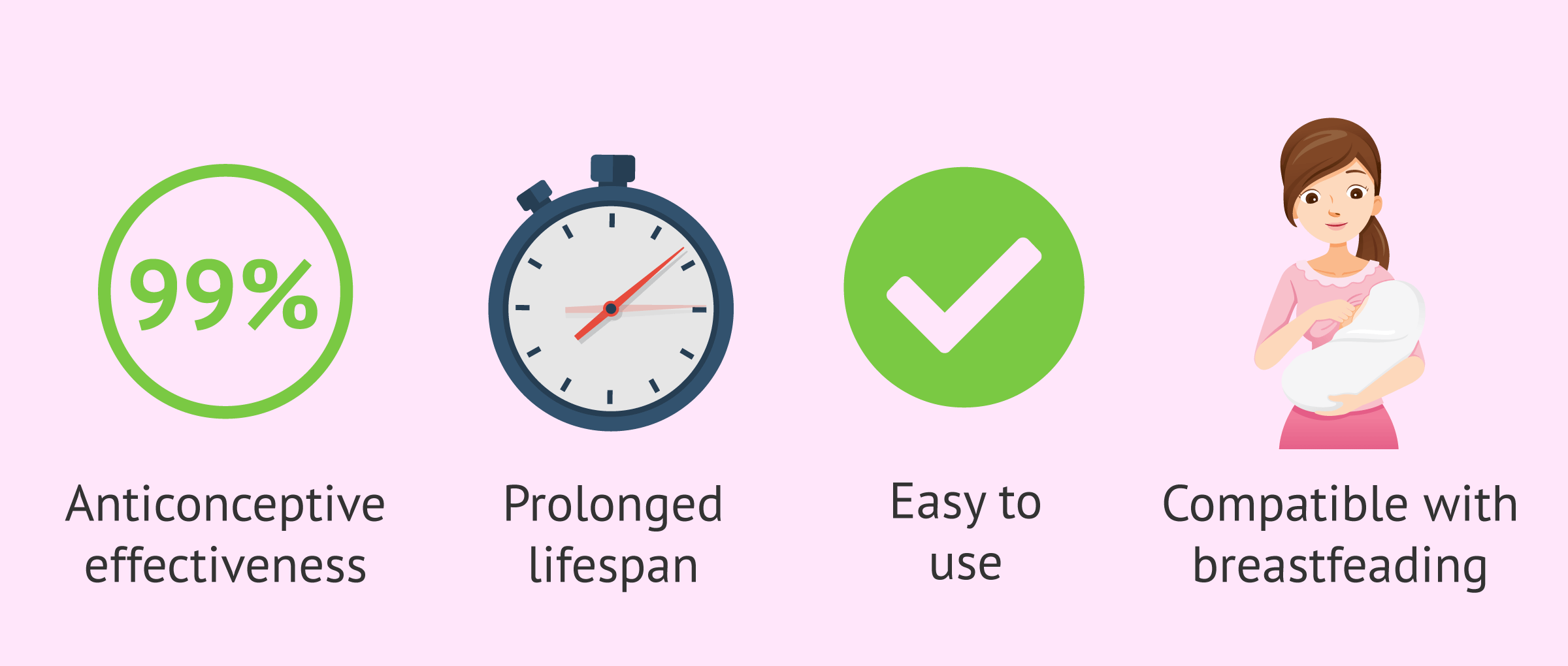
The main advantages of the subdermal contraceptive implant are the following:
- Contraceptive effectiveness of 99% continuously, so the possibility of pregnancy is virtually nil.
- It does not require a daily routine.
- Extended lifespan
- Discreet and easy to use.
- It can be used during breastfeeding, as it has no effect on the quantity or quality of breast milk.
- Quick reversibility when placement is interrupted.
Are there any disadvantages to the subdermal implant?
Although there are many advantages, the contraceptive implant is not always the ideal method for everyone because it has disadvantages. They are detailed below:
- Irregular menstrual periods in the first few months after insertion.
- Weight gain
- It does not protect against sexually transmitted diseases (STDs).
- Requires a specialist for placement and removal.

Placement and removal of the implant
The insertion and removal of the contraceptive implant is very important to be performed by a gynecologist. It will be done using local anesthesia in the arm so that the patient does not suffer pain.
Placement
The implant is placed by specialized medical personnel on an outpatient basis under local anesthesia. In addition, the type of implant to be placed must be taken into account, as there are differences between them. Like this:
- Implanon is placed faster and easier due to the existence of a special device that facilitates its insertion. Therefore, its placement only requires 30 seconds. This type of implant should be inserted in the first 5 days of the menstrual cycle, counting from the first day of your period.
- Jadelle requires ambulatory surgery for insertion. This type of implant should be inserted in the first 7 days of the menstrual cycle.

However, if there is certainty of absence of pregnancy, contraceptive implants can be inserted into the woman without having menstruation. In these cases, an additional contraceptive method will be used for the next 7 days.
When the implant is inserted, most people only feel a small sting after the anesthesia is applied. From this point on, there should be no pain when the implant is inserted.
Once the effect of the anesthesia has been terminated, a small pain may appear at the site of the arm where the implant is located, or even a bruise. However, this little pain will be gone in no time.
Withdrawal
The removal of the implant requires surgery and is a longer process than the placement of the same.
Although the maximum time of permanence of the implant is 3 or 5 years, the woman can request its removal at any time.
The doctor feels the arm until the implant is located and pressure is applied to one side. As a result, the implant is lifted on the side opposite to the side under pressure. A small cut is made in the skin, previously anesthetized to avoid pain.
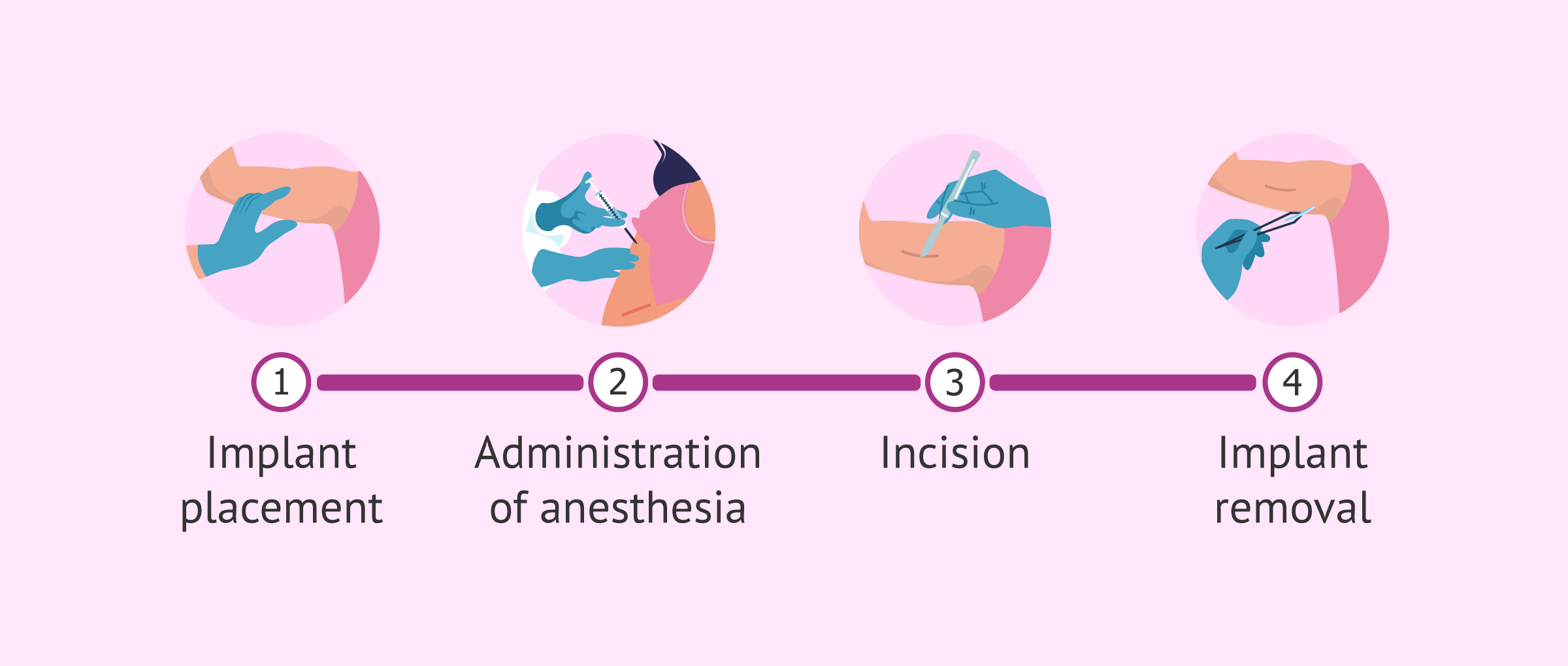
The implant is gently pushed into the incision and once removed, the doctor closes the incision.
Contraceptive implant side effects
The most common side effects are alterations in bleeding, which may appear irregular bleeding, prolonged and / or abundant, and amenorrhea (absence of menstruation). Intermenstrual bleeding, that is, bleeding between periods, is also common.
Other secondary symptoms that may appear in women in the short term due to the use of the implant are the following:
- Headache
- Breast Pain
- Increased hair.
- Dizziness.
- Nausea
- Mild insulin resistance.
- Mood swings
- Vaginal dryness
- Bruises and infections at the site where the implant is inserted.

Generally, these symptoms are mild and disappear several days after implant placement.
FAQs from users
Can the birth control implant affect fertility?
The implant is a long-lasting, but reversible method of contraception. It has a contraceptive efficacy of 99.95% and a single implant can last up to 5 years.
It is a small metal device, which is placed under the skin of the arm. It works thanks to the hormonal release of gestagens that will inhibit ovulation. It is true that women can witness changes in the amount and duration of their periods, there are even women who will not have menstruation during its use.
Once it is removed, the contraceptive effect disappears quickly and the ovulatory cycles will continue in a normal way, so it does not affect fertility at all.
To what extent do the different types of subdermal contraceptive implants distinguish?
Birth control implants differ in the type of progestin, i.e., synthetic or released progestogen. Thus, it is possible to differentiate between Norplant or Jadelle that release the levonorgestrel progestin or Implanon that releases etonorgestrel.
Do I gain weight with birth control implant?
Yes. The birth control implant may cause weight gain as a side effect. Besides, it can generate edema just like other methods. However, this does not occur in all women.
How long should I wait to have sex on the Jadelle implant?
If the implant is inserted during the first 5 days of menstruation, it generates a contraceptive protection of 99% immediately. However, if the contraceptive has been inserted without menstruation, it is recommended to use another barrier contraceptive (as a condom) for 7 days after insertion.
Suggested for you
If you want more information about other birth control methods, I recommend you read the following article: Contraceptive methods: types, effectiveness, risks and prices.
If you are concerned about how the administration of other drugs such as, for example, antibiotics can affect the effectiveness of contraceptives, then we invite you to continue reading in this link: Hormonal contraceptives and antibiotics: how do they interact?
We make a great effort to provide you with the highest quality information.
🙏 Please share this article if you liked it. 💜💜 You help us continue!
References
Boog K, Chen ZE, Cameron S. Sexual and reproductive healthcare providers' opinions on expansion of pharmacy-led provision of contraception. BMJ Sex Reprod Health. 2019 Jun 1. pii: bmjsrh-2018-200252. doi: 10.1136/bmjsrh-2018-200252 (View)
Kortsmit K, Williams L, Pazol K, Smith RA, Whiteman M, Barfield W, Koumans E, Kourtis A, Harrison L, Bauman B, Warner L. Condom Use With Long-Acting Reversible Contraception vs Non-Long-Acting Reversible Contraception Hormonal Methods Among Postpartum Adolescents. JAMA Pediatr. 2019 May 20. doi: 10.1001/jamapediatrics.2019.1136 (View)
Neary M, Chappell CA, Scarsi KK, Nakalema S, Matovu J, Achilles SL, Chen BA, Siccardi M, Owen A, Lamorde M. Effect of patient genetics on etonogestrel pharmacokinetics when combined with efavirenz or nevirapine ART. J Antimicrob Chemother. 2019 Jul 12. pii: dkz298. doi: 10.1093/jac/dkz298 (View)
Okunola TO, Bola-Oyebamiji SB, Sowemimo O. Comparison of weight gain between levonorgestrel and etonogestrel implants after 12 months of insertion. Int J Gynaecol Obstet. 2019 Jul 2. doi: 10.1002/ijgo.12901 (View)
Romano ME, Braun-Courville DK. Assessing Weight Status in Adolescent and Young Adult Users of the Etonogestrel Contraceptive Implant. J Pediatr Adolesc Gynecol. 2019 Mar 27. pii: S1083-3188(19)30171-8. doi: 10.1016/j.jpag.2019.03.008 (View)