Listeriosis in Pregnancy: Symptoms, Prevention and Treatment
Listeriosis is a bacterial infection that is usually transmitted by food contaminated by the bacterium Listeria monocytogenes.
Infection with listeriosis can have very serious consequences in pregnant women, as it causes congenital problems in the fetus.
That's why it's very important to know what the symptoms are, the routes of transmission, and ways to prevent listeriosis if you're thinking about pregnancy.
The different sections of this article have been assembled into the following table of contents.
Contents
- 1.
- 2.
- 3.
- 3.1.
- 3.2.
- 4.
- 4.1.
- 4.2.
- 5.
- 6.
- 6.1.
- 6.2.
- 6.3.
- 6.4.
- 7.
- 8.
What is listeriosis?
Listeriosis is a disease caused by the bacterium Listeria Monocytogenes, an intracellular microorganism that can survive refrigeration and freezing.
This infection is usually contracted by eating improperly processed foods, especially cold cuts, raw vegetables, and unpasteurized dairy products.


Listeriosis is especially important during pregnancy because the bacteria can be transmitted to the fetus through the placenta and cause very serious problems in its development or even an abortion.
In addition to pregnant women, people with weakened immune systems can also suffer very serious complications.
Symptoms
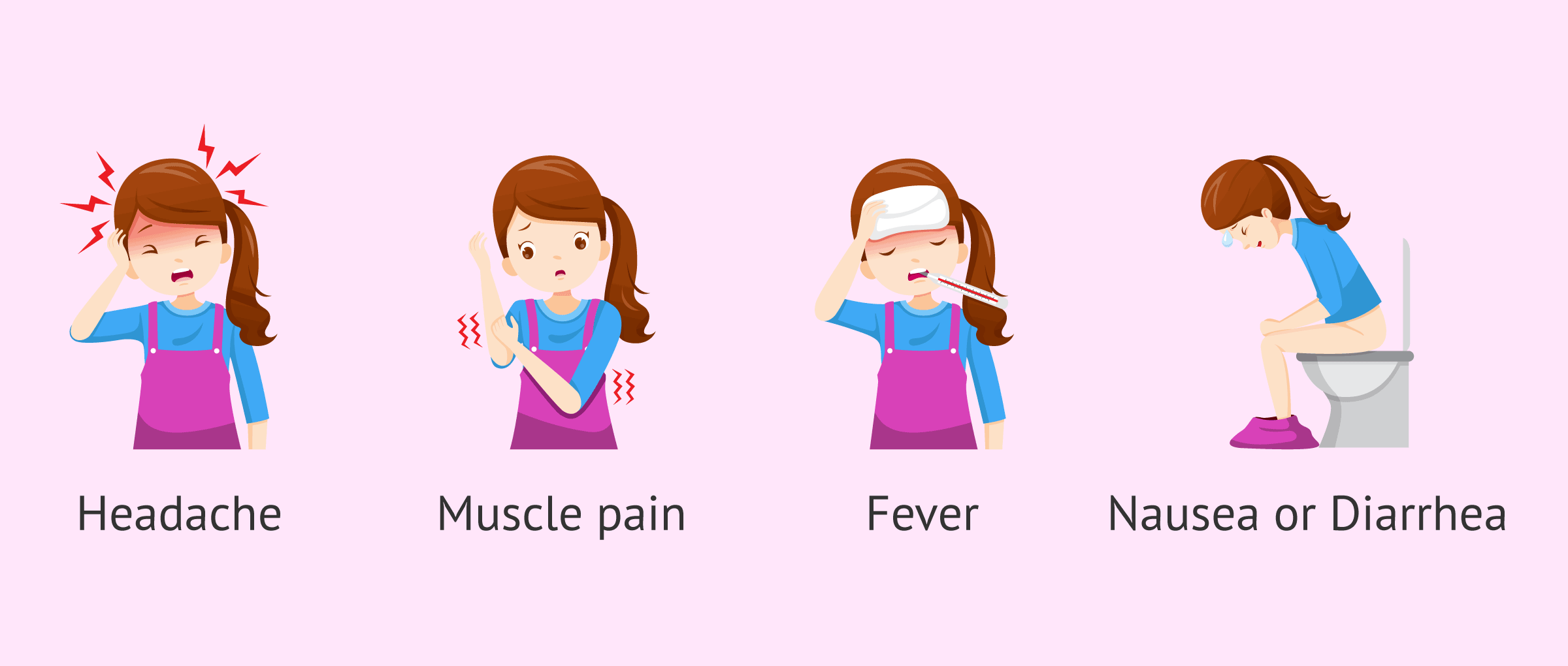
Listeriosis can often be mistaken for the flu virus because they have very similar symptoms:
- Headache.
- Muscle pain.
- Fever.
- Nausea or diarrhea.
However, about 30% of listeriosis infections are asymptomatic, making diagnosis difficult.
In addition, the incubation time of listeriosis is very long and varies between 1 and 90 days. Therefore, the affected person may have symptoms within a few days after eating the contaminated food or feel nothing until a month or two has passed.
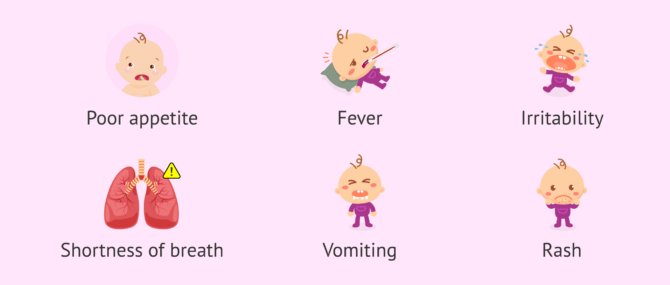
As for babies infected with listeriosis, the first symptoms can be seen within a few days of birth and are as follows:
- Poor appetite.
- Fever.
- Irritability.
- Difficulty breathing.
- Vomiting.
- Rash.

Listeriosis in pregnancy
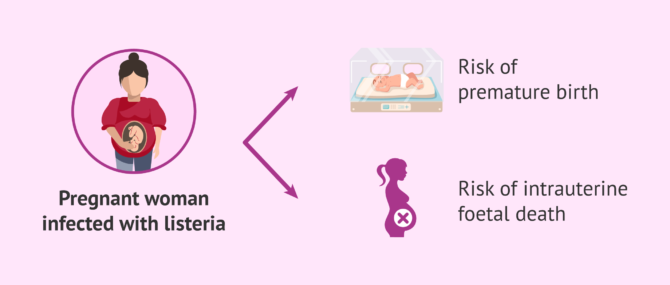
If a pregnant woman becomes infected with listeriosis, even with mild or almost no symptoms, this infection can be transmitted to the fetus and can have fatal consequences, such as intrauterine fetal death, premature delivery, or death of the baby after birth.
This will depend above all on the time of gestation at which the listeriosis infection occurs and whether early diagnosis and treatment has been possible.
First of all, let’s comment on the possible ways of contagion that exist from the mother to the fetus:
- Transplacental route
- can be spread through the placenta to the blood of the fetus and cause septicemia.
- Amniotic route
- by suction and aspiration of a contaminated amniotic fluid from the placenta.
- Ascending route
- from the cervix and through the ovular membranes.
- In childbirth
- if the cervical canal is contaminated, the baby can become infected by passing through it.
Therefore, the transmission of this infection during pregnancy occurs vertically.
First and second trimester
As we have said, depending on the time of gestation, the consequences of listeriosis in the fetus will be one or the other.
In general, if the infection occurs during early pregnancy, the woman is very likely to have a miscarriage.
Third trimester
In 80% of cases, listeriosis infection occurs in the third trimester of pregnancy.
In these cases, there may be fetal death within the uterus or the birth of a baby with congenital listeriosis, which can take two forms:
- Early Infection
- by transplacental or amniotic infection. It appears in the first week of life and can cause premature delivery, respiratory distress and pneumonia. It is the most frequent form and the one that is usually diagnosed in the mother. Mortality is 20-30%.
- Late infection
- appears from the seventh day of the baby's life and leads to meningitis. They are usually babies of asymptomatic mothers who are infected at the time of delivery. Mortality is about 10%.
Listeriosis became especially well known when presenter Bertín Osborne commented in one of his programs that it was the cause of his son Kike's brain injury, as his wife Fabiola had suffered from listeriosis during pregnancy.
Prevention of listhesiosis
As with toxoplasmosis, pregnant women can become infected with listeriosis if they are not careful when preparing food, maintaining proper hygiene measures or consuming inappropriate products.
In the following section, we are going to comment on the most important preventive measures that pregnant women should take into account in order not to get listeriosis.
Hygienic and conservation measures
One of the main problems of the bacteria Listeria Monocytogenes is its resistance to heat and cold. Neither salt treatments nor freezing achieve their destruction. It is only safe to cook food at a very high temperature.
Besides, it is very important to always wash your hands with soap and water when handling food, as well as utensils used for cooking, consuming food of animal origin within a few days of buying it and washing fruits and vegetables well with an appropriate brush.
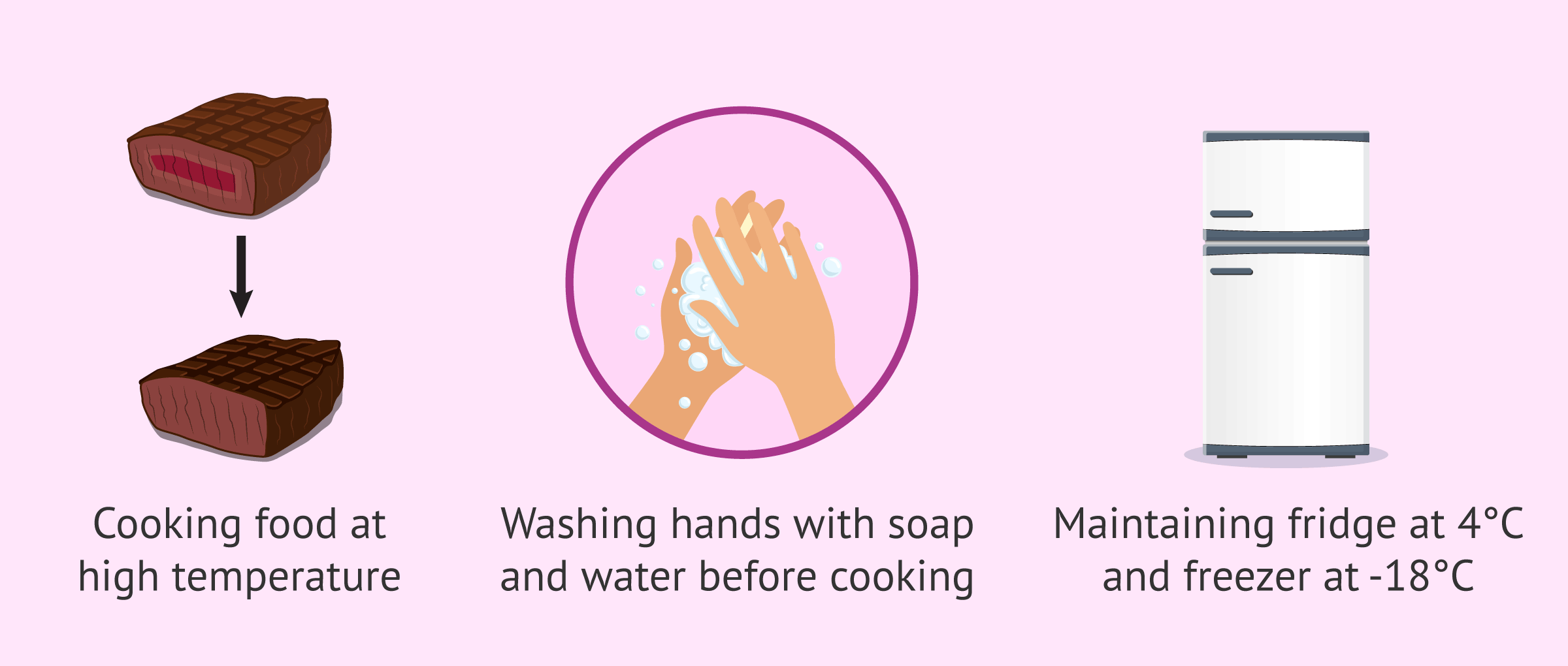
It is also advisable to keep the refrigerator always clean, at a temperature of 4℃ and the freezer at least 18℃, freeze all perishable products and discard all food that remains outside the refrigerator for more than two hours.
Food measures
Despite all that has been said so far, there are some foods that pregnant women will have to avoid throughout pregnancy in order to take extreme precautions and avoid listeriosis:
- Raw fish and shellfish.
- Cold cuts such as ham or york ham, especially if they are not packaged.
- Frankfurt sausages and prepared meats that have not been cooked intensively, ensuring that the inside of the product receives high temperatures.
- Soft cheeses such as brie, feta or camembert.
- Cheeses made with unpasteurized milk.
- Unpasteurized milk or products derived from this raw milk.
- Unsterilized or uncanned pâtés.
- Salads or vegetables already prepared and ready to eat.
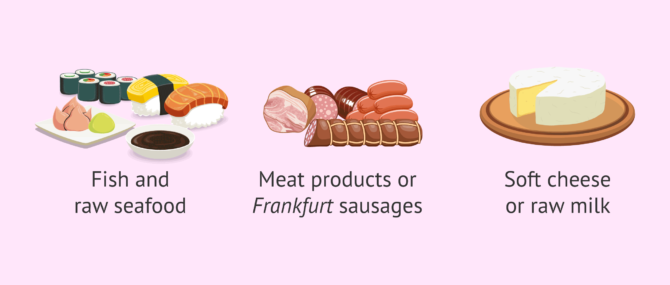
It is also not advisable to eat refrigerated pâtés or spreads. However, pregnant women may eat canned or non-perishable pâtés.
Treatment of listeriosis
Listeriosis is treated with antibiotics, usually ampicillin and gentamicin combined for about 3 weeks.
In fact, in pregnant women, it is common to initiate early treatment of listeriosis in the event of any clinical suspicion, such as fever of unknown origin.
Cultures of the agent Listeria Monocytogenes may take about 48 hours, so it is very important to start early treatment and, if listeriosis is confirmed, to adapt the antibiotic regimen.
FAQs from users
What preventive measures are most important to prevent listeriosis?
Listeriosis is caused by Listeria monocytogenes, which is transmitted through contaminated food and causes fever and a flu-like illness.
The most frequently contaminated products with which the pregnant woman must take special care are precooked meat, unpasteurized milk and/or dairy products, and shellfish.

It is recommended to cook raw foods of animal origin (meat, fish...) at high temperatures (> 50ºC) and avoid drinking milk without heat treatment. Carefully wash raw foods (vegetables, fruits...). Wash hands after handling raw food and wash kitchen utensils after handling raw food and before using cooked food.
Do not mix raw and cooked or ready-to-eat foods in the refrigerator and clean the refrigerator often.
Once opened, do not store too long cold cuts that require storage in the refrigerator (ham, turkey sausage, pork tongue, gelatin...).
Food leftovers and ready meals should be carefully reheated (> 50°C) before consumption.
What are the symptoms of listeriosis in a pregnant woman?
Although in some cases listeriosis may go unnoticed, the most frequent presenting picture during pregnancy is fever, malaise, meconium, foul-smelling amniotic fluid and having signs of loss of fetal well-being.
If listeriosis in pregnancy remains undetected for more than a week, the consequences for the fetus can be fatal.
Is listeriosis compatible with breastfeeding?
Yes, the bacteria Listeria Monocytogenes cannot be transmitted through breast milk, so women with listeriosis can breastfeed their babies without a problem.
How is listeriosis diagnosed?
Listeriosis is usually diagnosed by bacterial culture from the blood, although it can also be diagnosed from amniotic fluid in pregnant women.
This is a laboratory test in which the sample is left to incubate for 48 hours on a culture plate to see if the bacteria Listeria Monocytogenes grows.
Suggested for you
If you would like to find out more about the care you need to take during pregnancy, whether it's about diet or other aspects, we recommend that you read on here: Health in pregnancy
We make a great effort to provide you with the highest quality information.
🙏 Please share this article if you liked it. 💜💜 You help us continue!
References
Caroline Charlier, Olivier Disson, Marc Lecuit. Maternal-neonatal listeriosis. Virulence. 2020 Dec;11(1):391-397. doi: 10.1080/21505594.2020.1759287 (View)
Instituto Nacional de Seguridad e Higiene en el Trabajo (INSHT). Listeria monocytogenes (View)
L J Moran, Y Verwiel, M Bahri Khomami, T J Roseboom, R C Painter. Nutrition and listeriosis during pregnancy: a systematic review. J Nutr Sci. 2018 Sep 24;7:e25. doi: 10.1017/jns.2018.16. eCollection 2018 (View)
Madjunkov M, Chaudhry S, Ito S. Listeriosis during pregnancy. Arch Gynecol Obstet. 2017 Aug;296(2):143-152 (View)
Mateus T, Silva J, Maia RL and Teixeira P. Listeriosis during Pregnancy: A Public Health Concern. ISRN Obstet Gynecol. 2013; 2013: 851712 (View)
Nitin Arora, Yoel Sadovsky, Terence S Dermody, Carolyn B Coyne. Microbial Vertical Transmission during Human Pregnancy. Cell Host Microbe. 2017 May 10;21(5):561-567. doi: 10.1016/j.chom.2017.04.007 (View)
Yefang Ke, Lina Ye, Pan Zhu, Ying Sun, Zhe Zhu. Listeriosis during pregnancy: a retrospective cohort study. BMC Pregnancy Childbirth. 2022 Mar 28;22(1):261. doi: 10.1186/s12884-022-04613-2 (View)