
Plasma rich in growth factors (PRGF) can be used in assisted reproduction in certain situations where the reproductive prognosis is not very encouraging, in order to improve outcomes in these patients.
Although it is a fairly novel technique that requires further research and standardization, PRGF is offering promising results for certain reproductive problems, especially those related to the endometrium.
Provided below is an index with the 9 points we are going to expand on in this article.
- 1.
- 1.1.
- 2.
- 2.1.
- 3.
- 4.
- 5.
- 5.1.
- 5.2.
- 5.3.
- 6.
- 7.
- 8.
- 9.
What is plasma rich in growth factors?
Plasma rich in growth factors (PRGF) is a plasma obtained from the patient's own blood (autologous) with a large amount and concentration of growth factors.
Among these factors are PDGF, VEGF, TGF-beta, FGF, EGF, IGF-1, and HGF.
These growth factors are very important in regulating biological processes such as cell proliferation. For this reason, PRGF has been used in regenerative medicine, as its high concentration of growth factors promotes tissue regeneration.
However, PRGF has more recently begun to be used in the field of assisted reproduction. In this area, PRGF is increasing hope for many patients with endometrial or ovarian problems.
How is PRGF obtained?
To obtain PRGF, the first step is to perform a blood draw on the woman, just as if blood tests were going to be performed. Therefore, obtaining PRGF does not cause major discomfort to the patient.
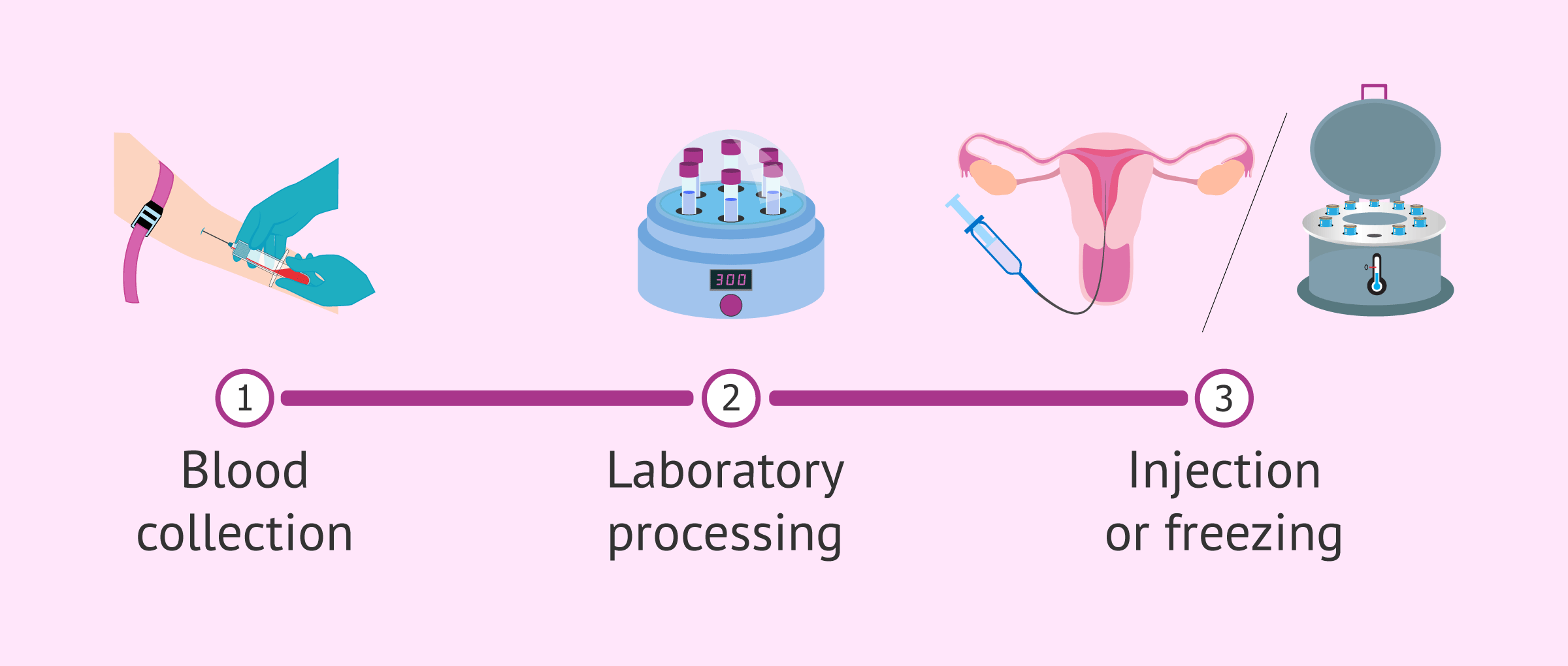
Subsequently, the blood sample is taken to the laboratory, where it undergoes processing.
This process is quite simple and basically consists of centrifugation (to obtain platelet-rich plasma) and activation (so that the platelets release the growth factors).
The obtained product is usually frozen in small doses. In this way, several inoculations can be performed on the patient from a single blood draw.
PRGF for endometrial receptivity
The PRGF obtained from the patient herself can be inoculated into the uterine cavity, as the growth factors it contains could improve endometrial receptivity in cases of refractory endometrium.
In assisted reproduction, refractory endometrium is defined as an endometrium that, after hormonal endometrial preparation, does not reach the adequate thickness. To perform an embryo transfer after an in vitro fertilization (IVF) cycle with reasonable guarantees of success, the ideal is to achieve an endometrial thickness of 7-10 mm.
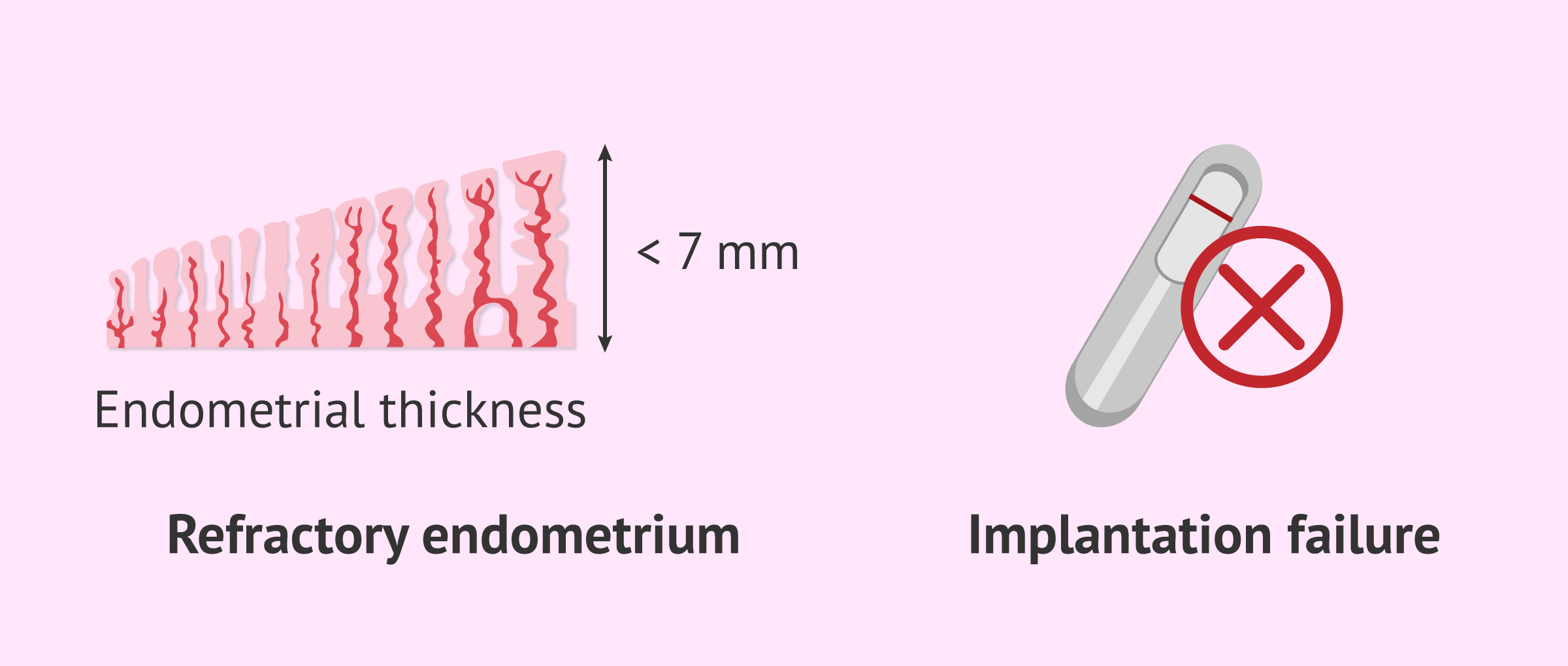
However, if the patient develops a thin endometrium (thickness less than 7 mm), it has been associated with lower chances of achieving pregnancy.
Nevertheless, different studies have shown that intrauterine inoculation of PRGF before embryo transfer can help these women achieve a thicker endometrium and improve their reproductive prognosis.
PRGF has also been used in patients with implantation failure—that is, those who do not achieve pregnancy after several transfers of good-quality embryos. In this case, the results are also promising in increasing the pregnancy rate.
How is PRGF inoculated into the endometrium?
The process by which PRGF is introduced into the uterine cavity is very simple. It is performed using a thin cannula (like those used for artificial insemination or embryo transfer) through the cervix, while the specialist is guided by ultrasound. Therefore, the process is similar to an embryo transfer, is painless, and does not require anesthesia.
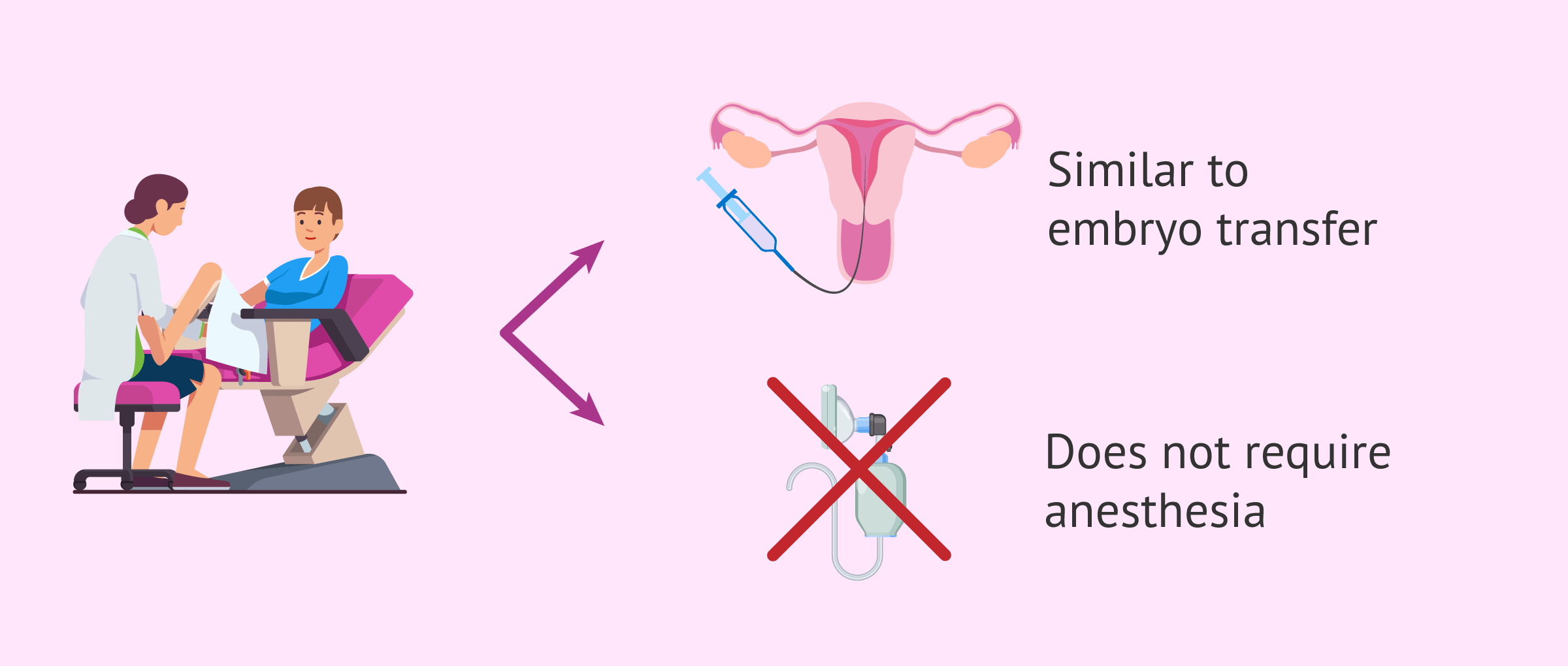
In this way, 0.5-1 ml of PRGF is inoculated into the endometrium. However, it is common to perform this process 3 times before the embryo transfer, waiting 2-3 days between each inoculation.
PRGF for the ovary
PRGF can also be inoculated into the ovary, with the aim of promoting the regeneration of ovarian tissue.
However, this technique is in a more experimental stage than the inoculation of PRGF into the endometrium.
In principle, the main applications of PRGF in the ovary would be in cases of diminished ovarian reserve or premature ovarian insufficiency. Thus, injecting PRGF into the ovary aims to improve ovarian function in these patients.
Advantages of PRGF in assisted reproduction
In addition to the improvement it can bring to the reproductive outcomes of some patients, PRGF has other advantages:
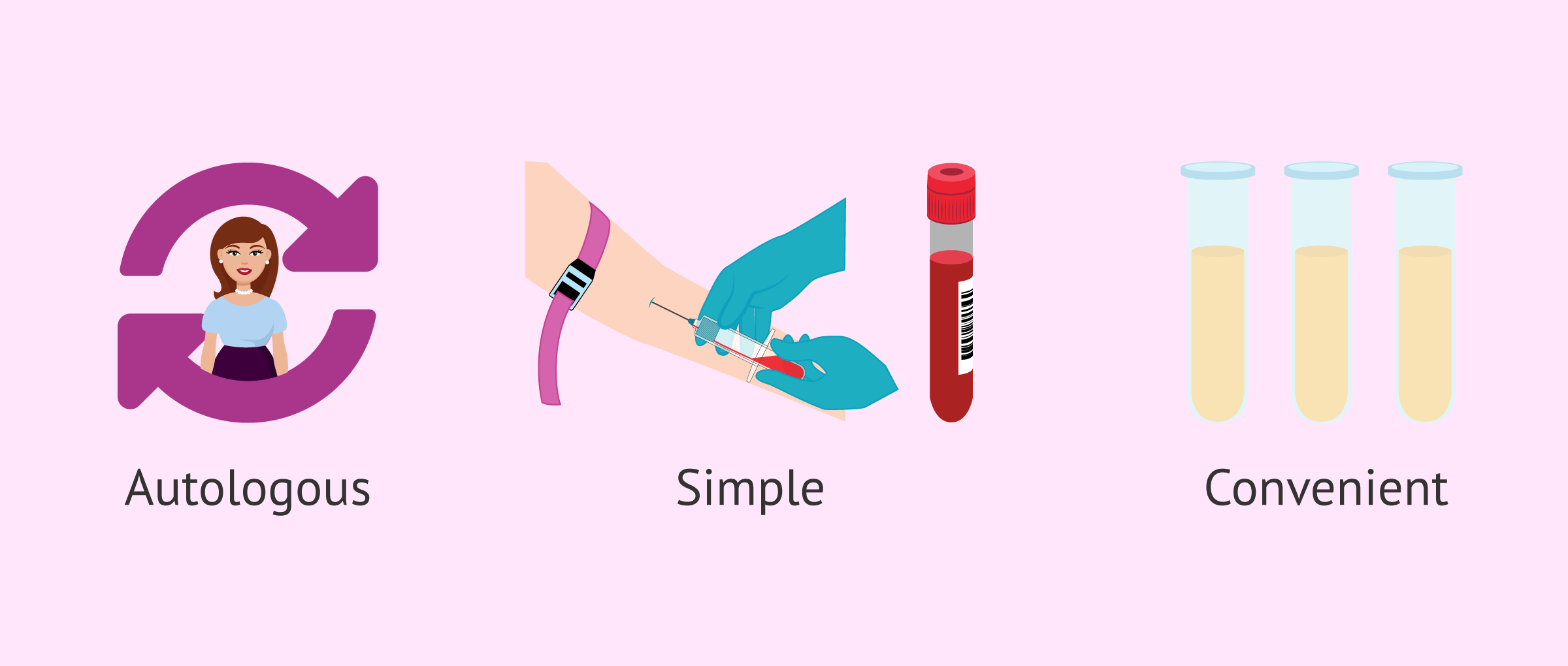
- Autologous: PRGF comes from the same patient to whom it is inoculated, which reduces the risk of rejection, allergies, and disease transmission.
- Simple: obtaining PRGF is not a complicated process for the woman, as it only requires a blood draw. Meanwhile, inoculating PRGF into the uterus is also a painless procedure with no difficulty.
- Convenient: from a single blood draw, several doses (for multiple inoculations) of PRGF are usually obtained, which can be frozen.
However, despite all these advantages, PRGF inoculation is a fairly novel technique that requires more research and standardization.
FAQs from users
Is plasma rich in growth factors used if the endometrium is normal to improve IVF results?
There are various scientific publications that support the benefits of PRP in cases of refractory endometrium, improving endometrial appearance and thickness. There are also some publications demonstrating that in patients with Recurrent Implantation Failure undergoing IVF treatment, the use of intrauterine PRP could be beneficial in improving the implantation rate in these selected patients, although it is still experimental.
Read more
Does plasma rich in growth factors improve ovarian reserve?
Plasma rich in growth factors (PRGF) has been injected into the ovary as a possible "treatment" in cases of low ovarian reserve or premature ovarian insufficiency. In this way, thanks to the regenerative properties of the growth factors contained in this plasma inoculated into the ovary, the aim is to improve ovarian function in these patients.
What are the risks or adverse effects of PRGF in assisted reproduction?
The inoculation of plasma rich in growth factors, although quite novel in the field of assisted reproduction, has proven to be a safe technique in other applications in regenerative medicine.
Furthermore, because PRGF is autologous—meaning it comes from the same patient to whom it is inoculated—the risks of adverse rejection reactions and the transmission of possible diseases are reduced.
Recommended reading
If you are interested in reading more information about the importance of the endometrium in assisted reproduction, we recommend accessing the following link: Why is the endometrium important in assisted reproduction?
On the other hand, if you want to know more about the embryo implantation process, you can read this article: What is embryo implantation and when does it occur?
Community and Support
At inviTRA we work to make monthly and rigorous information accessible to everyone. If this article has helped you, consider supporting us so we can continue accompanying more people on their journey to parenthood.
References
Allahveisi A, Seyedoshohadaei F, Rezaei M, Bazrafshan N, Rahimi K. The effect of platelet-rich plasma on the achievement of pregnancy during frozen embryo transfer in women with a history of failed implantation. Heliyon. 2020 Mar 12;6(3):e03577. (View)
Anitua E, de la Fuente M, Ferrando M, Quintana F, Larreategui Z, Matorras R, Orive G. Biological effects of plasma rich in growth factors (PRGF) on human endometrial fibroblasts. Eur J Obstet Gynecol Reprod Biol. 2016 Nov;206:125-130. (View)
Chang Y, Li J, Wei LN, Pang J, Chen J, Liang X. Autologous platelet-rich plasma infusion improves clinical pregnancy rate in frozen embryo transfer cycles for women with thin endometrium. Medicine (Baltimore). 2019 Jan;98(3):e14062. (View)
Coksuer H, Akdemir Y, Ulas Barut M. Improved in vitro fertilization success and pregnancy outcome with autologous platelet-rich plasma treatment in unexplained infertility patients that had repeated implantation failure history. Gynecol Endocrinol. 2019 Sep;35(9):815-818. (View)
Dogra Y, Singh N, Vanamail P. Autologous platelet-rich plasma optimizes endometrial thickness and pregnancy outcomes in women with refractory thin endometrium of varied aetiology during fresh and frozen-thawed embryo transfer cycles. JBRA Assist Reprod. 2022 Jan 17;26(1):13-21. (View)
Du J, Lu H, Yu X, Lü Z, Mi L, Zhang X. Efficacy and safety of platelet-rich plasma for the treatment of thin endometrium: A protocol for systematic review and meta-analysis. Medicine (Baltimore). 2020 Jan;99(3):e18848. (View)
Farimani M, Nazari A, Mohammadi S, Anvari Aliabad R. Evaluation of intra-ovarian platelet-rich plasma administration on oocytes-dependent variables in patients with poor ovarian response: A retrospective study according to the POSEIDON criteria. Reprod Biol Endocrinol. 2021 Sep 8;19(1):137. (View)
Farimani M, Poorolajal J, Rabiee S, Bahmanzadeh M. Successful pregnancy and live birth after intrauterine administration of autologous platelet-rich plasma in a woman with recurrent implantation failure: A case report. Int J Reprod Biomed. 2017 Dec;15(12):803-806. (View)
Ferrari AR, Cortrezzi S, Borges E Junior, Braga D, Souza MDCB, Antunes RA. Evaluation of the Effects of Platelet-Rich Plasma on Follicular and Endometrial Growth: A Literature Review. JBRA Assist Reprod. 2021 Oct 4;25(4):601-607. (View)
Frantz N, Ferreira M, Kulmann MI, Frantz G, Bos-Mikich A, Oliveira R. Platelet-Rich plasma as an effective alternative approach for improving endometrial receptivity - a clinical retrospective study. JBRA Assist Reprod. 2020 Oct 6;24(4):442-446. (View)
Hajipour H, Farzadi L, Latifi Z, Keyhanvar N, Navali N, Fattahi A, Nouri M, Dittrich R. An update on platelet-rich plasma (PRP) therapy in endometrium and ovary related infertilities: clinical and molecular aspects. Syst Biol Reprod Med. 2021 Jun;67(3):177-188. (View)
Kim H, Shin JE, Koo HS, Kwon H, Choi DH, Kim JH. Effect of Autologous Platelet-Rich Plasma Treatment on Refractory Thin Endometrium During the Frozen Embryo Transfer Cycle: A Pilot Study. Front Endocrinol (Lausanne). 2019 Feb 14;10:61. (View)
Lin Y, Qi J, Sun Y. Platelet-Rich Plasma as a Potential New Strategy in the Endometrium Treatment in Assisted Reproductive Technology. Front Endocrinol (Lausanne). 2021 Oct 18;12:707584. (View)
Maleki-Hajiagha A, Razavi M, Rouholamin S, Rezaeinejad M, Maroufizadeh S, Sepidarkish M. Intrauterine infusion of autologous platelet-rich plasma in women undergoing assisted reproduction: A systematic review and meta-analysis. J Reprod Immunol. 2020 Feb;137:103078. (View)
Mouanness M, Ali-Bynom S, Jackman J, Seckin S, Merhi Z. Use of Intra-uterine Injection of Platelet-rich Plasma (PRP) for Endometrial Receptivity and Thickness: a Literature Review of the Mechanisms of Action. Reprod Sci. 2021 Jun;28(6):1659-1670. (View)
Nazari L, Salehpour S, Hosseini S, Sheibani S, Hosseinirad H. The Effects of Autologous Platelet-Rich Plasma on Pregnancy Outcomes in Repeated Implantation Failure Patients Undergoing Frozen Embryo Transfer: A Randomized Controlled Trial. Reprod Sci. 2022 Mar;29(3):993-1000. (View)
Russell SJ, Kwok YSS, Nguyen TTN, Librach C. Autologous platelet-rich plasma improves the endometrial thickness and live birth rate in patients with recurrent implantation failure and thin endometrium. J Assist Reprod Genet. 2022 Jun;39(6):1305-1312. (View)
Sharara FI, Lelea LL, Rahman S, Klebanoff JS, Moawad GN. A narrative review of platelet-rich plasma (PRP) in reproductive medicine. J Assist Reprod Genet. 2021 May;38(5):1003-1012. (View)
Xu Y, Hao C, Fang J, Liu X, Xue P, Miao R. Intrauterine Perfusion of Autologous Platelet-Rich Plasma Before Frozen-Thawed Embryo Transfer Improves the Clinical Pregnancy Rate of Women With Recurrent Implantation Failure. Front Med (Lausanne). 2022 Mar 29;9:850002. (View)
Zadehmodarres S, Salehpour S, Saharkhiz N, Nazari L. Treatment of thin endometrium with autologous platelet-rich plasma: a pilot study. JBRA Assist Reprod. 2017 Feb 1;21(1):54-56. (Ver)
FAQs from users: 'Is plasma rich in growth factors used if the endometrium is normal to improve IVF results?', 'Does plasma rich in growth factors improve ovarian reserve?' and 'What are the risks or adverse effects of PRGF in assisted reproduction?'.



