
A chemical pregnancy, also known as biochemical pregnancy, is a very early miscarriage that usually goes unnoticed and is confused with the menstrual period.
For fertilization to take place, the sperm has to meet the egg in the Fallopian tube. If it happens, an embryo starts developing until it reaches day 6—at this point, it is time for the embryo to attach to the woman's uterus. After implantation, the body starts releasing beta-hCG hormone, which is measured by pregnancy tests. As long as there's a certain level of hCG in the body, tests will came out positive.
A chemical pregnancy can occur both in cases of natural conception and In Vitro Fertilization (IVF) pregnancies. In both cases, the symptoms are the same.
Provided below is an index with the 8 points we are going to expand on in this article.
- 1.
- 2.
- 2.1.
- 3.
- 4.
- 5.
- 5.1.
- 5.2.
- 5.3.
- 5.4.
- 5.5.
- 5.6.
- 5.7.
- 5.8.
- 6.
- 7.
- 8.
Chemical pregnancy after IVF
There is a common belief that a chemical pregnancy can only occur after undergoing an infertility treatment because it is often detected after taking a blood pregnancy test at a clinic.
Actually, the rate of chemical abortion after IVF is just as low as 8%.
For this reason, as one shall see, the chances for a chemical pregnancy to occur with IVF are as high as in natural pregnancies. The explanation behind this common misconception is simple: it happens so early that it goes unnoticed by the woman, who confuses it with her menstrual flow.
You can make a guess if you obtain a positive result after taking a pregnancy test but the levels of hCG don't continue to rise exponentially after a few days.
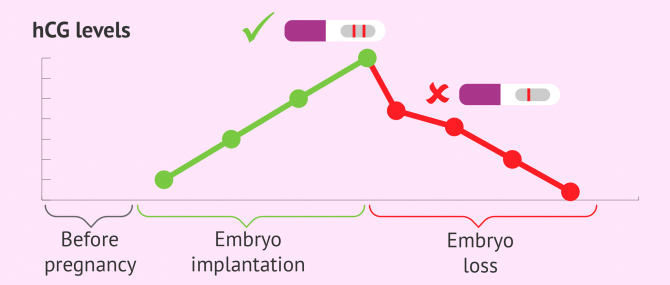
hCG levels rising very slowly or not rising at all may indicate that a chemical pregnancy has taken place.
What are the causes?
This type of miscarriage or pregnancy loss occurs so early that the fetus cannot be seen by ultrasound scan. Finding out the causes that have led to early embryo arrest and miscarriage is complicated. The fact that the body passes the remaining tissue along with menstrual flow makes it impossible to be analyzed.
However, the following are some factors that may explain the mechanism of chemical pregnancies:
- Embryonic gene alterations after fertilization
- Genetic abnormalities in the egg and/or sperm
- Unhealthy lifestyle habits of the parents: tobacco, alcohol, high levels of stress, etc.
- Uterine malformations
- Infections

We recommend that you try not to become obsessed with discovering the cause behind it, as it can be highly frustrating. The cause of some chemical pregnancies is just that, from time to time, certain embryos can't continue developing for unexplained reasons, which does not mean that you are infertile.
Instead, you should be optimistic and see it as a good sign, given that fertilization and embryo implantation happened.
Preventing biochemical abortion
Most miscarriages, as well as biochemical pregnancy, are usually caused by chromosomal abnormalities in the embryo or gametes. Therefore, there is nothing that can be prevented.
However, it is true that there are some recommendations to reduce the risk of biochemical pregnancy.

This is the case of a healthy lifestyle through regular physical exercise, eating healthy and controlling stressful situations.
In addition, eating iron-rich foods and taking folic acid supplements every day also serve as prevention against micro miscarriages. However, this should be done under medical prescription and according to the guidelines of a specialist.
Finally, avoiding smoking or drinking alcohol is also a good practice to prevent a biochemical pregnancy.
Signs & symptoms
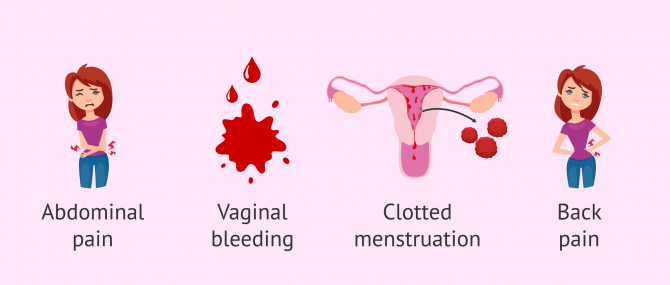
Given that it occurs so early, there aren't many symptoms associated with chemical pregnancies. However, the following are the most common ones:
- Period-like abdominal pain
- Bright red menstrual bleeding
- Menstrual clots
- Mild uterine contractions and back pain
There are no specific medications to take after a diagnosis of chemical pregnancy. Neither is a D&C (Dilation & Curettage) required. Your menstruation will show up as usual, and your ovulation periods will continue to be as always.
Ovulation after chemical pregnancy
The majority of women who have gone through a chemical pregnancy wonder whether it will affect their future fertility as well as how long should they wait before trying to conceive again.
A chemical pregnancy does not increase or diminish the chances of becoming pregnant again in the future. In the case of IVF patients, the success rates of your next cycle won't be compromised either. In fact, given that the rates are cumulative, your chances will be higher.
Read: How Successful Is IVF with ICSI? – Pregnancy & Live Birth Rates.

Even though, in principle, you have a favorable prognosis after a chemical pregnancy, it is totally normal to feel devastated after going through such a complicated process. Keeping this in mind, we strongly recommend that you talk with your doctor to be aware of the real consequences of a chemical pregnancy and to learn what options you havr to fulfill your dream of starting a family.
If you need to undergo IVF to become a mother, we recommend that you generate your Fertility Report now. In 3 simple steps, it will show you a list of clinics that fit your preferences and meet our strict quality criteria. Moreover, you will receive a report via email with useful tips to visit a fertility clinic for the first time.
FAQs from users
When does ovulation occur after a chemical pregnancy?
Most commonly, the woman's menstrual cycle returns to normal 7-14 days after the biochemical abortion.
However, this period of time for the menstrual cycle to return to normal after a micro-abortion will depend on the level of beta hCG and progesterone in the blood. It is necessary for these hormone levels to drop to their basal values before the menstrual cycle can resume and ovulation can take place.
When does the period stop after a biochemical pregnancy?
When there is an early interruption of embryonic development or a biochemical pregnancy, it may happen that the menstrual period is delayed for a few days or even 1-2 weeks. For this reason, women are often unaware that they have suffered an early miscarriag
How long should we wait to try to conceive again after a chemical pregnancy?
This is variable, as it will depend on the individual and how she feels both physically and emotionally after the micro-abortion or biochemical pregnancy.
Women whose menstrual cycle resumes normally can try to get pregnant again when they have had at least two or three menstrual periods, i.e. 2-3 months after the micro-abortion.

In any case, it is best to consult your doctor and follow his or her instructions.
What may be the cause of recurrent biochemical miscarriages?
Biochemical abortion, biochemical pregnancy or microabortion is a fairly early gestational loss. Implantation of the embryo occurs, but the embryo stops developing soon after. When this happens, the woman experiences bleeding similar to menstruation, which is often confused.
Among the possible causes of biochemical abortion are the following:
- Genetic alterations in embryos.
- Malformations in the uterus.
- Hormonal alterations.
- Infections of the female reproductive tract.
In addition, an inappropriate lifestyle, such as smoking or drinking alcohol, can also be a reason for microabortion.
Is it true that you are more fertile after a chemical pregnancy?
No, it is not necessarily associated. However, in cases of IVF treatments, it is true that your chances of becoming pregnant, as long as the cause is not related to other problems, will increase because the success rates are cumulative.
Can biochemical abortion only occur after IVF?
Biochemical miscarriage is understood to be when there is a positive pregnancy test (preferably performed on blood), and the pregnancy is lost without being able to be evidenced by imaging techniques (basically transvaginal ultrasound).
This situation is not inherent to in vitro fertilization or other assisted reproduction techniques, but it is more common to detect it in these situations. The reason for this is that after assisted reproductive techniques, a blood pregnancy test will almost always be performed. In couples seeking a spontaneous pregnancy, it is detected less frequently because the pregnancy test is not systematically performed before menstruation, so this situation goes unnoticed. It would correspond to those cases in which there is some menstrual delay, but menstruation ends up appearing (and a pregnancy test has not been performed or it has been performed in urine, and given that its detection level is lower, it comes out negative). The latter is what we would call in medicine a false negative test. In general, these delays are usually attributed to some state of stress or anxiety.
Is a biochemical pregnancy considered a miscarriage?
Yes, it is a type of miscarriage that occurs very early, even before anything can be seen in the uterus or on ultrasound. The only evidence is the presence of hCG in the body, which causes the test to be successful.
How can you tell if you have had a chemical pregnancy?
Actually, distinguishing between miscarriage bleeding and menstrual flow is very complicated, as there is almost no difference between them to the naked eye. Common signs include a delay in your period or a menstrual flow that is more abundant than normal, but not so heavy as to be seen by the woman. Only those who got a positive pregnancy test are able to tell if they have had a chemical pregnancy.
Suggested for you
We have explained that a chemical pregnancy can only be detected through a blood pregnancy test in order for hCG levels to be quantified. Continue reading here: What Are Normal hCG Hormone Levels during Pregnancy?
A chemical pregnancy is actually a type of miscarriage or spontaneous abortion. What do you know about it? Get more information here: Why Does a Miscarriage Happen? – Causes, Symptoms & Treatment.
We have made several references to the two-week wait or 2WW after an IVF cycle, which is defined as the time period between the embryo transfer and the pregnancy test. To learn more about it, click here: What is the Two-Week Wait (2WW)? – Tips to Survive It.
We make a great effort to provide you with the highest quality information.
🙏 Please share this article if you liked it. 💜💜 You help us continue!
References
Ellish NJ, Saboda K, Connor JO, Nasca PC, Stanek EJ, Boyle C. A prospective study of early pregnancy loss. Hum Reprod 1996;11:406 – 412 (View)
Levy T, Dicker D, Ashkenazi J, Feldberg D, Shelef M, Goldman JA. The prognostic value and significance of preclinical abortions in in vitro fertilization-embryo transfer programs. Fertil Steril 1991;56:71–4 (View)
Wang JX, Norman RJ,Wilcox AL. Incidence of spontaneous abortion among pregnancies produced by assisted reproductive technology. Hum Reprod 2004;19:272 – 227 (View)
Wilcox AJ, Weinberg CR, O’Connor JF, Baird DD, Schlatterer JP, Canfield RE, Armstrong EG, Nisula BC. Incidence of early loss of pregnancy. N Engl J Med 1988;319:189 – 194 (View)
Zinaman MJ, O’Conner J, Clegg ED, Brown CC, Selevan SG. Estimates of human fertility and pregnancy loss. Fertil Steril 1996;65:503– 509 (View)
FAQs from users: 'When does ovulation occur after a chemical pregnancy?', 'When does the period stop after a biochemical pregnancy?', 'How long should we wait to try to conceive again after a chemical pregnancy?', 'What may be the cause of recurrent biochemical miscarriages?', 'Is it true that you are more fertile after a chemical pregnancy?', 'Can biochemical abortion only occur after IVF?', 'Is a biochemical pregnancy considered a miscarriage?' and 'How can you tell if you have had a chemical pregnancy?'.
Authors and contributors



