
Although in general any gestation of two embryos is understood as a twin pregnancy, we must know that there is a difference between identical twins and fraternal twins. Visibly, there is a major difference, which is that identical twins are identical and of the same sex. In any case, both are considered high-risk pregnancies, as they have a higher probability of complications.
A double pregnancy is the most common form of multiple pregnancy, although there are also occasional instances of triplets, quadruplets, quintuplets...
They are not the most common pregnancies, especially naturally, although they can occur more frequently after in vitro fertilization (IVF) treatment when more than one embryo is transferred. However, reproductive medicine is trying to curb the proliferation of these types of gestations by transferring a single embryo.
In the following video, Michelle Emblenton, biochemist at inviTRA, summarizes in this video whether having twins is hereditary and what can influence it. However, you can later explore the topic in more detail by reading the article.
Provided below is an index with the 8 points we are going to expand on in this article.
- 1.
- 1.1.
- 2.
- 3.
- 3.1.
- 4.
- 4.1.
- 4.2.
- 4.3.
- 4.4.
- 4.5.
- 4.6.
- 4.7.
- 4.8.
- 5.
- 6.
- 7.
- 8.
Types of twin pregnancy
Multiple pregnancy occurs as a consequence of different processes that will also determine the type of twins:
- Dizygotic or fraternal twins: occurs after the fertilization of more than one egg by different sperm. This is what we commonly know as fraternal twins (or triplets, quadruplets, quintuplets, etc.). The children share a physical resemblance, but just like any other siblings. Dizygotic twins can also be of different sexes, depending on the fertilizing sperm. The case of fraternal twins usually presents with a frequency close to 70% of multiple pregnancy cases.
- Monozygotic or identical twins: arise from the division of the same embryo. The babies have the same genetic load, the same sex, and an almost identical physical appearance. It occurs with a frequency of approximately 30% of multiple gestation cases.
In turn, in the case of identical twins, we can make a classification based on the moment the embryo divided into two independent embryos. This will affect the placenta and the number of amnions or sacs:
- Dichorionic-diamniotic pregnancy: the division occurs in the morula embryonic stage, before the fifth day of embryonic development. Each embryo will develop in an individual placenta and amniotic sac.
- Monochorionic-diamniotic pregnancy: embryo fragmentation takes place in the blastocyst stage (between days 4 and 8 of embryonic development). It results in one placenta and two amniotic sacs.
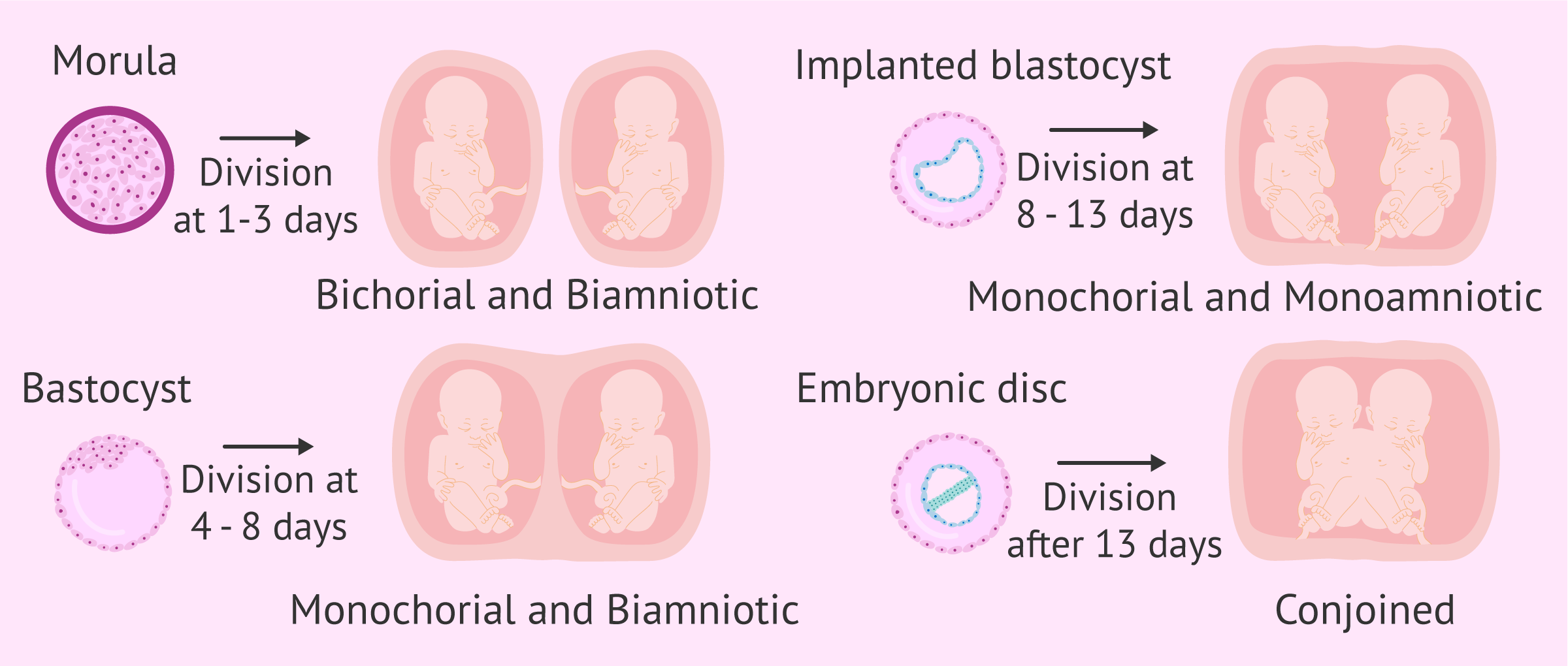
- Monochorionic-monoamniotic pregnancy: occurs when the division has taken place between day 8 and day 13 of development. In this case, both embryos share the sac and placenta.
- Conjoined twins: the division occurs at an advanced stage of embryonic development and is therefore not complete. Both embryos grow in the same sac and the same placenta but in an anomalous way.
In the case of dizygotic embryos or fraternal twins, being two independent eggs, they will evolve in two separate placentas and sacs. These are, therefore, dichorionic-diamniotic pregnancies.
Symptoms of twin pregnancy
The evolution of a twin pregnancy is practically the same as that of a single pregnancy, although there may be slight variations in symptoms.
When a multiple pregnancy occurs, women often suffer from more nausea and vomiting than in a single pregnancy. The size of the uterus in these types of pregnancies is also larger, which can generate more discomfort and a greater feeling of heaviness.
Some common recommendations to reduce the potential risks and complications associated with multiple pregnancies are as follows:
- Rest: the woman will likely require some extra tranquility compared to what is needed in a single pregnancy.
- Exhaustive medical monitoring: a greater number of ultrasounds will need to be performed, and she will have to visit her doctor somewhat more than usual. Early diagnosis is important when it comes to bringing the pregnancy to term and planning the delivery (although it does not necessarily have to be this way, it is highly likely to be a cesarean section).

In short, it is important to follow medical advice so that the twin pregnancy evolves healthily month by month and allows for the birth of healthy children.
What risks are associated with twin pregnancy?
These types of gestations usually involve a series of risks for both the woman and the future baby. The most common risks associated with twin pregnancy are summarized below:
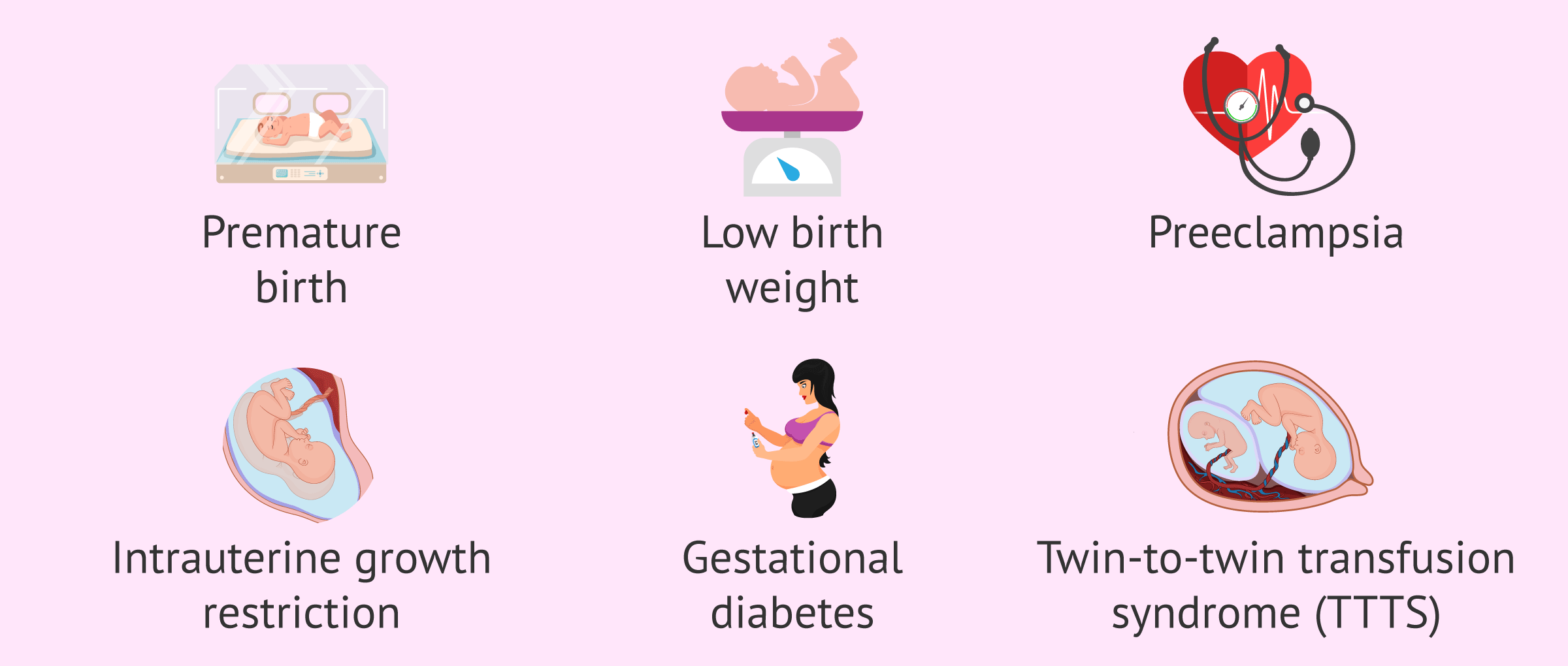
- Premature birth.
- Low birth weight.
- Preeclampsia.
- Increased fluid retention.
- Intrauterine growth restriction.
- Gestational diabetes.
- Chromosomal abnormalities: genetic studies are recommended for this.
- Twin-to-twin transfusion syndrome: occurs when one fetus receives more blood than the other. It happens in monochorionic pregnancies and can be serious, although if detected in time, it has a solution.
If you want more information about the potential risks, you can read this article: What are the risks of multiple pregnancy?
Factors that favor multiple pregnancy
There are various factors that can favor the achievement of a multiple pregnancy, such as:
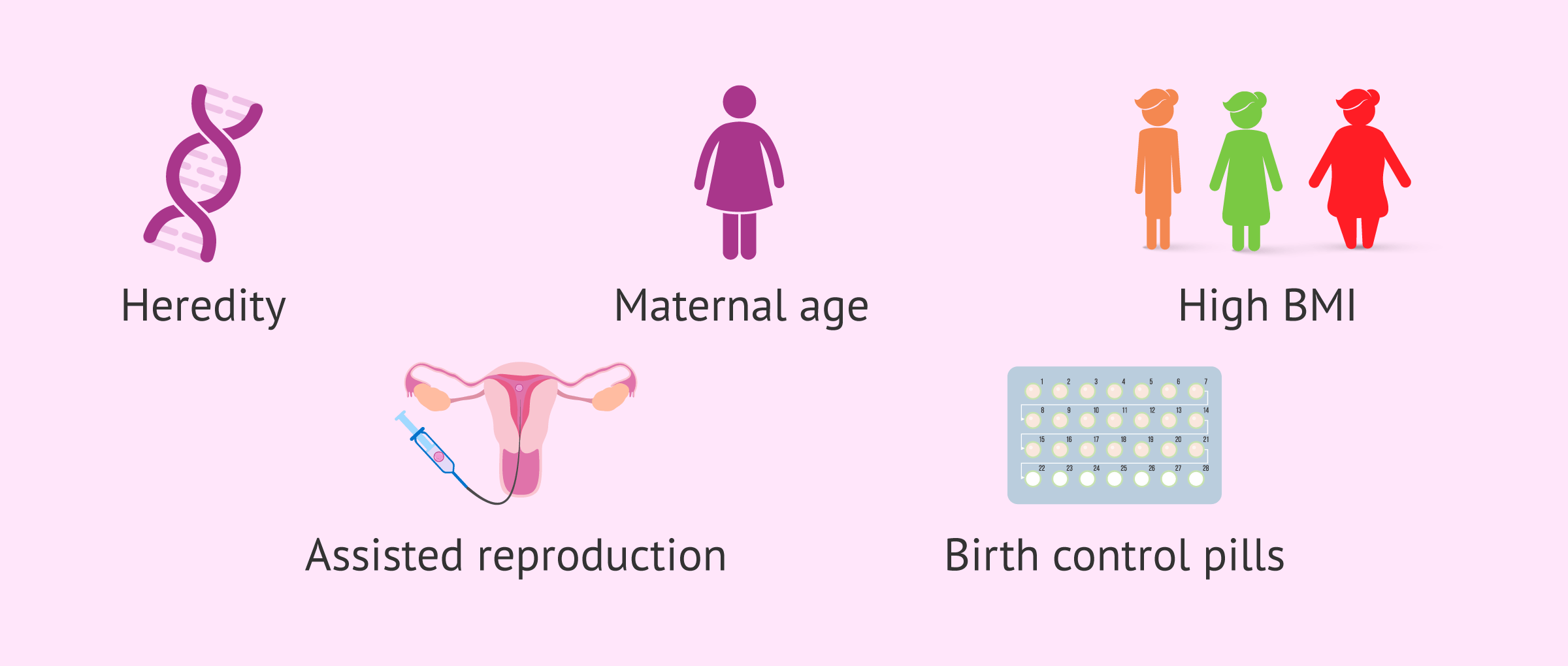
- Hereditary: it is transmitted maternally when the woman has a family history of this type of pregnancy. It can also occur if the father has a family history of twins but transmits it to his daughter. It is not true that these types of cases skip one, two, or three generations, although it can happen.
- Age of the woman: when the woman is over 30-35 years of age at the time of conception, there is a higher probability of a multiple pregnancy. Hormonal alterations as menopause approaches can favor double ovulations.
- High Body Mass Index (BMI): some studies indicate an increased probability of polyovulation in women with a BMI over 30.
- Assisted reproduction: fertility treatments have been responsible for many multiple pregnancies due to the artificial stimulation of ovulation and the transfer of more than one embryo. However, reproductive medicine is trying to curb these types of pregnancies.
- After continuous use of birth control pills: some studies point to a possible rebound effect after taking the contraceptive pill.
In recent decades, the rate of multiple pregnancy associated with in vitro fertilization (IVF) treatments where more than a single embryo is transferred has been seen to increase, hence the importance of single embryo transfers whenever possible.
Commonly, many patients believe that transferring frozen embryos decreases this risk. As Dr. Gorka Barrenetxea explains, performing a deferred embryo transfer (with frozen embryos) or an immediate one (fresh) after the puncture does not decrease the multiple pregnancy rate. This depends exclusively on the number of embryos transferred.
Twin pregnancy and assisted reproduction
As we have previously mentioned, many patients decide to transfer two embryos to increase the probability of pregnancy. However, more and more specialists are choosing to perform good embryo selection.
For this reason, many fertility centers opt for long embryo culture until day 5 of development to transfer a single embryo. In this way, the probability of a multiple pregnancy is reduced, and therefore, the risks associated with it.
The final decision of how many embryos to transfer will be made by the patients themselves, although it is recommended to follow the specialist's advice.
The final decision of how many embryos to transfer will be made by the patients themselves, although it is recommended to follow the specialist's advice.
It should be noted that when multiple pregnancy is associated with in vitro fertilization, we speak of fraternal twins and not identical twins, although socially the two terms tend to be confused. The case of identical twins in assisted reproduction could occur with the same probability as naturally.
If you want more information on this topic, you can read the following article: Multiple pregnancies in assisted reproduction: advantages and disadvantages.
FAQs from users
Which specific risks or dangers are involved in a multiple pregnancy?
Although the potential risks for the fetuses and the mother are becoming increasingly controlled and less frequent, it is precisely in cases of multiple births where problems for the mother may raise, such as high blood pressure, diabetes, prematurity, problems at the time of delivery, etc.
As for the baby, the potential dangers are those related to prematurity, most of them considered as mild and transitional, although some may become a serious health issue.
What are the most significant signs and symptoms of a twin pregnancy?
Answer from Fertility Madrid
There is an increase in uterine volume, so the diaphragm moves into the thoracic cavity, decreasing respiratory capacity.
- Blood pressure increases
- Maternal heart rate increases (palpitations)
- Varicose veins appear and feet and ankles swell
- Increased hormone levels
- Increased salivation and constipation may occur
That is why at Fertility Madrid we are in favor of transferring a single embryo.
What are the symptoms of a twin pregnancy?
Michelle Emblenton, biochemist at inviTRA, tells us about the possible symptoms of a twin pregnancy.
The evolution of a twin pregnancy or a multiple pregnancy is basically the same as the evolution of a single pregnancy. However, with two babies it may be that some of the symptoms are more pronounced. You may experience more nausea or more fatigue. As you've got two babies growing in there, the uterus is going to be bigger and you may have more sensation of heaviness and fatigue, requiring a little bit more rest than usual. What is important in a multiple pregnancy is that you go to all of your regular checkups (and there will probably be more of them in a multiple pregnancy) to ensure that all of those factors we've talked about are under control and that the pregnancy is evolving healthily for both you and your babies. And don't forget that once those babies are born, which may be by a cesarean section or not (it depends on your individual case) you are going to need a little bit more help than those mothers who just have a single baby, so do be prepared.
How can I get pregnant naturally with twins?
There is no way you can ensure that a twin pregnancy will occur naturally, as it will depend on the probability that a woman will ovulate more than one egg in the same cycle or on the probability that the embryo will fragment and give rise to the development of two independent embryos.
What are the chances of twins with donor eggs?
The chances of twins with egg donation are higher than in normal IVF cycles using the woman's own eggs due to the young age of donors, which translates into very healthy oocytes. This is the reason why multiple embryo transfers are unadvisable.
On average, if more than one embryo is transferred, the likelihood of becoming pregnant with twins is about 40%, while the chances of carrying triplets or greater is roughly 4%.
Read more
How is a twin pregnancy detected?
The pregnancy test analyzes the level of beta-hCG in maternal blood to confirm or rule out pregnancy. A very high beta-hCG level in the first weeks of gestation raises the suspicion of a double pregnancy, but confirmation will be obtained when two gestational sacs are visualized on ultrasound or a double heartbeat is heard.
Is it possible to have fraternal twins sharing one placenta?
No, when the pregnancy is with fraternal twins (and not identical twins), each one comes from a different embryo and therefore each one will develop its own placenta and its own amniotic sac.
This is known as a bicorionic-biamniotic pregnancy.
Is multiple pregnancy hereditary?
Although the genetic basis for the hereditary probability of having twins is not yet currently understood, it is true that having cases of fraternal or identical twins in the family does increase the chances of having a multiple pregnancy.
This is especially true in the case of fraternaltwins, since it is likely that the probability of ovulating twice is inherited.
If you would like more information on the hereditary basis of twins, we recommend reading this article: Is having twins hereditary?
Recommended readings
If you would like to know the probability of having twins in fertility treatments, we recommend visiting this article: What is the probability of twins with IVF and artificial insemination?
If, on the other hand, you want to read more in-depth information about how the inheritance of these types of pregnancies works, then we invite you to visit this link: Is having twins or fraternal twins inherited? What can influence it?
Community and Support
At inviTRA we work to make monthly and rigorous information accessible to everyone. If this article has helped you, consider supporting us so we can continue accompanying more people on their journey to parenthood.
References
ASRM American Society for Reproductive Medicine. (2013). Embarazo y Nacimientos Múltiples: Mellizos, Trillizos, o Mayor Número de Bebés. Guía para pacientes. Serie de información para pacientes. Comité de Educación del Paciente y el Comité de Publicaciones. Birmingham, Alabama.
Barri, P. (1996) Are multiple pregnancies an inevitable consequence of AMP techniques, in Press.
Bryan E, Denton J, Hallett F. Guidelines for Professionals: Multiple Births and Their Impact on Families. London: Multiple Births Foundation, 2001
Craandjik, M., Helmerhorst, F.H., Koudstaal, J. et al, (1996) The influence of assisted procreation on the perinatal outcome of twin pregnancies. [Abstr. no. 859] Hum. Reprod., 11 (Abstr. Book 1), 40.
Dias T, Mahsud-Dornan S, Thilaganathan B, Papageorghiou A, Bhide A. First-trimester ultrasound dating of twin pregnancy: are singleton charts reliable? BJOG 2010; 117: 979–984 (View)
Dr. Erika McAslan Fraser. Expecting twins, triplets or more? The healthy multiple pregnancy guide. Tamba - Twins & Multiple Births Association. Scottish registered charity SC041055 (View)
Instituto Mexicano del Seguro Social. Diagnóstico y manejo del embarazo múltiple. Guía de Práctica Clínica (GPC). Catálogo maestro de guías de práctica clínica: IMSS-628-13. Dirección de prestaciones médicas. Unidad de Atención Médica. Coordinación de Unidades Médicas de Alta Especialidad. División de Excelencia Clínica.
Khalil A, Rodgers M, Baschat A, Bhide A, Gratacos E, Hecher K, Kilby MD, Lewi L, Nicolaides KH, Oepkes D, Raine-Fenning N, Reed K, Salomon LJ, Sotiriadis A, Thilaganathan B, Ville Y. ISUOG Practice Guidelines: role of ultrasound in twin pregnancy. Ultrasound Obstet Gynecol 2016; 47: 247–263
Lorenzo I, Herrera LA. El embarazo múltiple ¿es realmente un factor de alto riesgo obstétrico? Población y Salud en Mesoamérica. 2009 [citado 26 Ago 2009]; 6(2) (View)
National Collaborating Center for Women’s and Children’s Health (UK). Multiple Pregnancy. The Management of Twin and Triplet Pregnancies in the Antenatal Period. Commissioned by the National Institute for Clinical Excellence. RCOG Press: London, September 2011
National Collaborating Center for Women’s and Children’s Health. Multiple Pregnancy: Evidence Update. Commissioned by the National Institute for Clinical Excellence. NICE: Manchester, March 2013 (View)
Nijs, M. and Geerst, L. (1993) Prevention of multiple pregnancies in an IVF program. Fertil. Steril., 59, 1245-1250 (View)
Roest, J., Van Heusden, A. et al. (1997) A triplet pregnancy after IVF is a procedure related complication that should be prevented replacement of 2 embryos only. Fertil. Steril, 67,290-295 (View)
Salomon LJ, Cavicchioni O, Bernard JP, Duyme M, Ville Y. Growth discrepancy in twins in the first trimester of pregnancy. Ultrasound Obstet Gynecol 2005; 26: 512–516 (View)
Senoz, S., Benchetrit, A. and Casper, R. (1997) An IVF fallacy multiple pregnancy risk is lower for older women. /. Assist. Reprod. Genet., 14, 192-198 (View)
Staessen, C. and Camus, M. (1992) The relationship between embryo quality and the occurrence of multiple pregnancy. Fertil. Steril, 57, 626-630 (View)
The American College of Obstetricians and Gynecologists. Women’s Health Care Physicians. (2015). Frequently Asked Questions. FAQ188. Pregnancy. Copyright July 2015 by the American College of Obstetricians and Gynecologists.
Velazco A. Embarazo múltiple. En: Rigol Ricardo O. Obstetricia y Ginecología. La Habana. Editorial Ciencias Médicas; 2006. p. 173-6.
FAQs from users: 'What can I do to get pregnant with twins naturally?', 'Which specific risks or dangers are involved in a multiple pregnancy?', 'What are the most significant signs and symptoms of a twin pregnancy?', 'What types of twin pregnancy are there?', 'What are the symptoms of a twin pregnancy?', 'How is a twin pregnancy diagnosed?', 'How can I get pregnant naturally with twins?', 'What are the chances of twins with donor eggs?', 'How is a twin pregnancy detected?', 'Is it possible to have fraternal twins sharing one placenta?' and 'Is multiple pregnancy hereditary?'.
Authors and contributors


More information about Michelle Lorraine Embleton


Hi. My family has a history of twins, on both my mom and dad´s sides. Interestingly I got pregnant with triplets naturally. I didn´t know, but at 11 weeks I had a bleed and thought I was miscarrying. I found out then I had been pregnant with triplets but lost one. I now have a lovely healthy set of twins, one boy and one girl.
I love being a mom of twins, but my partner wants to have another baby. I am terrified I may get pregnant with triplets like before and I already have my hands full. I really do only want one baby!
Any help or advice appreciated.
Hi Teresa0781
Congratulations on your twins, and thank you for sharing your story.
It does indeed sound like you have a hereditary disposition for having mutiple pregnancies, and I understand your concerns for a furture pregnancy.
There are options available to ensure a single pregnancy. One option is to use IVF with single embryo transfer, although it is impossible to rule out the division of the blastocyst to form identical twins.
Another route you could consider would be mutilfetal pregnancy reduction, whereby the number of embryos is reduced to ensure only one baby develops. You can read more about this by clicking here.
I hope this helps and wish you the best for your future pregnancy.