Female hormone analysis: what should normal hormone levels be?
A blood hormone test is a useful tool to study the levels of the female hormones responsible for regulating the female ovarian cycle. It can help us to determine the potential fertility of a woman.
The main hormones that are anaylzed in women check are: FSH, LH, estradiol, progesterone, AMH, prolactin, and TSH.
Along with a transvaginal ultrasound scan, a female hormone check up allows us to predict the status of a woman's ovarian reserve. This blood test is therefore a highly useful tool when it comes to determining the egg count of a woman and if the woman is ovulating adequately.
The different sections of this article have been assembled into the following table of contents.
Contents
- 1.
- 1.1.
- 1.2.
- 2.
- 3.
- 3.1.
- 4.
- 5.
- 5.1.
- 5.2.
- 5.3.
- 5.4.
- 5.5.
- 5.6.
- 5.7.
- 5.8.
- 6.
- 7.
The female sex hormones
A woman's menstrual cycle is regulated by the hypothalamic-pituitary-ovarian axis (HPO).
The hypothalamus and the pituitary gland are two structures which are located in the brain. They have many functions, one of which is to regulate hormones found in blood.
For their part, the ovaries are responsible for releasing the sex hormones, which exert their function over the uterus. In addition, these hormones are responsible for the appearance of the secondary female characteristics in women.

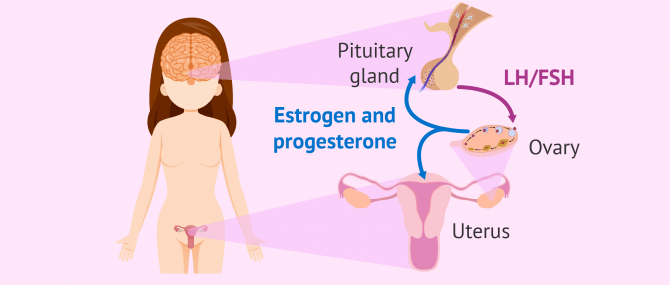
Hence, any abnormality that affects the release of hormones by the HPO axis can lead to menstrual irregularities and, as a result, infertility.
This is why getting your hormones tested with a simple hormone analysis is a crucial female fertility test.
The regulation process of the menstrual cycle can be split into two different parts: the hypothalamic-pituitary function and the ovarian function. The following sections will provide you with more information on the hormones involved in each:
Hormones produced by the pituitary gland
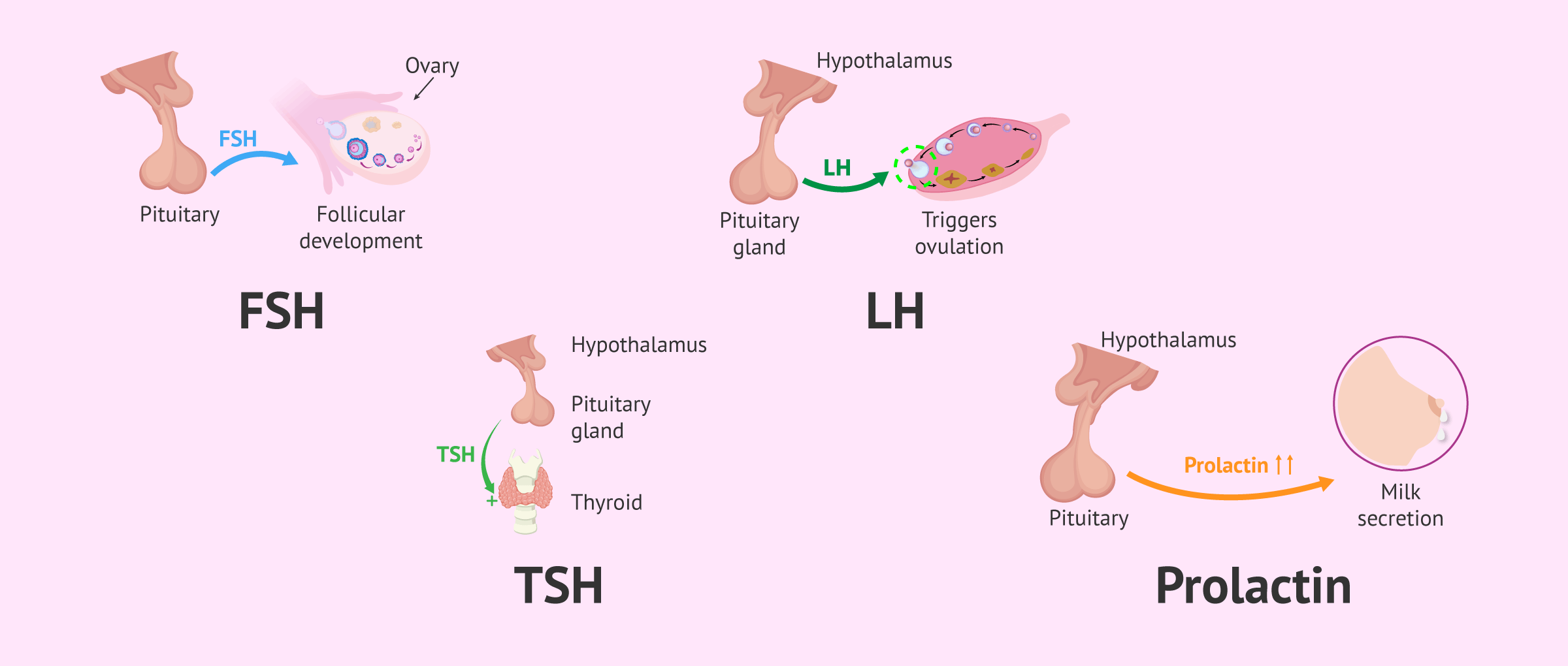
The principal hormones produced by the pituitary gland, also called gonadotropins, are follicle-stimulating hormone (FSH) and luteinizing hormone (LH). Both act upon on the ovary and trigger the release of estrogen and progesterone.

In turn, estrogen and progesterone then have an effect upon the pituitary gland, blocking the effect of hormones produced by the pituitary gland, thus closing the cycle. This process is known as feedback regulation or negative feedback.
TSH and prolactin are also released by the pituitary gland under the influence of the ovarian cycle.
Here, we are going to elaborate on the function of each one of these hormones:
- FSH
- This gonadotropin affects the ovary by favoring the development and maturation of ovarian follicles, a series of sac-like structures where the eggs grow and mature.
- LH
- Responsible for triggering the follicle maturation process and ovulation (egg release). This then leads to the formation of the corpus luteum (empty follicle after ovulation) and the release of progesterone.
- TSH
- The thyroid-stimulating hormone is released by the pituitary gland and regulates the activity of the thyroid gland.
- Prolactin
- This hormone is especially important during pregnancy, since it stimulates milk production by the mammary glands as well as progesterone synthesis in the corpus luteum.

If you would like to read more about this subject you can from more information here: Gonadotropins & Their Use in Assisted Reproduction.
Hormones produced by the ovaries
The hormones released by the ovary, thanks to the action of gonadotropins, are the sex hormones. Each of these we will discuss in more detail:
- Estradiol (E2)
- This is an estrogenic hormone released by the growing ovarian follicle. Among other functions related to sexual development, it is responsible for activating the release of LH and thus inducing ovulation in each menstrual cycle. In addition, and together with progesterone, it is involved in preparing the endometrium for embryo implantation.
- Progesterone (P4)
- This is a steroid hormone released mainly by the corpus luteum, and the placenta in pregnancy. It acts during the second phase of the menstrual cycle (luteal phase), preparing the endometrium for embryo implantation. It is also responsible for maintaining the endometrium during pregnancy. If pregnancy does not occur, the level of progesterone drops and this causes the expulsion of the endometrium in what is known as menstruation.
- Anti-Müllerian hormone (AMH)
- A hormone secreted by the granulosa cells of the antral and preantral follicles of the ovary throughout a woman's reproductive life. It plays a key role in follicle formation and development. In addition, AMH is an indirect marker of ovarian reserve.

For more information on how the female menstrual cycle works, we recommend the following article: The Different Phases of the Menstrual Cycle.
When and how to test hormone levels in women
A fertility hormone test involves taking a blood sample to determine the levels of the reproductive hormones described above.
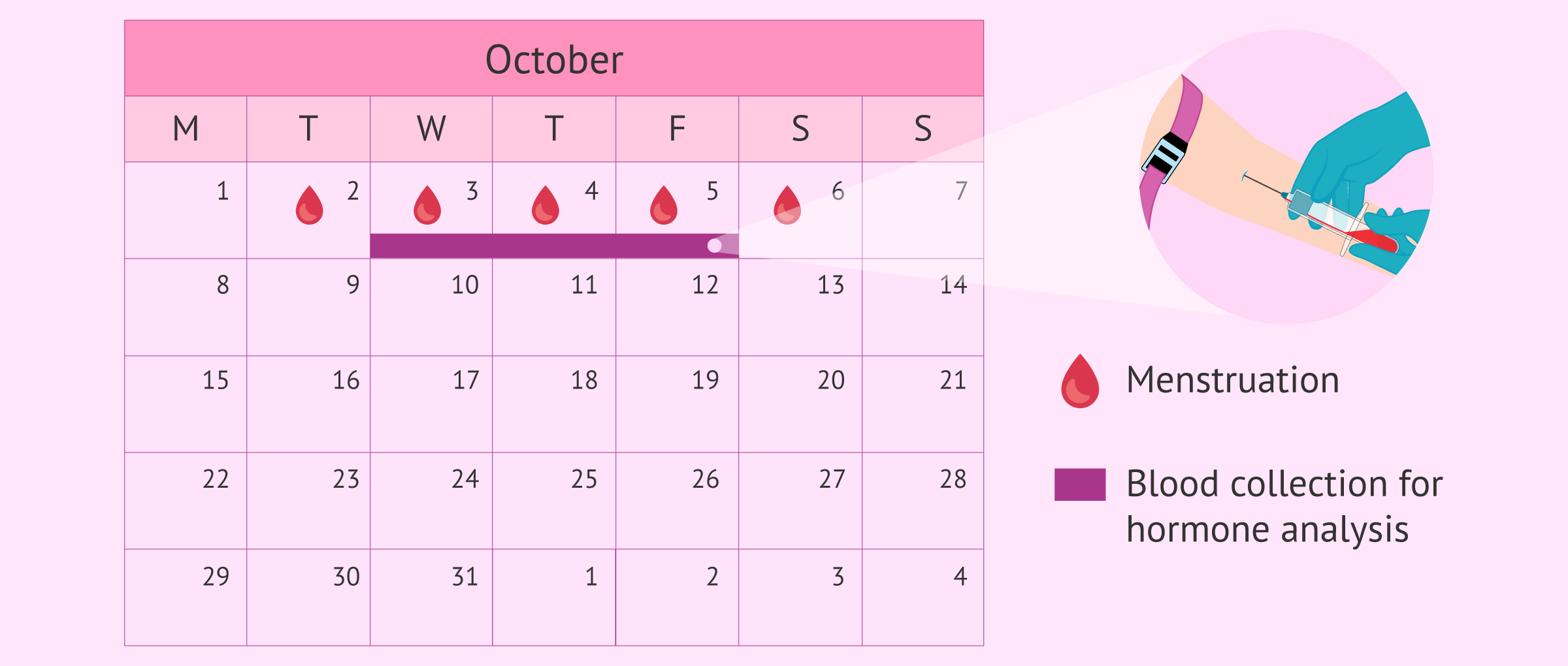
It should be noted that the blood test should be done between the third and fifth day of the menstrual cycle, that is, within 3-5 days after the start of your menstruation. During this time your hormones are in basal levels and can be compared with reference values.
The first day of the menstrual cycle is considered to be the first day when a woman has a heavy bleeding, marking the start of the menstrual period. The previous days, even if mild spotting occurs, are not considered the beginning of menstruation.
Nevertheless, the hormone progesterone should be checked on day 21 of the cycle to determine if ovulation has happened or not.
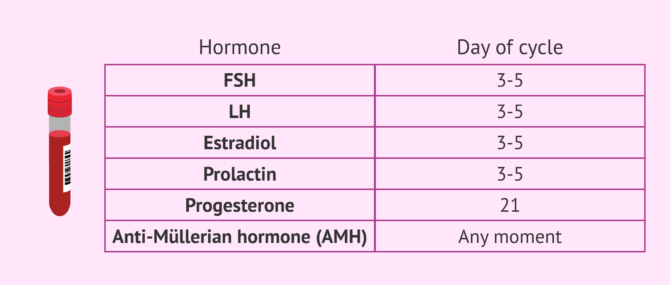
Finally, AMH testing can be done anytime during the cycle. AMH levels due not alter during the course of the menstrual cycle, because this hormone is synthesized by the antral and preantral follicles that form the ovarian egg reserve.
Normal hormone levels
It is crucial that the female hormone is well regulated in order for ovulation to occur, followed by fertilization and embryo implantation in the womb
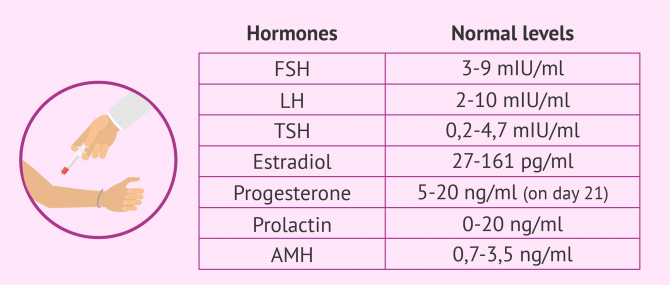
To check that there is no irregularity in this tight regulation of hormomes, we measure the levels of sex hormones in blood. These hormone levels can then be compared with normal, or reference values, which you can find in the table below:
We will now discuss what the normal ranges of female hormone values are and what their measurement is for:
- FSH
- This helps to check the ovarian reserve. Levels between 3 to 9 mIU/ml indicate a good ovarian reserve. A value below 6 indicates that the ovarian reserve is excellent, from 6 to 9 good, between 9 to 10 moderate, and 10-13 indicate a diminished egg count. Values above 13 mIU/ml show a very low ovarian reserve, and typically occurs when menopause starts.
- LH
- LH levels should range between 2 and 10 mIU/ml. High levels (above 20) show that ovulation is about to occur. Along with progesterone, measuring LH helps to determine if the woman is ovulating normally. If LH levels are too high, it can indicate the presence of certain disorders, including PCOS (Polycystic Ovary Syndrome).
- TSH
- Levels should range between 0.2 and 4.7 mIU/ml on day 3 of the cycle. Higher or lower levels can indicate hyperthyroidism or hypothyroidism, respectively. Both alterations can have a negative impact on ovulation and subsequently affect fertility.
- Estradiol (E2)
- At the beginning of the cycle, estradiol levels range between approximately 27 pg/ml to 161 pg/ml. Ideally, in a fertile woman, the level should be below 50 pg/ml. Abnormally elevated levels may indicate the presence of cysts or poor ovarian reserve.
- Progesterone (P4)
- Normal progesterone levels on day 21 of the cycle must range between 5 and 20 ng/ml (ideally 10 ng/ml or below) to confirm that ovulation has happened. On day 3, they shouold be lower than 1.5 ng/ml.
- Prolactin
- In non-pregnant women, prolactin levels are between 0-20 ng/ml, whilst in pregnant women they range from 10 and 300 ng/ml. If higher than 30 ng/ml, this indicates the presence of hyperprolactinemia. As such hormone regulation is altered and as a consequence so is ovulation. Moreover, if prolactin levels in a non-pregnant women are above 80 ng/ml, it indicates that the pituitary gland is not working as is should. This could be due to the presence of a tumor or PCOS.
- AMH
- The normal values are from 0.7-1 and 3.5 ng/ml. AMH levels below 0.7-1 indicate a diminished ovarian reserve, while levels above 3.5 ng/ml indicate an excessive ovarian development. If the latter is the case, your doctor must take special care during the ovarian stimulation protocol of a fertility treatment.
Further information on ovarian reserve tests can be found in theis article: Can a Woman’s Egg Count Be Measured with a Blood Test?
Other hormones
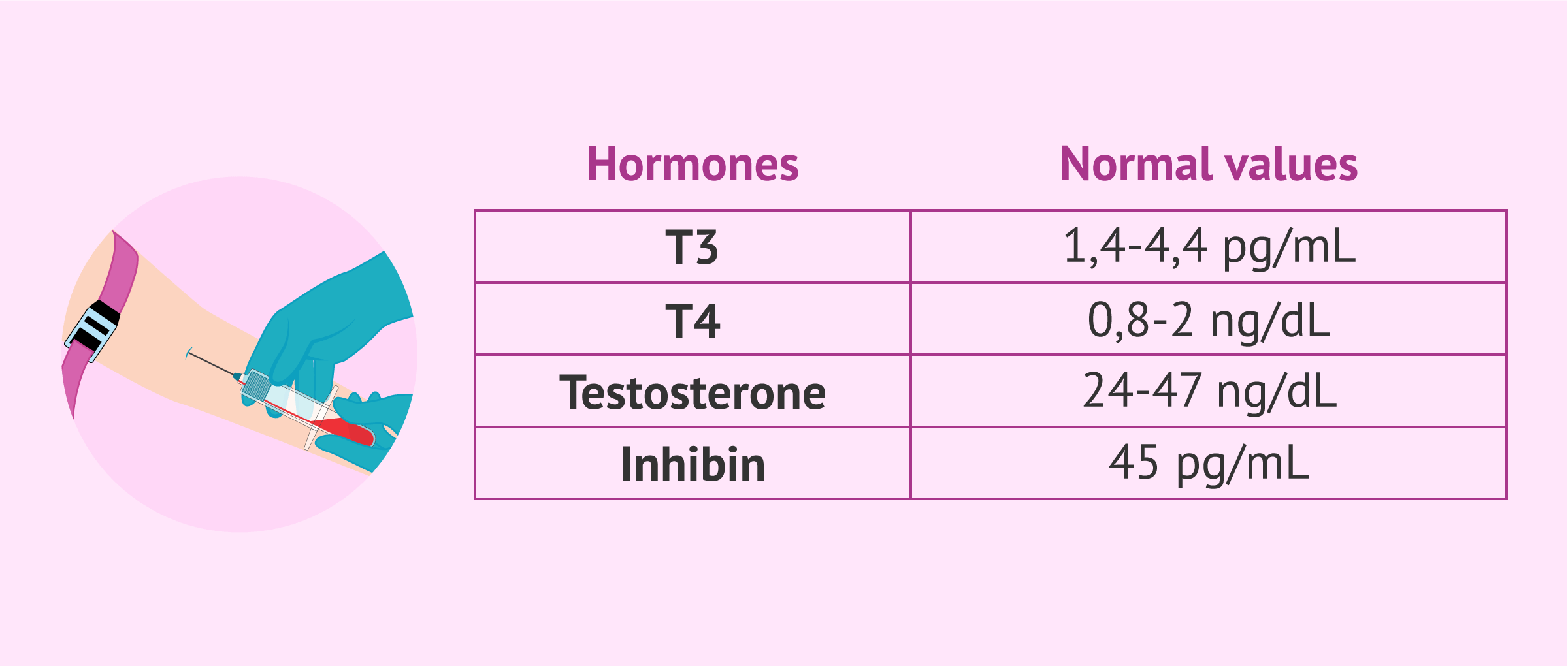
The following list is composed of hormones that are checked much less frequently. Although sometimes it can be helpful to study them when it comes to diagnosing a fertility problem. Hence it is also important to take them into consideration.
- Free triiodothyronine (FT3)
- helps us to assess the function of the thyroid gland. Its value on day 3 should range between approximately 1.4 and 4.4 pg/ml.
- Free thyroxine (FT4)
- levels should be between 0.8 and 2 ng/dl. Low levels can indicate thyroid gland insufficiency or pituitary gland disorders.
- Total testosterone (T)
- Normal T levels in women lie between 24 and 47 ng/dl. Elevated levels are usually an indicator of PCOS.
- Inhibin B
- When levels are lower than 45 pg/ml, it indicates ovarian reserve abnormalities or a poor response to stimulation.
Female hormonal imbalance
Once the woman's hormonal profile is known and the results have been analyzed, the fertility treatment will be personalized for her individual situation. If the results shows irregularities, the specialist will prescribe the steps to follow.
Furthermore, if trying for a baby without success, the doctor can indicated if is necessary to turn to assisted reproduction. Sometimes, a solution may be directed intercourse or artificial insemination (AI). In other circumstances, they may chose to proceed with (IVF), or even ovodonation.
Assisted procreation, as any other medical treatment, requires that you rely on the professionalism of the doctors and staff of the clinic you choose. Obviously, each clinic is different. Get now your Fertility Report, which will select several clinics for you out of the pool of clinics that meet our strict quality criteria. Moreover, it will offer you a comparison between the fees and conditions each clinic offers in order for you to make a well informed choice.
FAQs from users
Can you tell if I have fertility problems from my hormone values?
Hormone analysis provides a lot of information to study fertility. It is advisable to look at the ovarian reserve in women over 35 years of age, or those with irregular menstrual cycles, previous ovarian surgery, oncology patients, etc.
In addition, the analysis of FSH, LH, estradiol, prolactin and progesterone provides valuable information for the study of fertility.
Read more
At what age should AMH be examined?
Anti-Müllerian hormone is produced by the ovary, and its blood levels are an indicator of a woman's ovarian reserve.
To ensure everything works as expected, we recommend that the first measurement is done from age 20 and not later than age 30. By doing this, if a woman has a diminished ovarian reserve at a young age, she would have time to decide whether she wants to have a baby now or cryopreserve some eggs to become a mother in the future.
Is having your progesterone levels below the reference value on day 21 serious?
Levels of progesterone on day 21 of the cycle that are too low can indicate that ovulation (egg release from the ovary) has not taken place as expected. Without ovulation, a pregnancy cannot occur.
Can anxiety affect female hormone levels?
Yes, stress and anxiety can affect a woman's hormonal system, and subsequently alter the menstrual cycle.
Do low AMH levels equal low ovarian reserve?
Yes, although it should be confirmed with other tests such as FSH testing or an antral follicle count via transvaginal ultrasound.
You can find out more about these tests in this article: Ovarian reserve test
What is the best day to do a blood test to examine female fertility?
Ideally, in order to obtain an accurate result for FSH, LH and estradiol levels, it should be done on day 3 of the cycle, after the start of the menstrual period. Progesterone, on the other hand, should be tested on day 21. Finally, AMH levels can be checked at any time during the cycle, as its levels are independent from the cycle.
What are injectable female hormones used for?
Injectable female hormones are used in fertility treatment cycles to artificially control the menstrual cycle It allows for an optimization of the ovarian stimulation cycle in fertility treatment cycles, thereby increasing the chances of success.
If you would like more information about this, then please visit the following article: Ovarian induction.
Does stress affect the outcome of hormone level tests in women?
The answer is yes. Periods of stress in women may alter their hormonal cycle. Moreover, these situations may even cause the absence of menstruation at certain times, affecting female fertility.
Recommended reading
For more information on the function of sex hormones in both males and females you can read this comprehensive guide: Male & Female Sex Hormones – Definition & Functions.
Finally, if you are interested in learning more on the different female fertility tests, continue reading here: Female Fertility Tests – How Do You Know if You Can’t Get Pregnant?
We make a great effort to provide you with the highest quality information.
🙏 Please share this article if you liked it. 💜💜 You help us continue!
References
Leopoldo O Tso, Michael F Costello, Luiz Eduardo T Albuquerque, Regis B Andriolo, Cristiane R Macedo. Metformin treatment before and during IVF or ICSI in women with polycystic ovary syndrome. Cochrane Database Syst Rev. 2020 Dec 21;12(12):CD006105.
Loes M E Moolhuijsen, Jenny A Visser. Anti-Müllerian Hormone and Ovarian Reserve: Update on Assessing Ovarian Function. Clin Endocrinol Metab. 2020 Nov 1;105(11):3361-3373. doi: 10.1210/clinem/dgaa513.
Matorras R, Hernández J (eds): Estudio y tratamiento de la pareja estéril: Recomendaciones de la Sociedad Española de Fertilidad, con la colaboración de la Asociación Española para el Estudio de la Biología de la Reproducción, de la Asociación Española de Andrología y de la Sociedad Española de Contracepción. Adalia, Madrid 2007.
National Collaborating Centre for Women´s and Children Health. Fertility: assessment and treatment for people with fertility problems. Clinical Guideline. London: RCOG Press, 2004.
Crosignani PG, Rubin BL. Optimal use of infertility diagnostic tests and treatments. The ESHRE Capri Workshop Group. Hum Reprod 2000.
Rimbach S, Bastert G, Wallwiener D. Technical results of falloposcopy for infertility diagnosis in a large multicentre study. Hum Reprod 2001.
S Loubersac, A Dezellus¡, T Lefebvre, A Reignier, P Barriere, D Masson, T Freour, RESOVA Investigators Group. Evolution of serum Anti-Müllerian Hormone (AMH) level in young women treated with chemotherapy for breast cancer according to basal AMH level. Eur J Obstet Gynecol Reprod Biol. 2020 Nov;254:132-137. doi: 10.1016/j.ejogrb.2020.09.016.
Soyeon Hong, Eunmi Chang, E Jung Han, Seung Gi Min, Sohyun Kim, Min Kyu Kang, Dong Hyun Cha, So Hyun Shim, Hee Jin Park. The anti-Mullerian hormone as a predictor of early pregnancy loss in subfertile women.
Tufan E, Elter K, Durmusoglu F. Assessment of reproductive ageing patterns by hormonal and ultrasonographic ovarian reserve tests. Hum Reprod 2004.